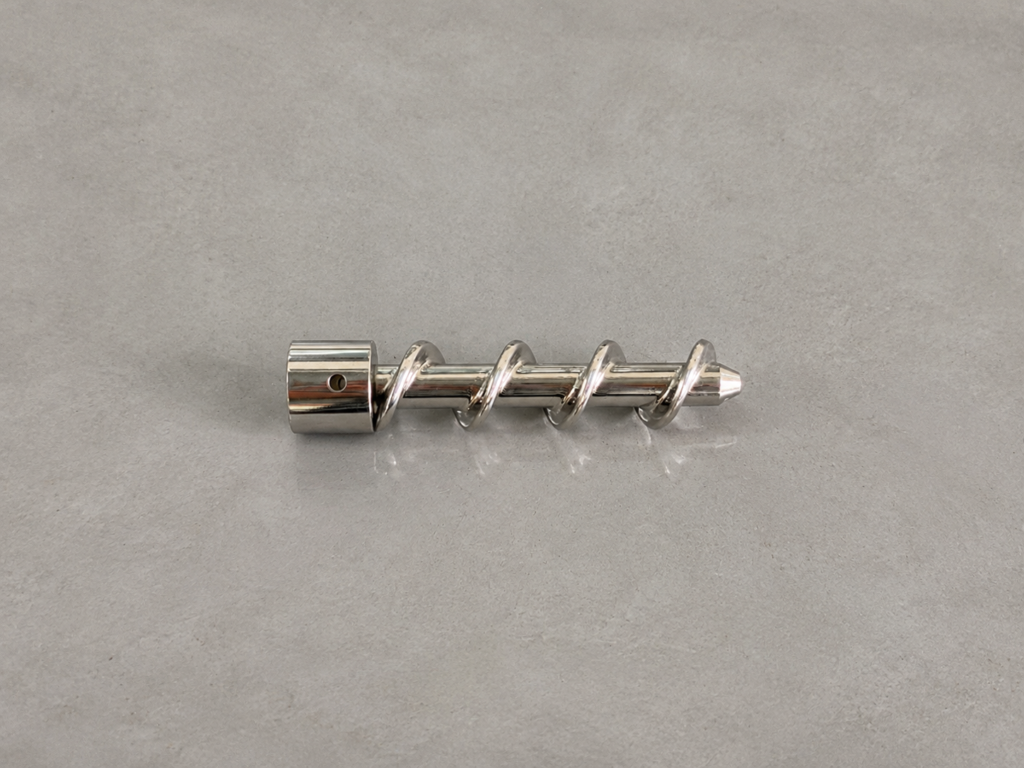
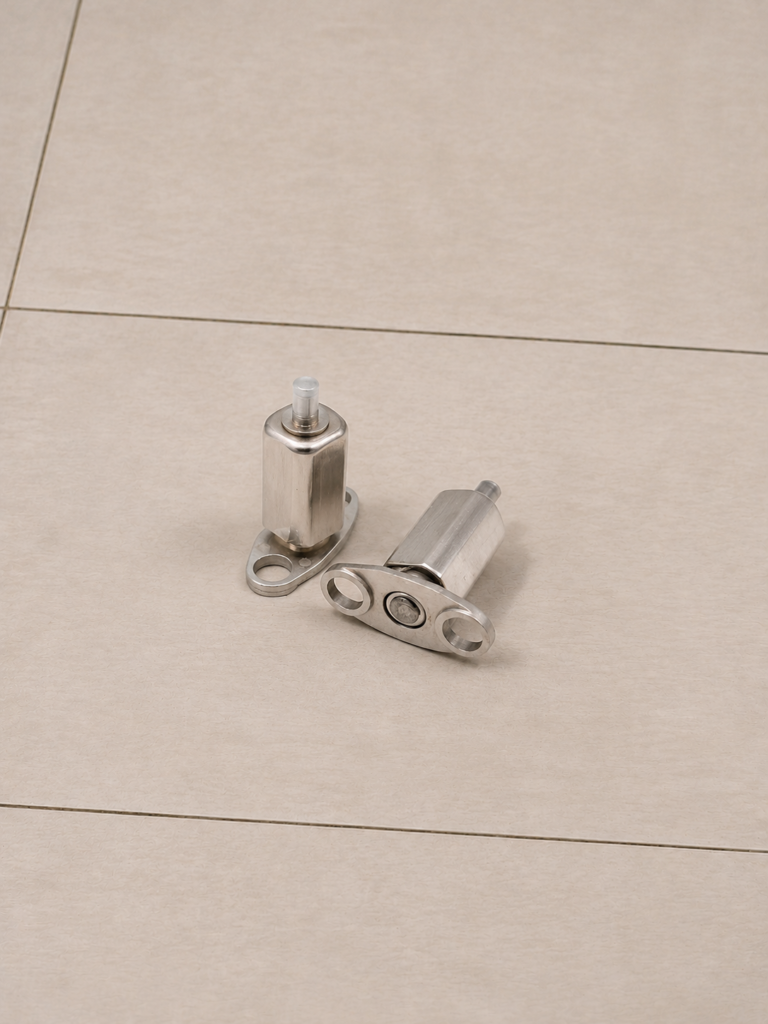
CNC machining determines the initial accuracy of a drone folding arm pivot, but long-term stability depends on the complete joint. Pin diameter, bore alignment, bushings, surface hardness, preload, lubrication, and locking geometry all influence clearance and wear.
Attempting to eliminate all clearance with an excessively tight fit may cause binding. The better approach is to control radial clearance, axial movement, friction, and replaceable wear surfaces separately.
Identify the Sources of Movement
A folding arm joint may develop looseness at several locations:
- Clearance between the pin and bore
- Wear inside the bushing
- Axial movement between arm brackets
- Deformation of thin aluminum lugs
- Loose retaining screws
- Wear in the locking mechanism
- Misalignment between two pivot supports
Radial clearance affects arm position, while axial clearance can create vibration and noise. Locking-mechanism wear may also allow movement even when the pivot pin remains within tolerance.
Each source should have an individual tolerance and inspection method rather than one general “no looseness” requirement.
Use a Replaceable Bushing
Running a steel pin directly against an aluminum arm bore is inexpensive but often produces rapid wear. Aluminum is softer, and repeated folding can enlarge the hole or damage an anodized layer.
A replaceable bushing provides a controlled bearing surface and protects the main arm structure. Possible materials include:
- Oil-impregnated bronze
- Hardened steel
- Stainless steel
- PTFE-lined composite
- Engineering polymer
- Dry-running multilayer bearing material
The bushing should be retained securely in the arm without distorting its internal diameter. Thin bushings may shrink after press fitting, so the finished bore must be checked in the assembled condition.
Design the Pivot in Double Shear
A pin supported on both sides of the folding arm experiences less bending than a single-sided pin. Double-shear construction improves stiffness and reduces uneven edge loading.
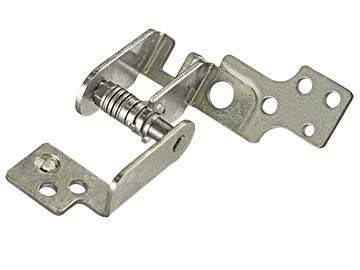
The two support holes must be coaxial. Machining them in separate setups can introduce position error, causing the pin to contact only one side of the bushing. Whenever possible, both holes should be bored or reamed in one controlled setup.
A shoulder bolt or precision-ground pin is generally more stable than using ordinary threaded fastener surfaces as the bearing interface. Threads should remain outside the rotating contact area.
Control Fits with CNC Machining
The required fit depends on whether the pin rotates in the bushing or remains fixed while the bushing moves. The drawing should clearly define which surface is stationary.
Important specifications include:
- Pin diameter and roundness
- Bushing inside and outside diameters
- Bore cylindricity
- Coaxiality of support holes
- Shoulder perpendicularity
- Axial spacing between lugs
- Surface texture
A nominal diameter alone is insufficient. Form error and misalignment can produce tight spots even when individual diameters pass inspection.
Select Wear-Resistant Surface Treatments
For aluminum arm components, hard anodizing can improve bore and side-face wear resistance. However, dimensional growth must be included in the machining allowance. Anodized aluminum should not be expected to compensate for a poorly aligned bore.
Steel pivot pins may use nitriding, hard chromium, electroless nickel, PVD, or DLC, depending on load, corrosion exposure, and lubrication. A hard coating requires a sufficiently hard substrate; otherwise, the underlying metal can deform and crack the coating.
Stainless steel improves corrosion resistance but may gall against another stainless surface. A compatible bushing, low-friction coating, or approved lubricant should separate similar sliding metals.
Surface-texture requirements should identify the actual bearing direction and measurement location. ISO 21920-1 provides rules for indicating profile surface texture in technical drawings. ISO 21920-1:2021
Control Axial Clearance Separately
Radial fit should not be used to eliminate axial movement. Axial clearance can be controlled with precision spacers, thrust washers, shims, wave springs, or preloaded polymer washers.

A small elastic preload can compensate for tolerance variation and early wear. Excessive preload, however, increases folding torque and accelerates side-face wear.
The arm should fold smoothly while remaining rigid after the locking mechanism engages. Pivot friction should not be responsible for holding the arm in its flight position.
Protect the Joint from Dust and Corrosion
Fine dust mixed with lubricant can form an abrasive paste. Seals, flanged bushings, protective caps, or dry-running bearing materials may be preferable for outdoor drones.
Carbon-fiber arms can also create galvanic corrosion when they contact aluminum in the presence of moisture. Insulating washers, sealed interfaces, and compatible coatings should interrupt the electrical and moisture paths.
Lubricant selection must consider temperature, dust retention, plastic compatibility, and migration toward motors or sensors.
Verify Wear Under Realistic Loads
Material data alone cannot predict joint life. The assembled pivot should be cycled under representative arm loads, vibration, temperature, dust, and moisture.
Measure before and after testing:
- Radial and axial clearance
- Folding torque
- Locking repeatability
- Pin and bushing wear
- Coating damage
- Arm-tip displacement
ISO 7148-1 specifies tribological testing of metallic plain-bearing materials under boundary-lubrication conditions and can support material comparison. The finished drone joint still requires component-level cycling because its oscillating motion, loading, and contamination differ from laboratory specimens. ISO 7148-1:2025
Conclusion
A durable folding arm pivot combines coaxial CNC-machined bores, a precision pin, replaceable bushings, controlled axial preload, suitable surface treatments, and environmental protection. The objective is not zero clearance at assembly, but stable movement and repeatable arm positioning throughout the drone’s service life.