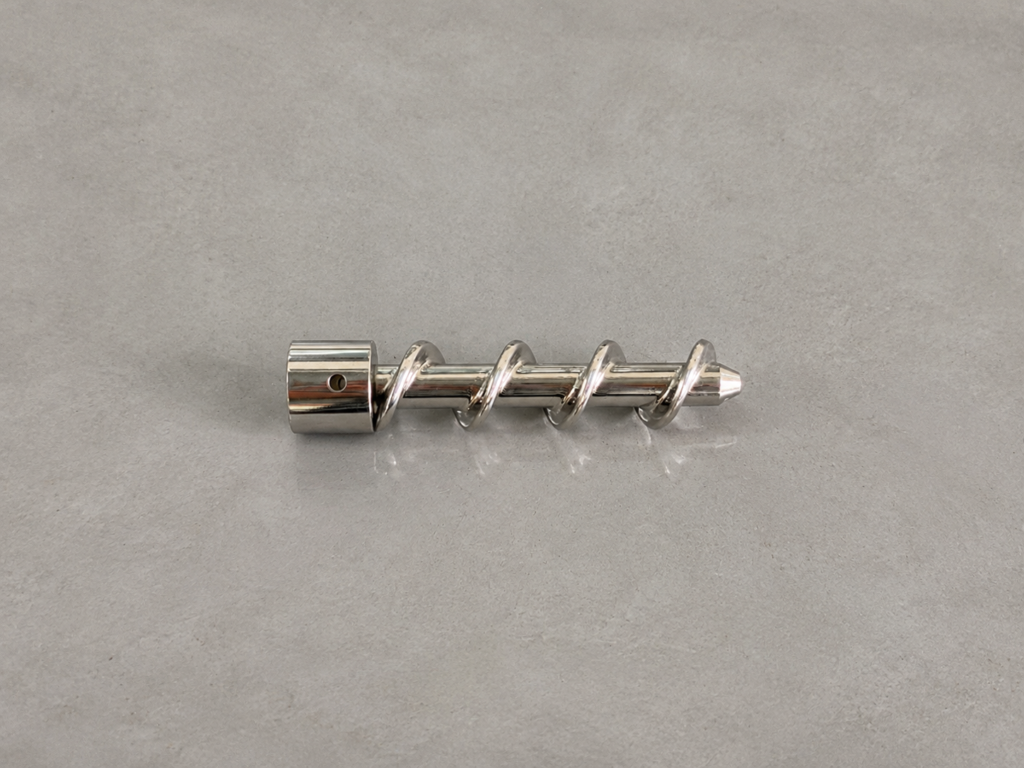
Food conveyor screw pitting corrosion often begins after cleaning rather than during production. Chloride-containing detergents, concentrated disinfectants, residual chemicals, and incomplete rinsing can locally damage the passive film on stainless steel.
Preventing pitting requires the correct alloy, a clean and smooth surface, drainable geometry, controlled cleaning conditions, and verified passivation.
Identify the Cleaning Chemicals
Many food plants use alkaline detergents, acidic descalers, hypochlorite disinfectants, peracetic acid, or other oxidizing chemicals. Each product can affect stainless steel differently.
Risk increases when cleaners are:
- More concentrated than specified
- Applied above the approved temperature
- Left on the surface for too long
- Allowed to dry before rinsing
- Mixed with chloride-rich water
- Trapped beneath seals or deposits
- Incorrectly combined with another chemical
Chlorinated cleaners are particularly sensitive to concentration, temperature, exposure time, and stainless steel grade. Acid must never be mixed with hypochlorite because the reaction can release hazardous chlorine gas.
Cleaning parameters should therefore be treated as controlled process variables rather than general housekeeping instructions.
Select the Stainless Steel Grade for the Environment
Type 304 stainless steel may be adequate for mild food products and low-chloride cleaning. Type 316L generally offers better pitting resistance because it contains molybdenum.

However, 316L is not immune to concentrated chlorides, high temperatures, stagnant cleaner, or poorly finished welds. More resistant duplex or high-alloy stainless steels may be required when the screw handles salty products or undergoes aggressive cleaning.
Material selection should consider:
- Chloride concentration
- Cleaning temperature
- Product acidity
- Exposure time
- Crevice conditions
- Required weldability
- Regulatory and food-contact requirements
Changing the alloy without correcting trapped cleaner or surface contamination may only delay the same failure.
Remove Machining Contamination
Fabrication can reduce the natural corrosion resistance of stainless steel. Carbon-steel tools, grinding dust, contaminated worktables, and iron-bearing abrasives can leave embedded particles that later rust.
Machining should use dedicated stainless-steel tooling and clean handling equipment. After fabrication, the screw must be thoroughly cleaned to remove oil, polishing compound, embedded iron, and shop contamination.
ASTM A380/A380M provides guidance for cleaning, descaling, pickling, and passivating stainless steel parts and systems. It also emphasizes designing equipment to minimize areas where dirt or cleaning solutions can become trapped. ASTM A380/A380M
Treat Welds and Heat Tint
Weld heat tint is more than a cosmetic discoloration. The oxide and chromium-depleted region beneath it can be less resistant to pitting.
Flight-to-shaft welds, repaired edges, and attachment points should be fully finished. Depending on the application, treatment may involve mechanical finishing, pickling, or electropolishing followed by thorough rinsing.
Weld undercut, incomplete penetration, sharp recesses, and rough repair marks can retain food residue and cleaner. Blending should produce a smooth transition without excessively thinning the screw flight.
Use Passivation Correctly
Passivation removes free iron and supports formation of the chromium-rich passive film. It does not fill pits, remove heavy scale, or correct poor welding.
The correct sequence is generally:
- Degrease and clean
- Remove scale and heat tint
- Rinse thoroughly
- Apply the validated passivation treatment
- Perform a final high-quality rinse
- Dry without recontamination
ASTM A967/A967M specifies chemical passivation treatments and verification methods for stainless steel parts. ASTM A967/A967M
Passivation chemistry must be compatible with the stainless steel grade and the food-equipment cleaning requirements.
Consider Electropolishing
Electropolishing removes a controlled surface layer, reduces microscopic peaks, and can improve cleanability. It is especially useful around screw flights, weld transitions, and surfaces exposed to frequent sanitation.
Potential benefits include:
- Lower surface roughness
- Reduced product adhesion
- Easier rinsing
- Removal of embedded contamination
- Improved passive-surface uniformity
Electropolishing cannot repair deep pits, weld voids, or poor geometry. Excessive material removal may also change flight thickness, edge shape, and critical clearances.
Eliminate Chemical Traps
Even a properly passivated screw can pit if cleaner remains in a stagnant crevice. The design should permit complete drainage and inspection.
Pay particular attention to:
- Flight-to-shaft roots
- Hollow-shaft openings
- Coupling interfaces
- Bolt heads and washers
- Seal contact areas
- Overlapping plates
- Intermittent welds
- Low points when the screw is parked
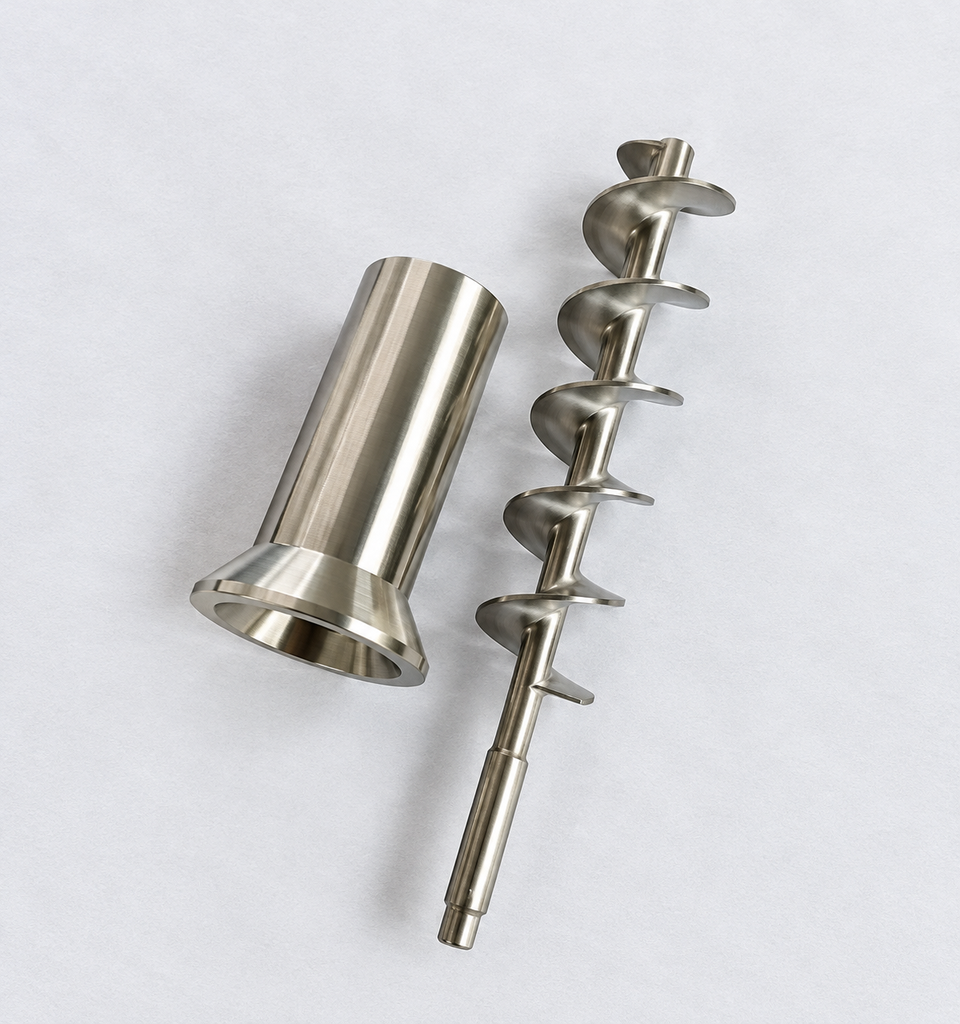
Continuous hygienic welds, smooth transitions, accessible surfaces, and a defined cleaning position reduce chemical retention. After rinsing, the screw should drain and dry rather than remain wet overnight.
Validate the Cleaning Procedure
A corrosion-resistant surface must be verified under realistic sanitation conditions. Qualification should reproduce the actual cleaner, concentration, water chemistry, temperature, exposure time, rinse, and drying cycle.
ASTM G48 provides laboratory methods for comparing the pitting and crevice-corrosion resistance of stainless steels in chloride environments. It is useful for alloy and surface-condition comparisons, but it does not replace testing with the plant’s actual cleaner. ASTM G48-25
Inspection should monitor pits at welds, flight roots, shaded surfaces, and chemical collection points. Surface roughness, free-iron contamination, and rinse-water residues should also be checked.
Conclusion
Cleaner-induced pitting is best prevented through compatible stainless steel, contamination-free fabrication, complete weld finishing, passivation or electropolishing, drainable design, and tightly controlled sanitation parameters. A smooth passive surface helps, but effective rinsing and chemical control remain essential.