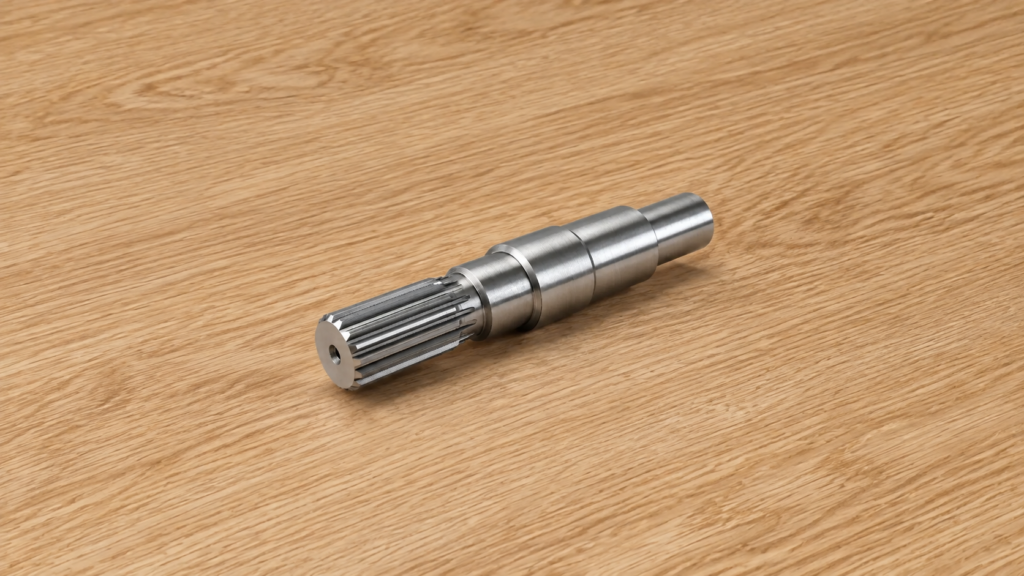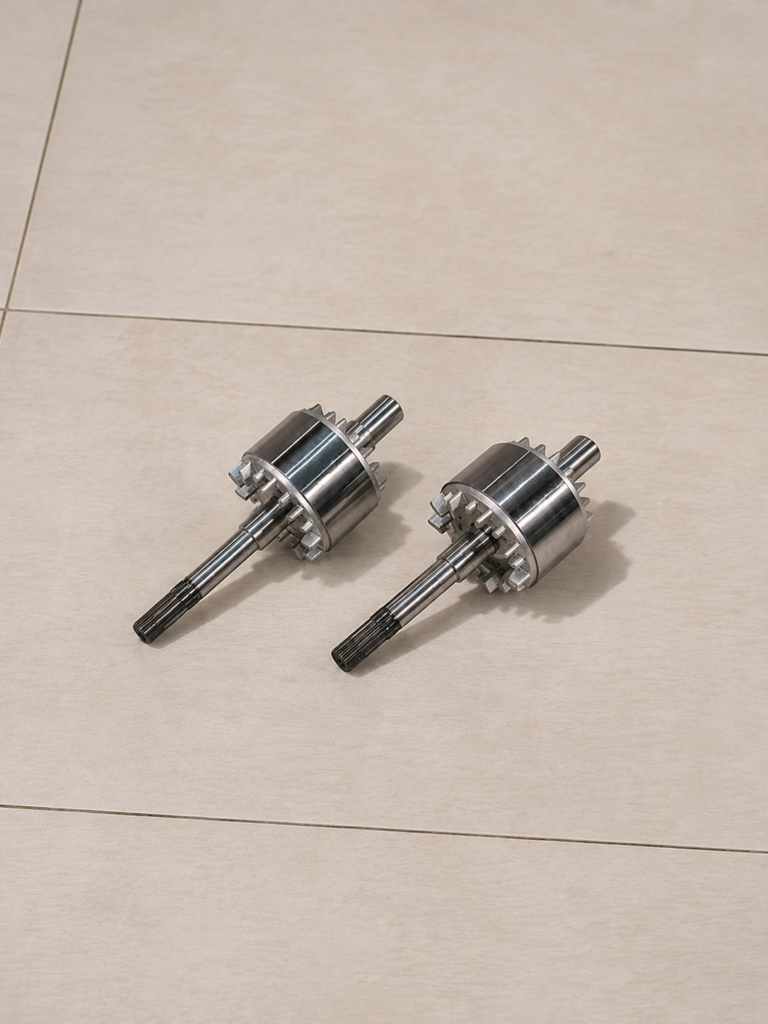

The Assembly Looked Correct—But Was the Fit Correct?
An H7/h6 fit ensures controlled clearance between precision-machined shafts and mating holes, supporting consistent assembly.
A precision shaft and its matching housing both passed dimensional inspection. The shaft entered the hole smoothly, without force.
But would every shaft fit every housing consistently?
That is the purpose of an H7/h6 fit: defining allowable size ranges to ensure interchangeability and predictable clearance.
Reading the H7/h6 Designation
The designation contains four elements:
- H represents the tolerance position of the hole.
- 7 represents the hole’s tolerance grade.
- h represents the tolerance position of the shaft.
- 6 represents the shaft’s tolerance grade.
Capital letters are used for holes, while lowercase letters are used for shafts.
In the hole-basis system, an H hole has a lower deviation of zero. The smallest acceptable hole is therefore equal to the nominal size, while larger acceptable holes remain within the H7 tolerance zone.
For an h shaft, the upper deviation is zero. The largest acceptable shaft equals the nominal size, while smaller acceptable shafts remain within the h6 tolerance zone.
What Type of Fit Does It Produce?
An H7/h6 fit normally produces a close clearance fit.
At the tightest condition, the smallest H7 hole and largest h6 shaft are both at the nominal size. The theoretical minimum clearance is therefore zero.
At the loosest condition, the hole is at its maximum size and the shaft is at its minimum size, producing a small positive clearance.
This makes H7/h6 suitable when accurate location is required but the components must still be assembled without a press fit.
Where Is H7/h6 Commonly Used?
Typical applications include:
- Precision guide shafts
- Removable hubs and couplings
- Bearing-related components
- Locating sleeves
- Machine-tool assemblies
- Parts requiring accurate concentric alignment
The fit is not automatically suitable for every sliding or rotating application. Lubrication, operating speed, surface finish, contamination, load, and thermal expansion must also be considered.
A zero theoretical minimum clearance does not guarantee free movement under all operating conditions.
The Manufacturing Decision
Returning to the assembly station, the engineer cannot approve the fit by checking only one shaft and one hole.
The complete size ranges must be verified. Precision holes may require boring, reaming, honing, or grinding, while shafts may require precision turning or cylindrical grinding.
The actual tolerance values also depend on the nominal diameter. H7 and h6 describe tolerance classes, not one fixed dimensional value for every part size.
Inspection may require bore gauges, micrometers, air gauges, plug gauges, or coordinate measuring equipment. Temperature and surface treatment must also be controlled because small dimensional changes can affect the final clearance.
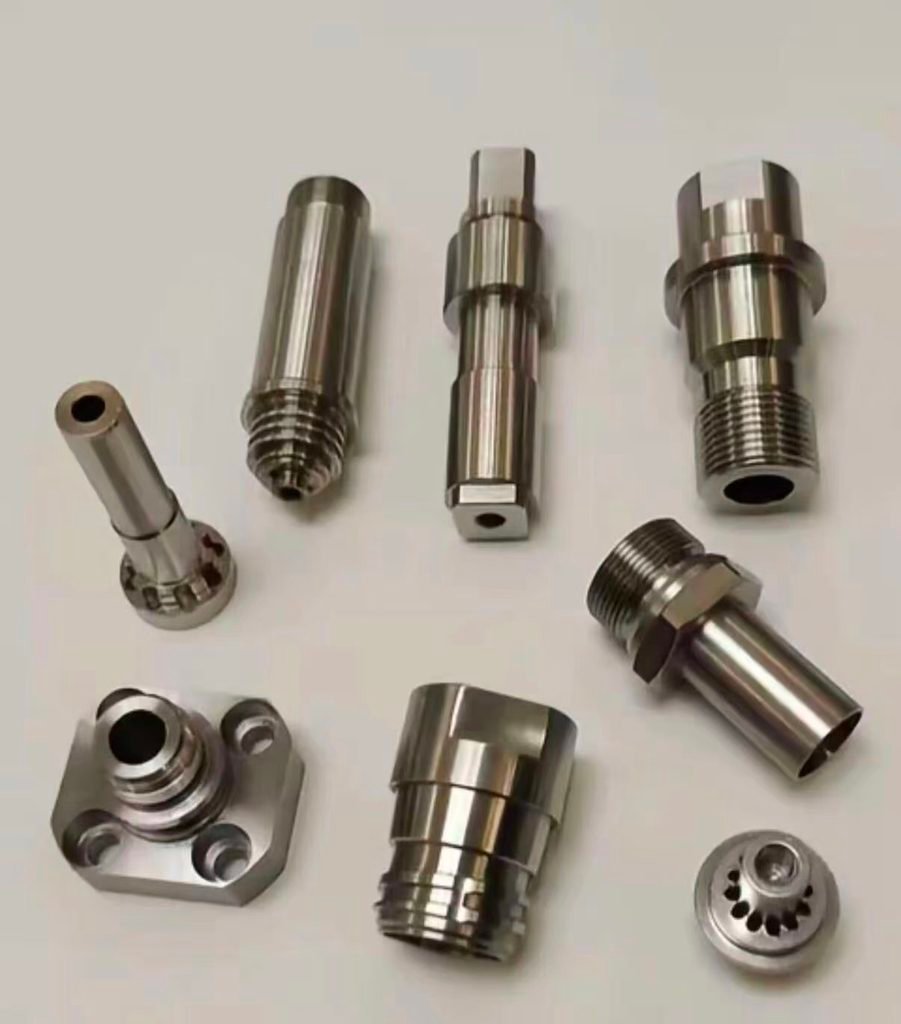
Conclusion
An H7/h6 fit is a hole-basis close clearance fit used for accurate positioning and reliable interchangeability.
The H7 hole begins at the nominal size and extends above it. The h6 shaft ends at the nominal size and extends below it. Together, they provide zero minimum clearance and a controlled maximum clearance.
If your assembly requires an H7/h6 fit, provide the nominal diameter, material, surface treatment, operating temperature, and functional requirements. These details allow the machining and inspection process to be selected correctly.