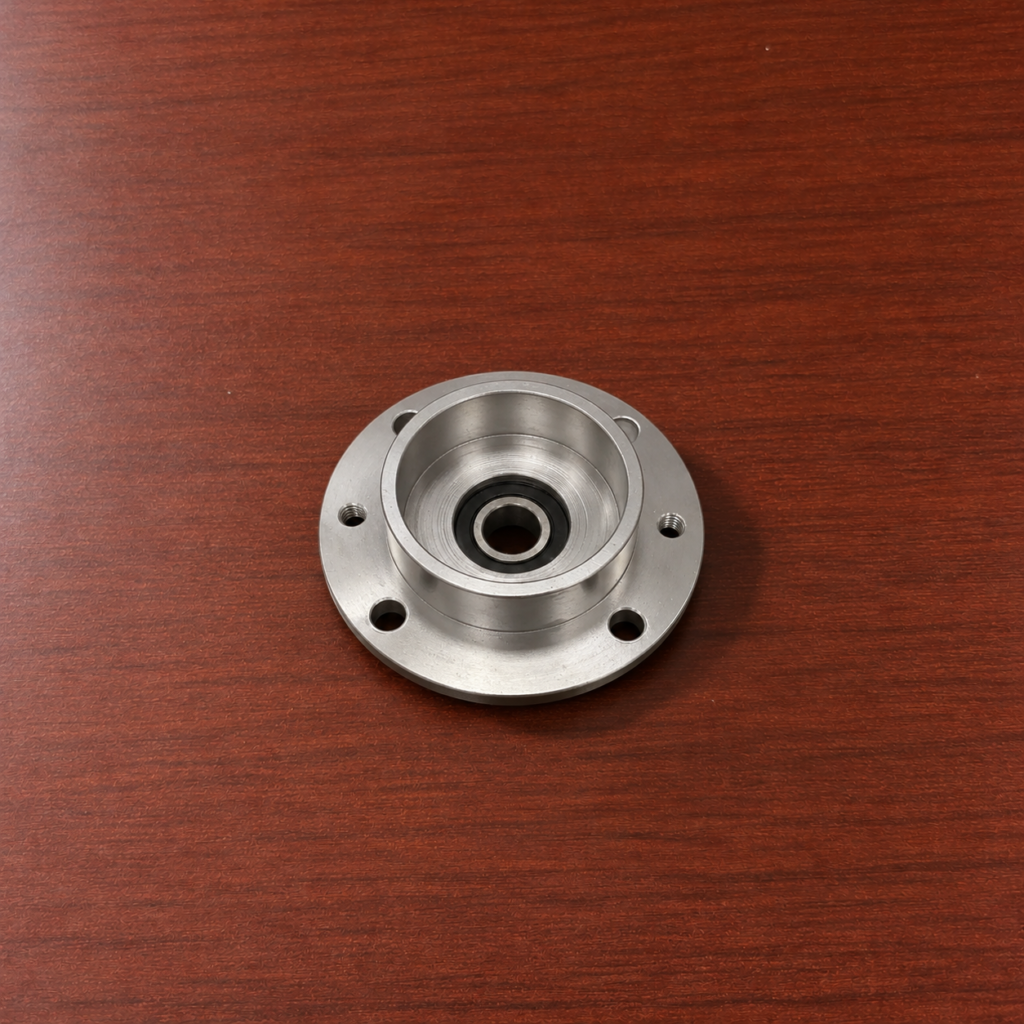

5-Axis Racing Steering Knuckle Machining
5-axis CNC steering knuckle machining is used to produce complex parts that connect the wheel hub, suspension and steering systems of a racing vehicle.
A steering knuckle contains features on several sides and at different angles. Five-axis machining can reach these areas with fewer setups, making it suitable for prototypes, replacement parts and small production batches.
What Does a Racing Steering Knuckle Do?
The steering knuckle connects the wheel assembly to the vehicle’s suspension and steering systems.
Depending on the vehicle, it may connect to the wheel hub, control arms, steering link and brake mounting components. Because these features face different directions, the part is more difficult to machine than a simple bracket.
Why Is Five-Axis Machining Used?
A three-axis machine may require the steering knuckle to be repositioned several times.
A five-axis CNC machine can rotate or tilt the workpiece so the cutting tool reaches angled and recessed areas more directly. This reduces manual repositioning and allows more features to be completed in one setup.
Which Features Are CNC Machined?
A racing steering knuckle may include:
- Wheel hub and bearing locations
- Suspension mounting points
- Steering arm connections
- Brake mounting features
- Drilled and threaded holes
- Internal pockets
- Curved exterior profiles
The exact features depend on the suspension layout and vehicle application.
How Does the Machining Process Work?
Production begins with a 3D CAD model. CAM software creates toolpaths for rough milling, pocket machining, drilling, threading and exterior contouring.
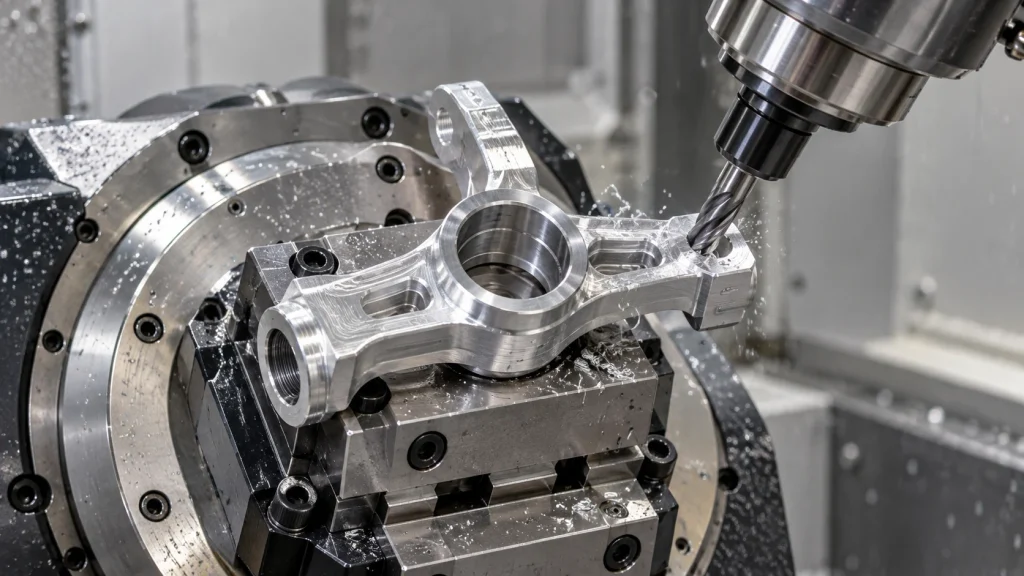
The workpiece is secured in a fixture, and rough machining creates the basic shape. The machine then rotates the component to reach its side features, angled mounting points and recessed areas.
Toolpath simulation is used before production to check tool movements and help prevent collisions.
What Affects Machining Time?
Machining time depends on part size, complexity, number of mounting features, required operations and order quantity.
The first component requires additional programming and setup time. Once the program and fixture are established, repeat parts can usually be produced more efficiently.
What Is Needed for a Quote?
Customers should provide a STEP model and a matching technical drawing when available.
The supplier also needs the part name, revision number, quantity, requested delivery date and shipping destination. Complete information helps the supplier plan the machining process and prepare a reliable quotation.
Conclusion
Five-axis CNC machining is suitable for racing steering knuckles because it provides access to complex features on multiple sides.
By combining milling, drilling, threading and contouring with fewer setups, 5-axis CNC steering knuckle machining can support prototypes, replacement parts and small-batch production.