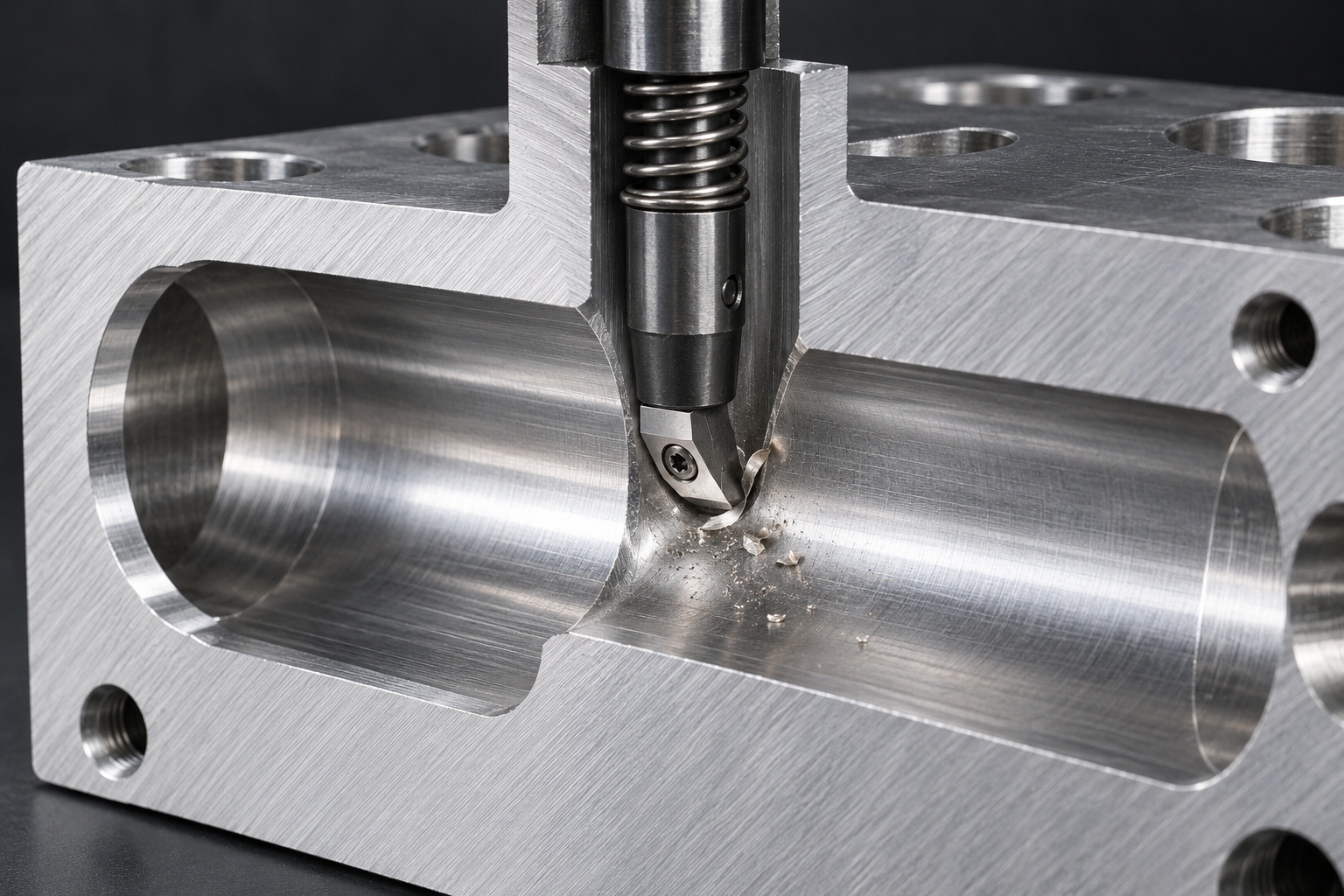
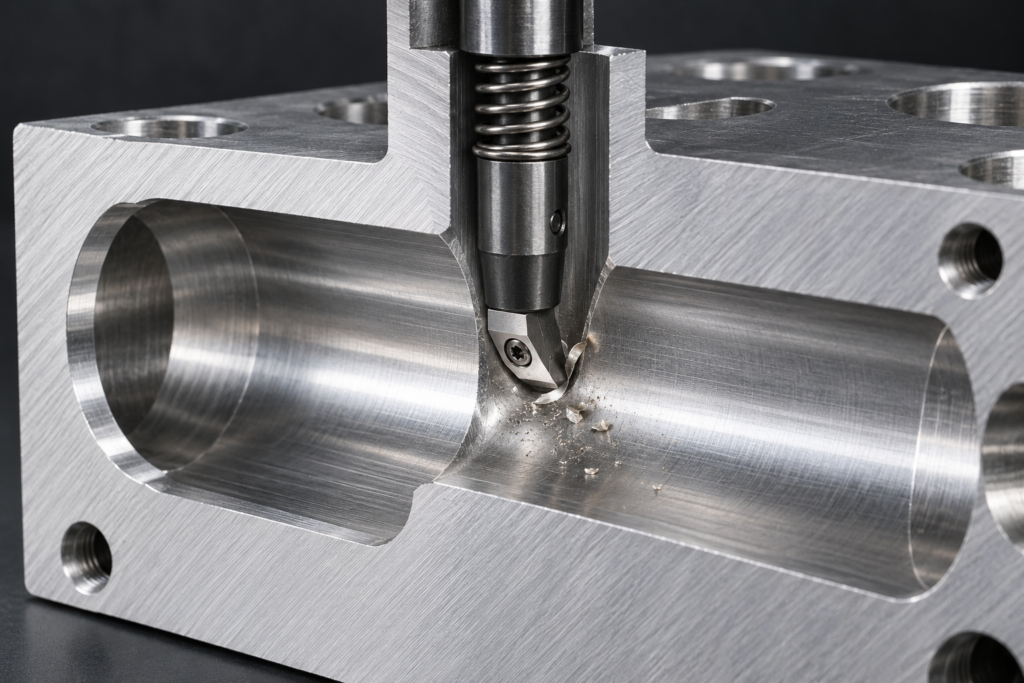
Cross hole deburring removes burrs from the internal edges where two drilled holes intersect. These burrs are difficult to reach and may affect fluid flow, cleanliness, assembly, and part reliability.
Why Remove Internal Burrs?
Internal burrs can:
- Block fluid or air passages
- Damage seals and cables
- Contaminate hydraulic systems
- Interfere with assembly
- Break away during operation
Deburring is especially important for hydraulic manifolds, valve bodies, engine parts, and pneumatic components.

Common Cross Hole Deburring Methods
CNC Deburring Tools
Specialized CNC tools use flexible blades to remove burrs from internal intersecting edges. They provide consistent results and are suitable for batch production.
Rotary Brushes
Abrasive brushes can remove light burrs and soften sharp edges. They are economical but may not remove heavy or folded burrs.
Abrasive Flow Machining
This process pushes an abrasive medium through internal passages. It is suitable for complex channels and areas that cutting tools cannot easily reach.
Thermal Deburring
Thermal deburring uses a controlled combustion cycle to remove thin burrs from multiple internal passages. Material and heat sensitivity must be considered.
Manual Deburring
ers, rotary tools, or custom hooks can be used for prototypes and small quantities. Results depend heavily on operator skill.
How to Select a Deburring Method
The selection should consider:
- Hole diameter and intersection angle
- Burr size
- Workpiece material
- Tool accessibility
- Required edge condition
- Production quantity
Light burrs may be removed with a brush. Heavy burrs usually require a cutting tool. Automated CNC deburring provides better consistency for batch production.
Inspection
Internal edges can be inspected using:
- A borescope
- Magnified visual inspection
- Air or fluid flow testing
- Cleanliness testing
Conclusion
Cross hole deburring helps prevent contamination, restricted flow, and assembly problems. The best method depends on the hole geometry, material, burr size, and production requirements.