CNC Machining Surface Finish Guidelines
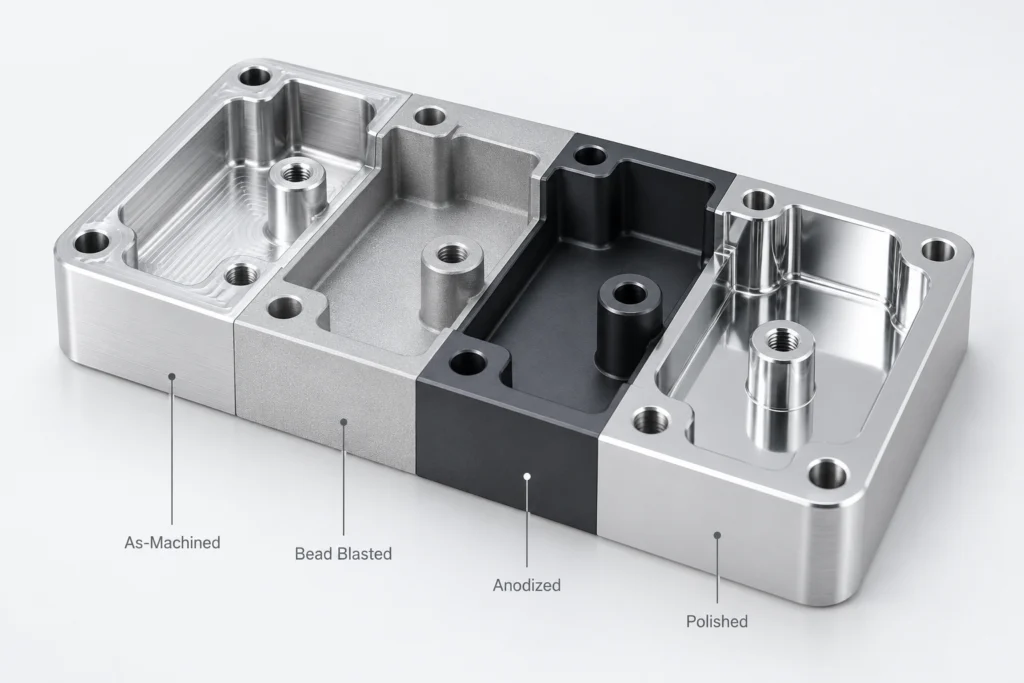
Specify surface finish requirements based on function, fit, sealing, friction, appearance, and inspection needs to avoid unnecessary machining and inspection costs.
Get a Quote
CNC machining surface finish comparison showing as-machined, bead blasted, anodized, and polished finishes
SURFACE FINISH DESIGN BASICS

Specify Surface Finish Only Where It Matters Most

Apply finer surface finish requirements only to functional or visible surfaces while using standard finishes on non-critical areas to control machining time and cost.
Feature
Recommended
Avoid
Notes
General Machined Surfaces
Use a standard as-machined finish
Fine finish requirements on all surfaces
Standard finishes reduce machining time and cost
Sealing Surfaces
Specify finish based on sealing requirements
Leaving critical sealing faces undefined
Surface roughness can affect sealing performance
Sliding / Bearing Surfaces
Specify the required finish on contact surfaces
Excessively rough or unnecessarily polished surfaces
Proper finish helps manage friction and wear
Mating Surfaces
Specify finish where fit, contact, or alignment requires it
Applying tight finish requirements to unrelated areas
Focus control on functional contact surfaces
Cosmetic Surfaces
Define appearance or secondary finish separately
Using Ra alone to define cosmetic appearance
Visual finish also depends on machining direction and post-processing
Post-Processed Surfaces
Consider anodizing, blasting, polishing, plating, or other secondary finishing requirements
Ignoring the effect of secondary finishing
Secondary processes can change appearance and dimensions
Design Tip: Specify surface finish only where it affects function, sealing, friction, fit, or appearance. Unnecessary fine finishes can significantly increase machining and inspection time.
SURFACE FINISH CONSIDERATIONS

CNC Surface Finish & Inspection Considerations
Tool Marks
Smaller stepovers and finishing passes can reduce visible machining marks.
Cutting Parameters
Feed rate, spindle speed, and tool condition directly affect surface roughness.
Tool Condition
Worn or damaged cutting tools can cause inconsistent finish and visible defects.
Material Behavior
Different materials respond differently to machining and secondary finishing processes such as polishing and blasting.
Inspection Requirements
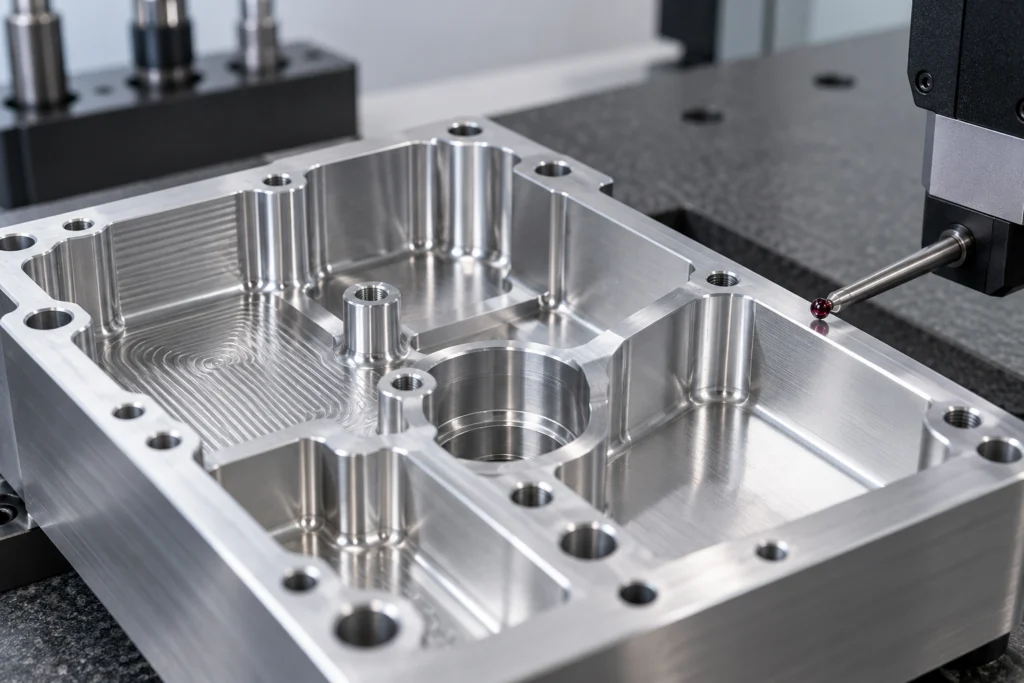
Very fine surface finish requirements may require additional measurement methods and inspection steps.
CNC machined aluminum part undergoing surface finish and dimensional inspection
DESIGN EXAMPLES

Good vs. Poor Surface Finish Design

Compare recommended and poor surface finish specifications for better function, appearance, manufacturability, and cost control.
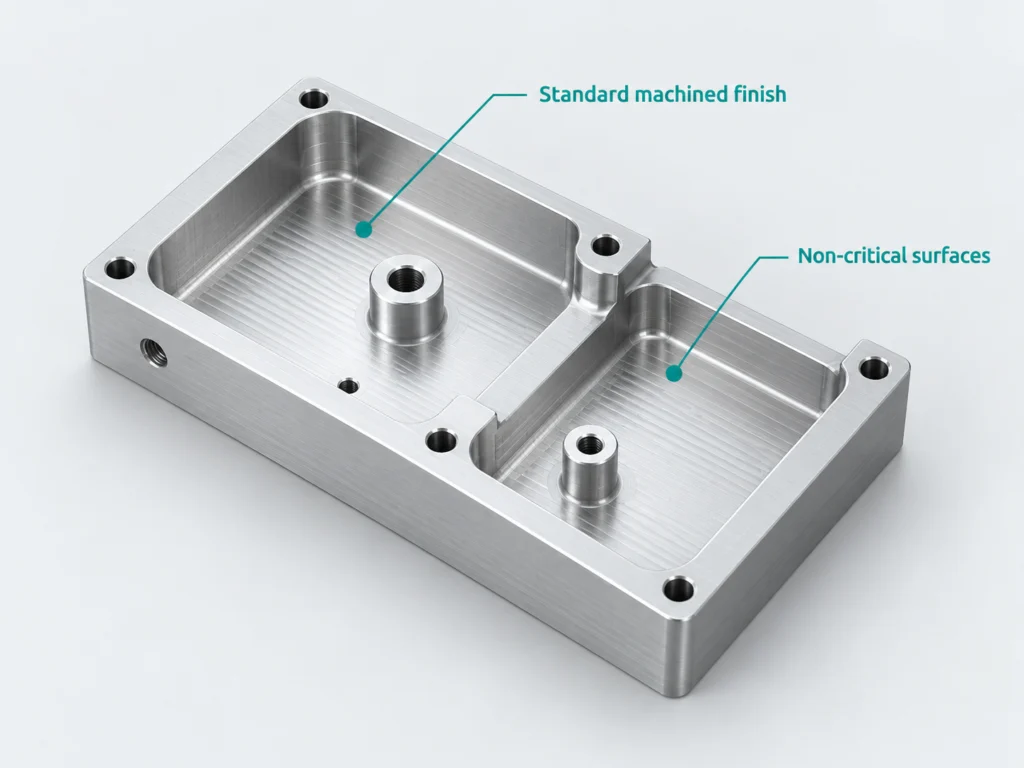
CNC machined aluminum part with standard as-machined finish on non-critical surfaces

Standard Machined Finish

Use standard as-machined finishes on non-critical surfaces to reduce machining time and cost.
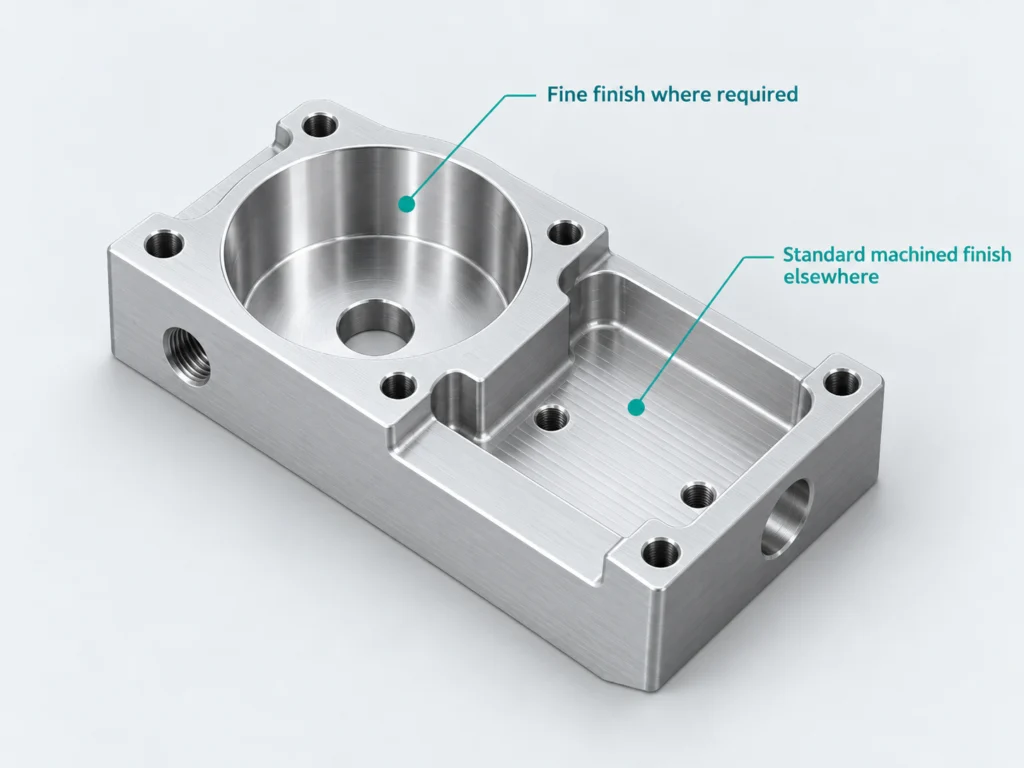
CNC machined part with finer surface finish applied only to functional areas

Finer Finish Where Required

Specify a finer surface finish only on sealing, sliding, mating, or other functional surfaces.
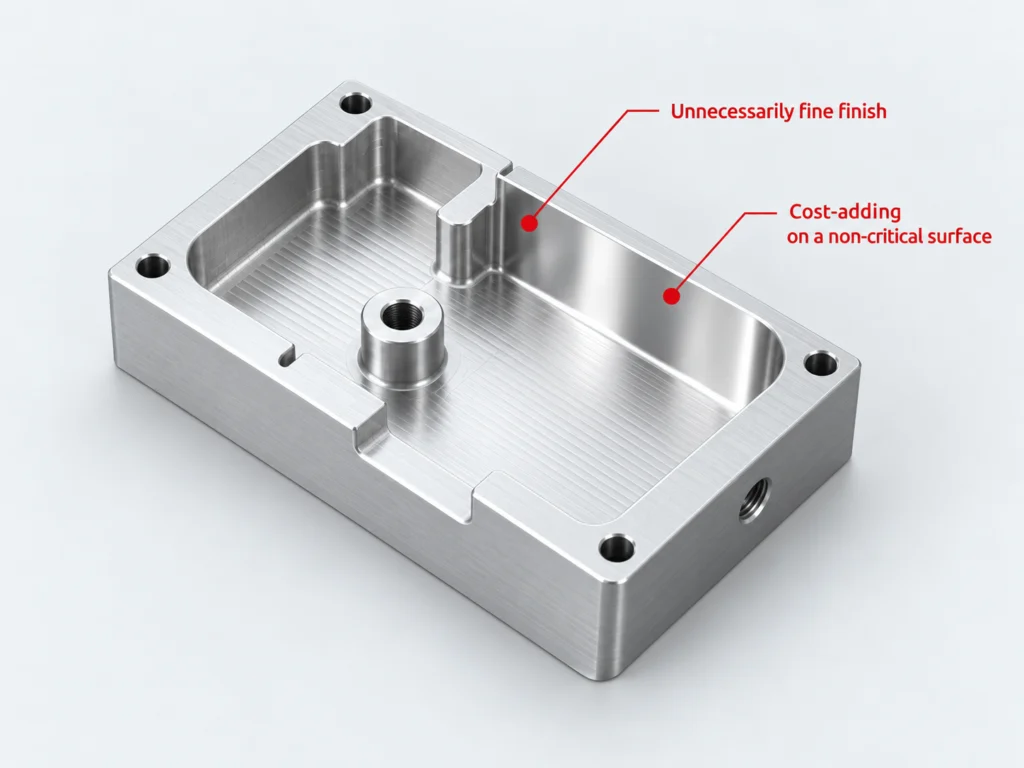
CNC machined part showing unnecessarily fine surface finish on non-critical areas

Unnecessarily Fine Finish

Avoid specifying very fine finishes on surfaces that do not affect function or appearance.
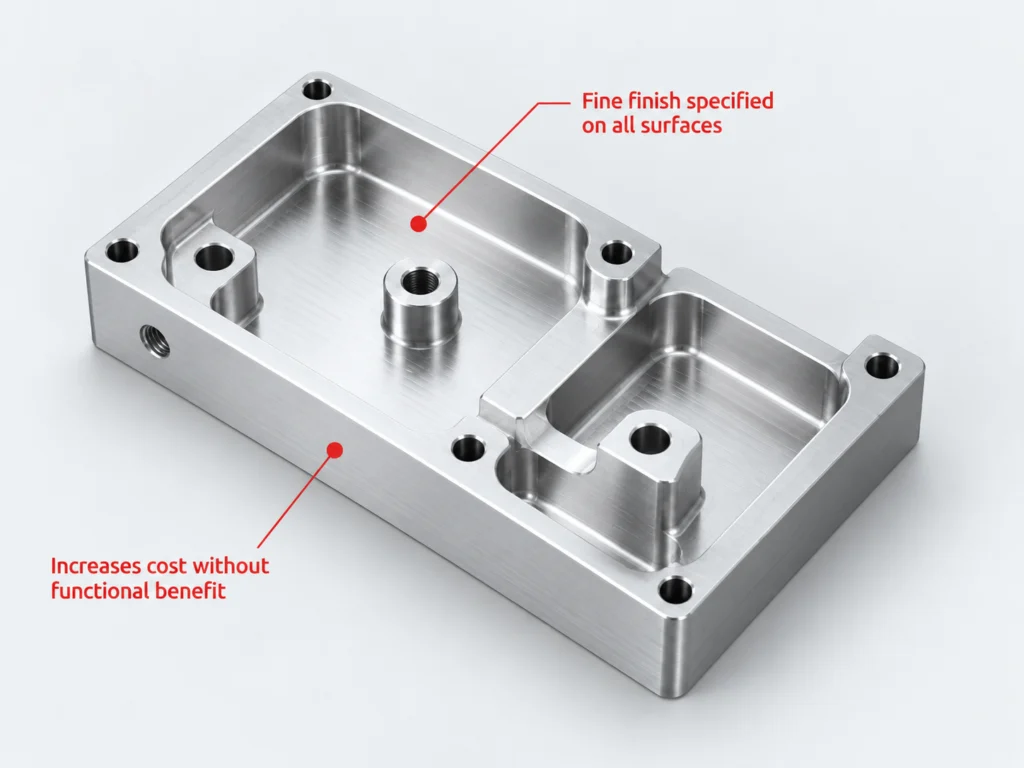
CNC machined part with fine surface finish specified across all surfaces

Fine Finish Everywhere

Requiring a fine finish on every surface adds machining and inspection cost without functional benefit.

Need a Surface Finish Design Review?

Send us your drawings or CAD files for a DFM review. We can assess surface roughness requirements, functional surfaces, cosmetic expectations, and secondary finishing considerations before production.
FAQ

Surface Finish FAQs

Common questions about CNC surface roughness, machining marks, functional finishes, and secondary finishing processes.

A standard as-machined finish is suitable for many CNC machined parts. Achievable surface roughness depends on the material, tooling, cutting parameters, feature geometry, and machining process.

Finer surface finishes are typically specified for sealing surfaces, sliding or bearing areas, precision mating features, or surfaces with specific cosmetic requirements.

Yes. Finer finishes may require additional finishing passes, smaller stepovers, slower cutting conditions, tighter process control, and additional inspection, which can increase cost and lead time.

No. Surface roughness describes the microscopic texture of a surface, while cosmetic appearance can also depend on machining direction, tool marks, blasting, polishing, anodizing, plating, and other secondary processes.

Usually not. Surface finish requirements should be applied only where they affect function, sealing, wear, fit, or appearance. Non-critical surfaces can generally use a standard machined finish.