The Bore Looked Machined, but the Bearing Failed Early
Turbocharger bearing bore roughness can affect far more than appearance.
In a high-speed turbocharger, the shaft and bearing surfaces are intended to operate with a thin pressurized oil film between them. Under stable conditions, that film separates the moving surfaces, carries load, removes heat, and provides damping to the rotating assembly.
When the bore surface is excessively rough, its microscopic peaks can intrude into the available oil-film thickness. Instead of continuous fluid separation, the system can enter mixed lubrication or local metal-to-metal contact. The result may be higher friction, heat, scoring, vibration, and reduced bearing life.
The Oil Film Is Extremely Sensitive
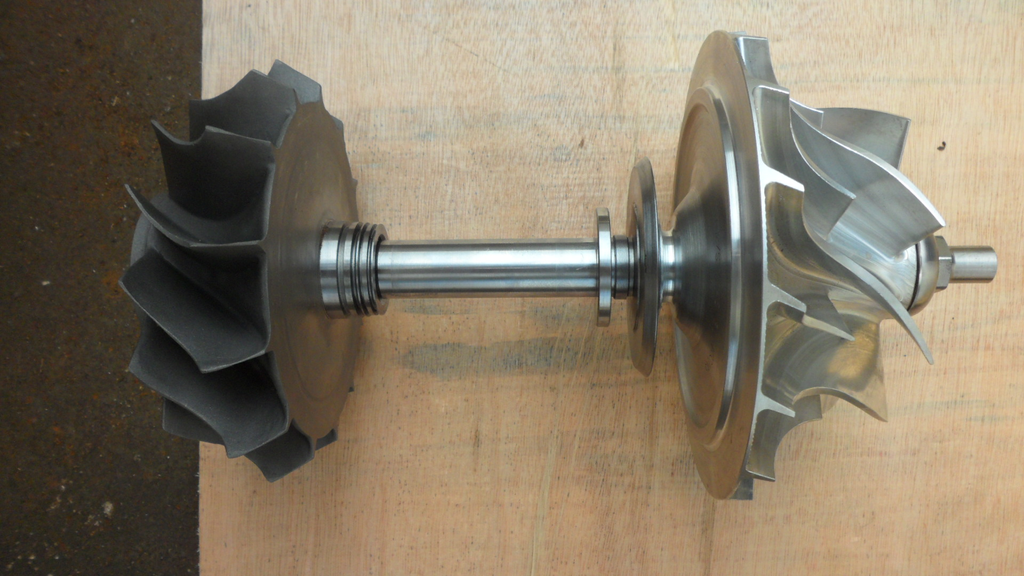
A turbocharger shaft rotates at very high speed and experiences rapid temperature changes. Bearing clearance, oil viscosity, supply pressure, shaft speed, load, and component geometry all influence the oil film.
Surface condition is part of that system.
A bore with deep machining marks, torn material, embedded debris, or sharp asperities disrupts the lubricant film locally. Those high points concentrate contact load and can damage the mating journal or floating bearing surface during start-up, shut-down, or low-film operating conditions.
The risk is not limited to immediate seizure. Progressive wear can enlarge clearance, reduce damping, and contribute to rotor instability or abnormal noise.
Roughness Is Not the Only Surface Requirement
An Ra value alone does not fully describe a functional bearing bore.
Two bores can show a similar average roughness but perform differently if one has deep scratches, periodic tool marks, chatter, waviness, or isolated pits. The direction of the surface pattern also matters. A machining pattern that channels oil or creates repeating pressure disturbances may affect bearing behavior differently from a controlled finish.
For critical turbocharger parts, review:
- Ra and, where specified, Rz or other peak-related parameters
- Waviness and chatter marks
- Bore roundness, taper, and cylindricity
- Bore straightness and alignment with related features
- Burrs at oil-feed holes and groove edges
- Cleanliness after honing, grinding, or washing
A smooth bore with poor geometry can still create an unstable clearance. Surface finish and bore form must be evaluated together.
Check the Entire Lubrication Path
Do not blame roughness before confirming oil delivery.
Contaminated oil, blocked feed holes, insufficient oil pressure, incorrect viscosity, aeration, poor drainage, or excessive operating temperature can also reduce film thickness. Oil debris is especially dangerous because it can score the bearing surface and change the clearance after the part enters service.
Inspect the oil inlet, grooves, cross-drilled passages, and exit path. Remove every burr and confirm that cleaning has eliminated abrasive residue before assembly.
Correct the Bore with a Controlled Process
If the bore is rough but there is adequate stock and geometry can be retained, qualified honing or fine finishing may be appropriate. The process must improve the surface without opening the bore beyond its functional clearance limit.
If scoring, chatter, taper, or out-of-roundness is significant, simple polishing may hide the visual defect while leaving the true functional problem unchanged. Re-machining, sleeving, or replacement may be required, depending on the material, wall thickness, and approved repair procedure.
Always inspect the bore after the final finishing process—not only after rough machining.
Conclusion
Excessive bore roughness can prevent a turbocharger bearing from maintaining a stable oil film. But roughness is only one part of the diagnosis.
Control the finished surface, bore geometry, clearance, cleanliness, and oil path as one system. That is what protects the film at operating speed.