Project Overview
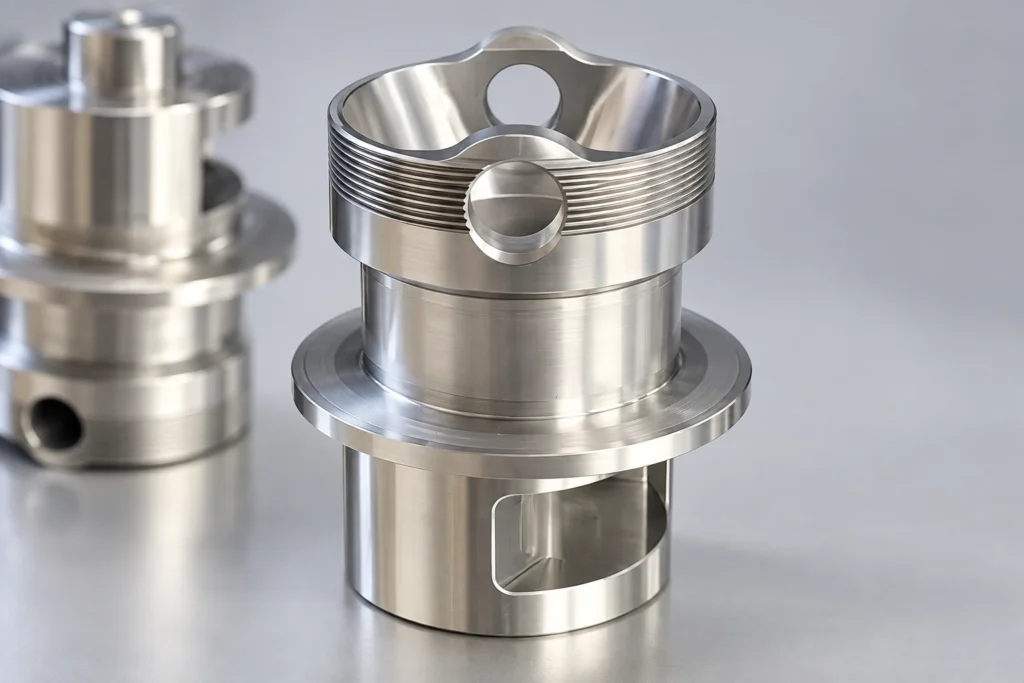
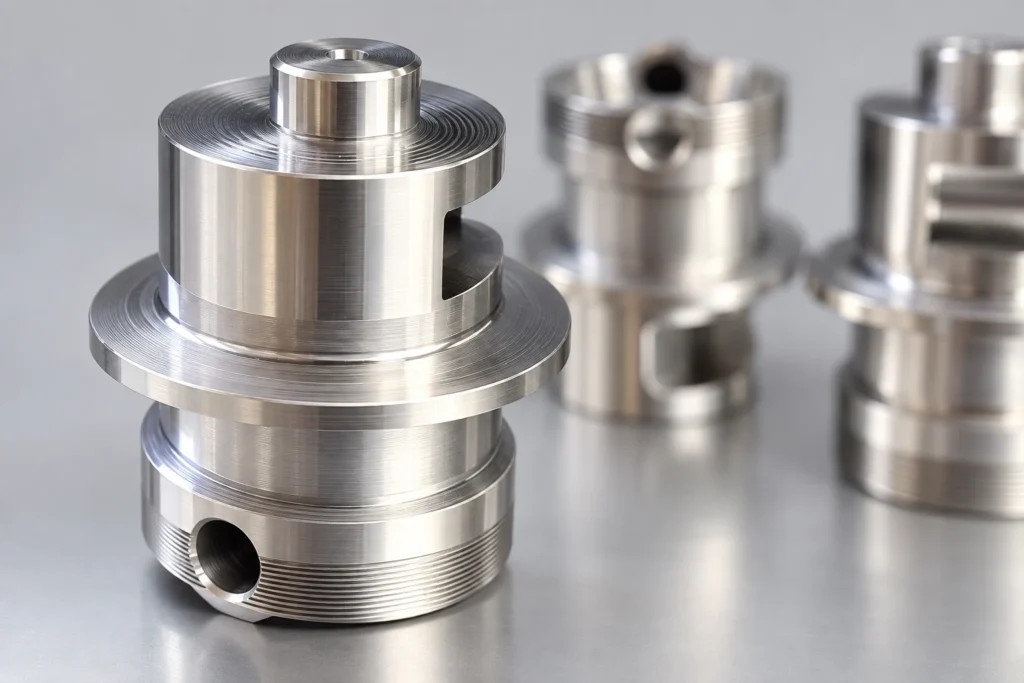
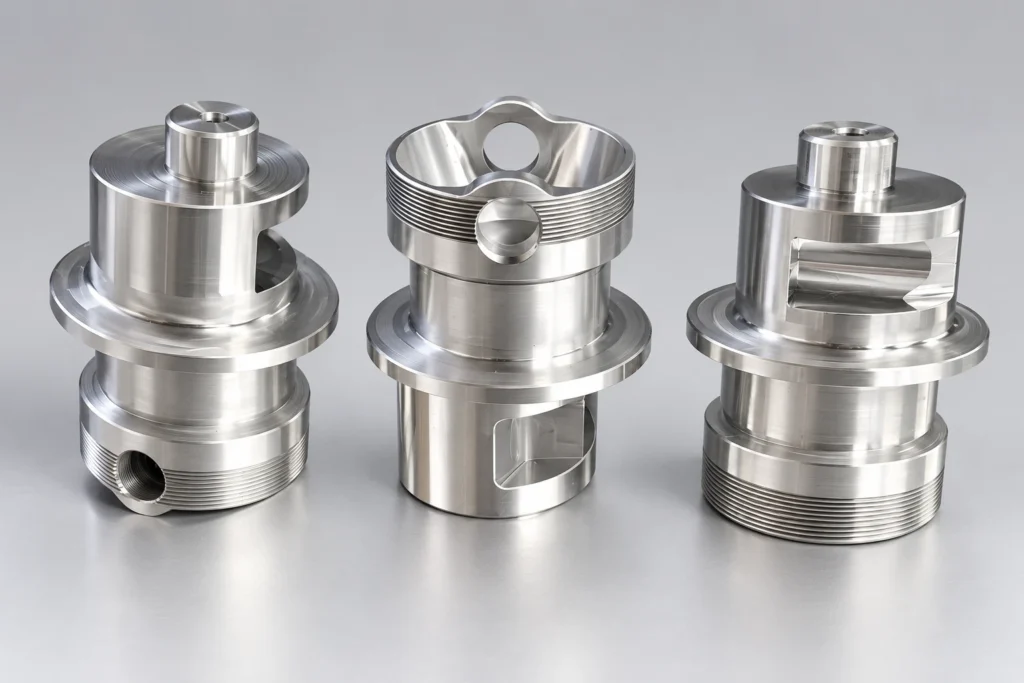
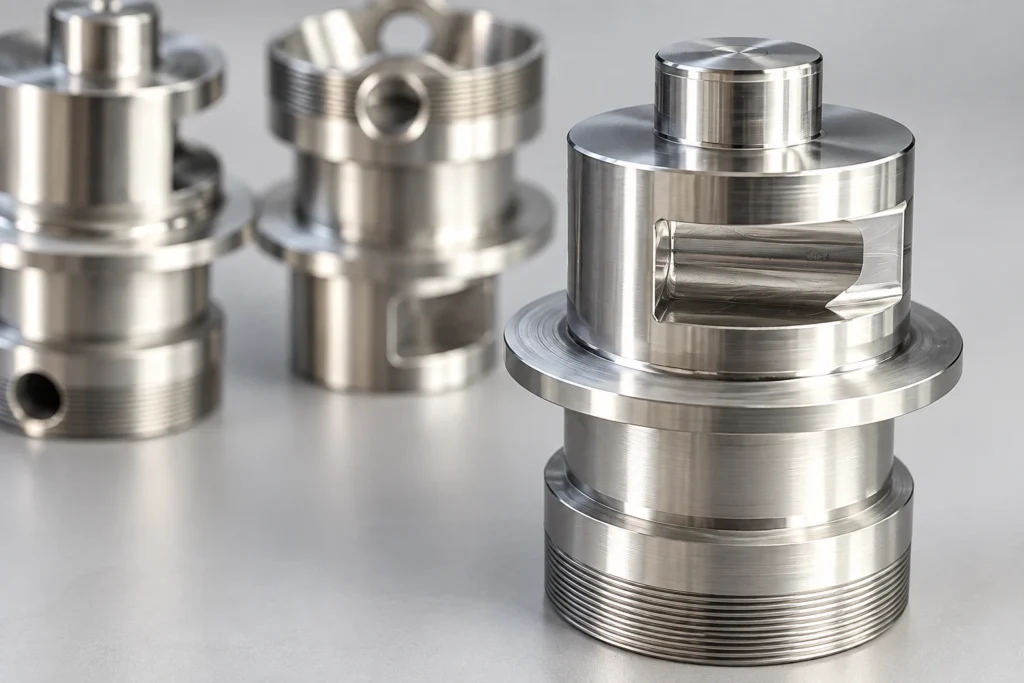
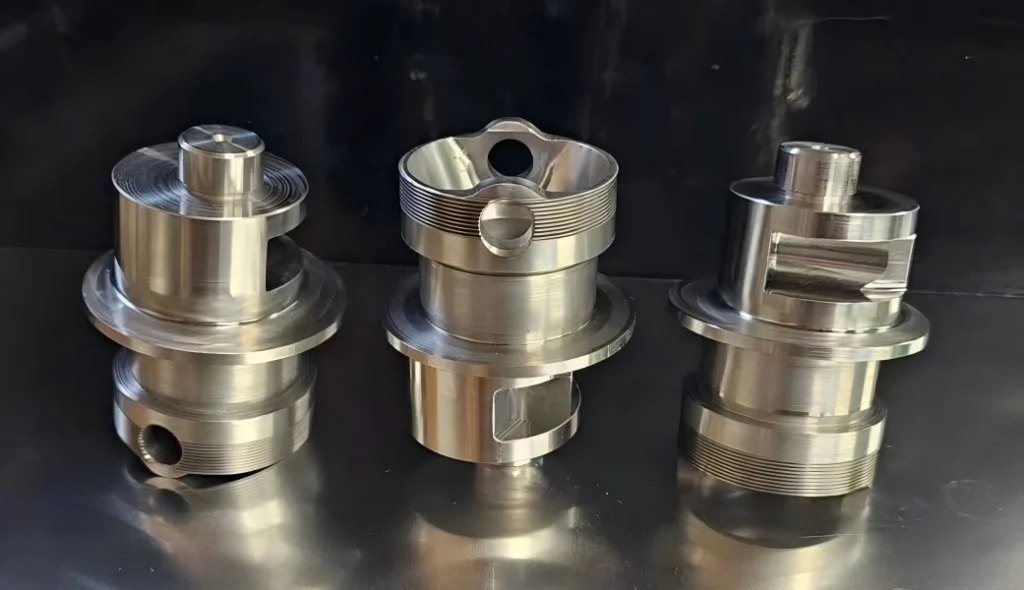
This project involved precision CNC machining of complex 7075 aluminum turn-mill components featuring external threads, cross holes, milled openings, stepped diameters, and contoured profiles.
The combination of turned and milled features required careful control of datum relationships, part rigidity, and machining sequence to maintain dimensional consistency.
Machining Challenges
The main challenge was maintaining alignment between turned and milled features while controlling rigidity and surface quality throughout machining.
Key machining considerations included:
- External threads and stepped cylindrical diameters
- Cross holes and openings positioned relative to turned features
- Accurate positioning of complex milled profiles
- Maintaining rigidity during asymmetric machining
- Controlling tool marks on visible surfaces
Our Solution
The main cylindrical geometry and reference surfaces were established through precision CNC turning before the secondary milled features were produced.
CNC milling was then used for cross holes, openings, slots, and contoured profiles. The machining sequence and workholding were planned to preserve stable datums and minimize unnecessary repositioning.
- Precision CNC turning for cylindrical and threaded features
- CNC milling for cross holes and complex profiles
- Controlled datum transfer between operations
- Optimized roughing and finishing sequence
- In-process verification of critical dimensions
Inspection & Quality Control
Inspection focused on critical diameters, thread quality, cross-hole positions, milled features, and overall surface condition. Finished parts were also visually checked before shipment.
- Critical diameter inspection
- Thread inspection
- Cross-hole and opening position verification
- Feature alignment checks
- Visual inspection of machined surfaces
Results
The completed 7075 aluminum turn-mill components achieved consistent geometry across the turned diameters, external threads, cross features, and milled openings.
Careful datum control and machining sequence planning helped maintain the relationship between turned and milled features while reducing unnecessary repositioning.
The finished parts showed clean machined surfaces, well-defined features, and consistent geometry suitable for final assembly.