Start With Manufacturing Risk
Split a complex one-piece part when its integrated geometry creates more manufacturing risk than functional value.
Deep cavities, inaccessible holes, thin connecting sections, and features facing several directions may require long tools, special fixtures, and repeated setups. These requirements can quickly increase machining cost and lead time.
Before keeping everything in one component, compare the benefits of an integrated structure with the machining, inspection, material, and rejection costs it creates.
Read the Manufacturing Signals
The following conditions suggest that separation should be evaluated:
| Design Condition | Possible Benefit of Splitting |
|---|---|
| Features require many setups | Simpler positioning and inspection |
| Deep areas have poor tool access | Shorter, more rigid cutting tools |
| Most of the stock becomes scrap | Smaller blanks and less material waste |
| Different areas need different materials | Material can match each function |
| One small feature changes frequently | Only one component needs redesign |
| A local defect rejects the whole part | Lower replacement cost |
One warning sign does not automatically justify a split. The decision should consider total production cost, not machining cost alone.
Compare Machining Risk With Assembly Risk
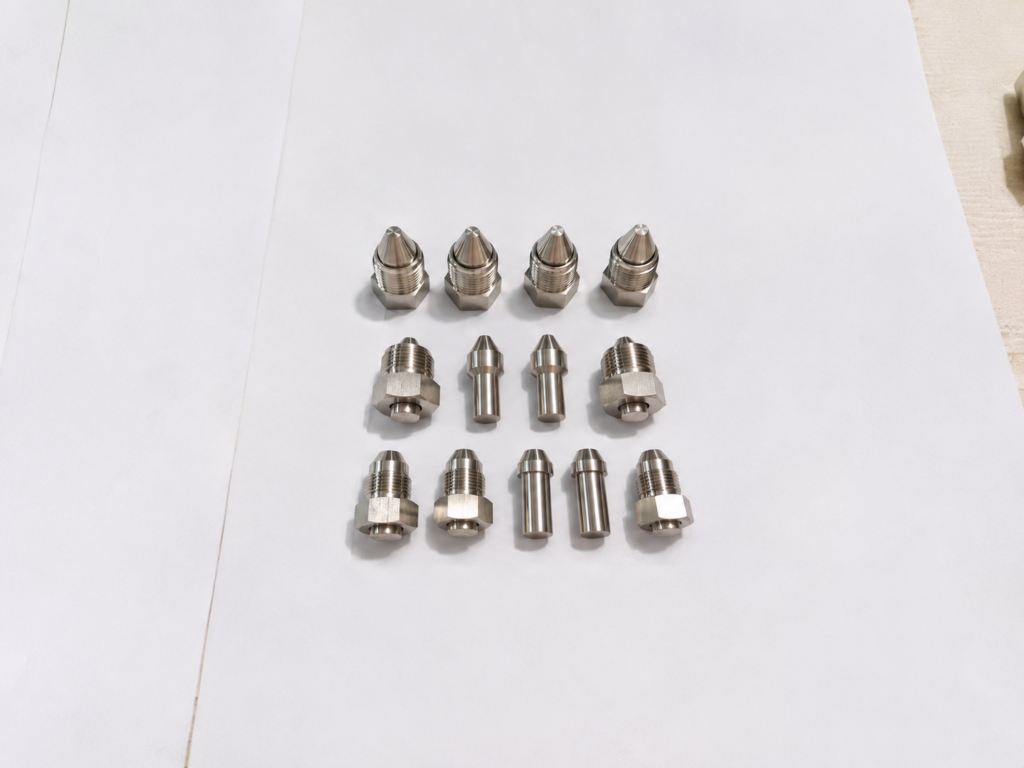
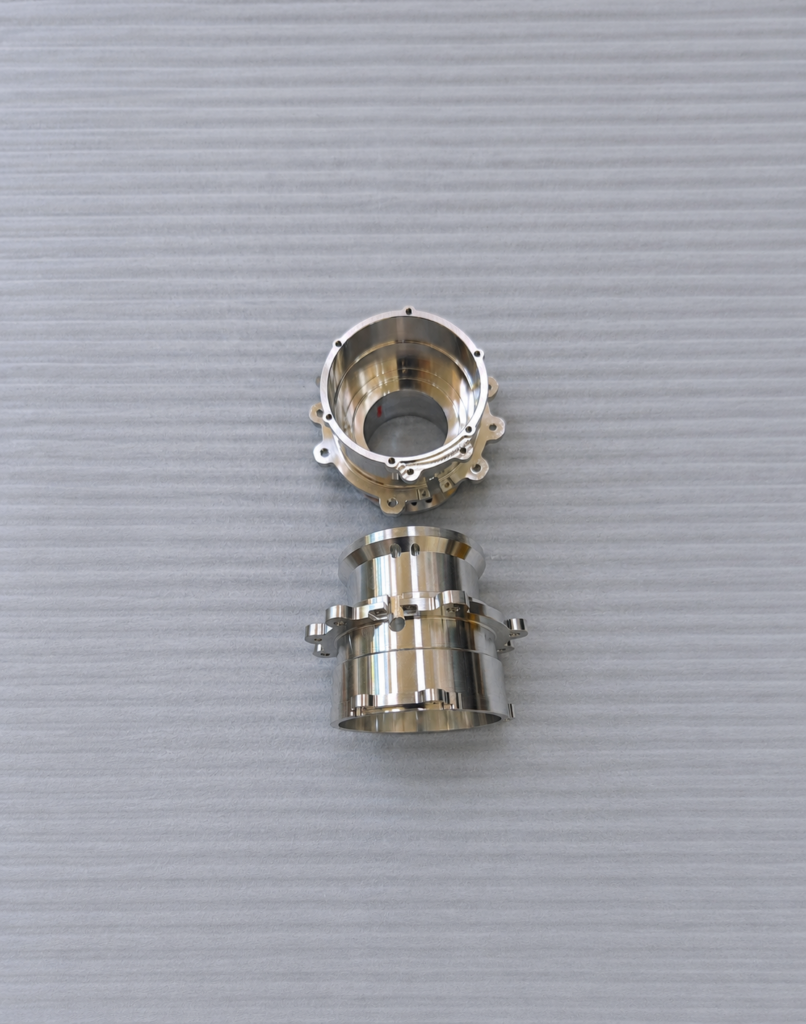
Separating the part can improve tool access and reduce deformation. Each component may also require less complex workholding and fewer five-axis operations.
However, the new interfaces introduce other requirements. Location features, fasteners, welds, pins, or adhesives may be needed. These connections can create tolerance accumulation, alignment error, leakage, or reduced stiffness.
A one-piece design is usually preferable when continuous strength, sealing, electrical continuity, or highly accurate feature relationships are essential.
Design the Joint Around Function
If the part is divided, the joint should be placed away from highly loaded, sealing, or precision reference areas. The connection must control movement without depending only on screw clearance.
Locating pins, shoulders, steps, or fitted surfaces can establish repeatable alignment. Screws should mainly provide clamping force.
The tolerance chain must also be recalculated. Dimensions that were controlled within one machining setup may now depend on two manufactured parts and their assembly interface.

Make the Decision Using Total Cost
Splitting is most valuable when it replaces difficult machining with straightforward machining and a reliable assembly.
The comparison should include raw material, machining time, fixtures, inspection, purchased hardware, assembly labor, maintenance, and rejection risk. For low-volume prototypes, a one-piece part may avoid unnecessary assembly development. For repeated production, a modular design may deliver greater savings.
Conclusion
A complex part should be separated when tool access, material waste, setup count, deformation risk, or future design changes make the one-piece version inefficient.
The best design is not always the one with the fewest components. It is the design that meets functional requirements with the lowest overall manufacturing and assembly risk.