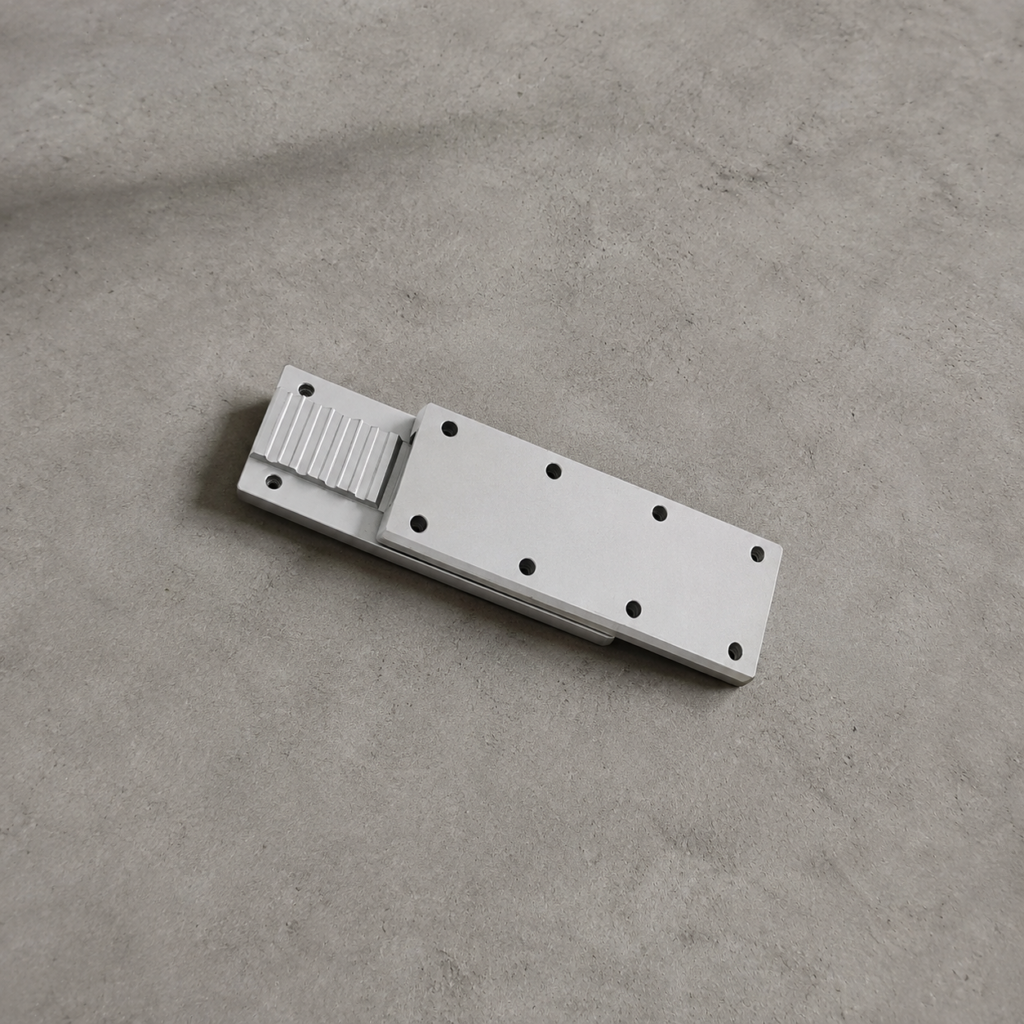
Precision machining quality control is essential for custom retainer plates because these simple-looking components often determine how securely an assembly is held, positioned, and serviced. A retainer plate may locate a bearing, clamp a cover, secure a sensor, retain a seal, or hold another component against a reference face.
For non-standard designs, the plate is made around a specific mounting space, hole pattern, contact surface, and clamping requirement. Its performance depends on more than its outside profile.
Functional Features of a Custom Retainer Plate
The critical requirements should be linked to the plate’s assembly function. Common features include:
- Mounting-hole position
- Clearance-hole diameter
- Threaded-hole depth
- Flatness of the contact face
- Thickness at the clamping area
- Counterbore or countersink geometry
- Distance between locating features
- Burr-free edges around holes and slots
If hole positions shift or the contact face is uneven, fasteners may introduce side load, uneven pressure, or poor alignment. The assembly may still be tightened, but its retained component may not sit in the intended position.
Apply Tight Tolerances Where They Matter
Not all features need the same tolerance. A non-functional outer contour may allow a normal machining tolerance, while locating holes, bearing-contact faces, or sealing interfaces may need closer control.
The datum system should reflect the real assembly. For example, if a custom retainer plate locates from a bore and a mounting face, inspection should reference those features rather than an arbitrary outer edge.
This approach helps prevent a part from passing individual dimensions while creating fit problems during installation.
Process Planning for Stable Results
Precision machining quality control begins before the first cutting operation. Material type, plate thickness, clamping method, and finish requirements should be considered during process planning.
Thin plates can distort during machining or when fasteners are tightened. Parts with deep counterbores, closely spaced holes, or narrow bridges may also require a controlled cutting sequence to protect flatness.
A stable machining process may include:
- Machining the primary reference face first
- Finishing critical holes from the same datum setup
- Using suitable support during clamping
- Controlling burrs before final inspection
- Allowing for anodizing, plating, or other surface finishes when required
For parts with a sealing or bearing-retention function, surface condition is as important as the nominal dimensions.
Inspection Should Reflect Assembly Requirements
Inspection should verify the characteristics that control actual fit and clamping. Depending on the drawing, this can include CMM measurement, caliper and height-gauge checks, thread gauges, surface-plate inspection, and functional assembly checks.
The inspection record should confirm hole location, plate thickness, flatness, counterbore depth, and critical relationships to the specified datums. For repeat orders, first-article verification and in-process checks help maintain consistency across batches.
Built for the Real Interface
Custom retainer plates are often small components with an important job: keep other parts located and secured as intended. Through precision machining quality control, critical interfaces can be held consistently while avoiding unnecessary tolerance on non-functional features.
The result is a non-standard retainer plate that installs correctly, clamps evenly, and supports a dependable final assembly.