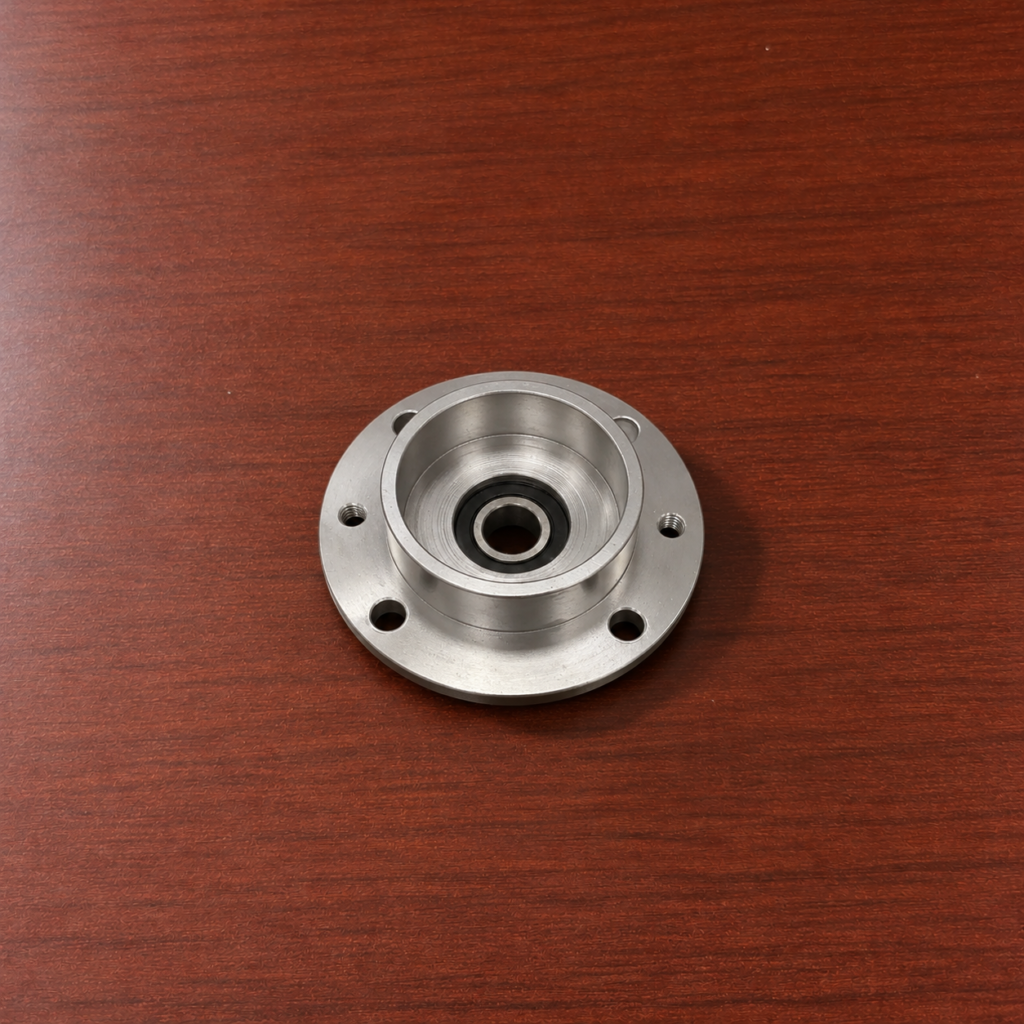
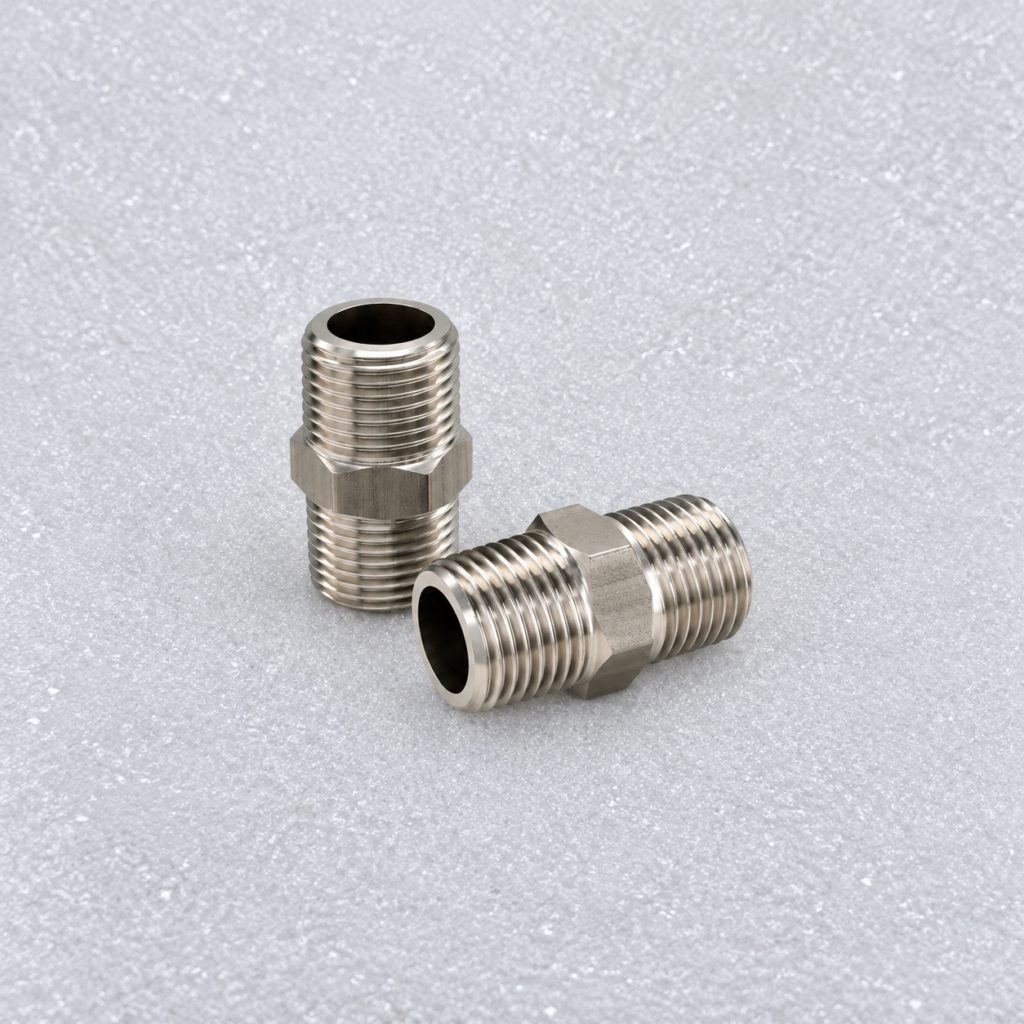
Pipe fitting CNC machining transforms bar stock or a prepared blank into a component that joins fluid or pneumatic lines. A fitting may appear small, but its bore, sealing face and threads must function as one connected feature chain.
The process is usually arranged around the main flow axis. Turning establishes the body, drilling opens the passage, and threading completes the connection.
What Should Be Machined First?
The first setup begins with facing the blank. This creates the reference surface used to control the overall length and the position of the connection end.
The external body is then rough turned. Cylindrical sections, hexagonal tool areas and stepped diameters are formed according to the fitting design. If a wrench flat is required, it can be milled later with live tooling or in a secondary setup.
Finishing the important outside diameters early provides reliable surfaces for subsequent holding and repositioning.
How Is the Flow Bore Created?
A center drill starts the hole on the spindle axis and prevents the following drill from moving away from the intended position. The main passage is then drilled to its programmed depth.
For a through-bore, the tool can pass completely through the fitting. Blind passages require closer control because chips must leave through the same opening used by the drill.
If the connection requires a stepped internal profile, drilling removes the central stock before boring enlarges selected sections. A reamer may be used when the bore must guide a mating tube or internal component.
Where Does the Seal Contact?
The sealing feature is machined after the bore has established the fluid path. Depending on the fitting design, this area may be a flat face, internal cone, external cone or recessed seat.
A profiling tool forms the sealing geometry relative to the bore axis. Machining both features in the same setup limits positional differences between the passage and the contact surface.
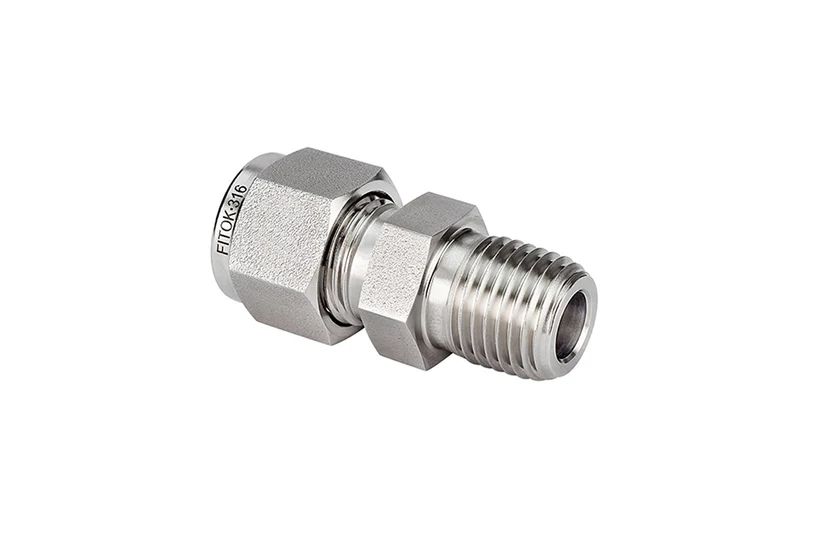
Sharp transitions are avoided where they could interfere with assembly. However, edge breaks must remain small enough to preserve the intended sealing area.
When Is the Thread Produced?
External threads are commonly cut after the outside diameter and thread relief have been completed. The threading tool follows repeated passes until the required profile is reached.
Internal threads begin with a drilled or bored minor diameter. They may be produced by tapping or single-point threading, depending on the thread size, depth and production requirements.
Coolant and chip evacuation are particularly important for blind internal threads. Chips trapped at the bottom can damage the tool before the thread reaches full depth.
How Are Side Connections Added?
Elbow, tee and multi-port fittings require holes that enter from more than one direction. After the main axis is complete, the part is indexed so each side port can be spot drilled, drilled and threaded.
Turn-mill equipment can perform these operations without transferring the component to another machine. When a second setup is necessary, finished diameters or faces provide the locating reference.
At the passage intersection, the drilling sequence should help chips escape through the larger opening. Accessible edges are deburred before the fitting is cleaned.
Effective pipe fitting CNC machining maintains a clear relationship between the flow bore, sealing geometry and every threaded connection from the first setup to the final port.