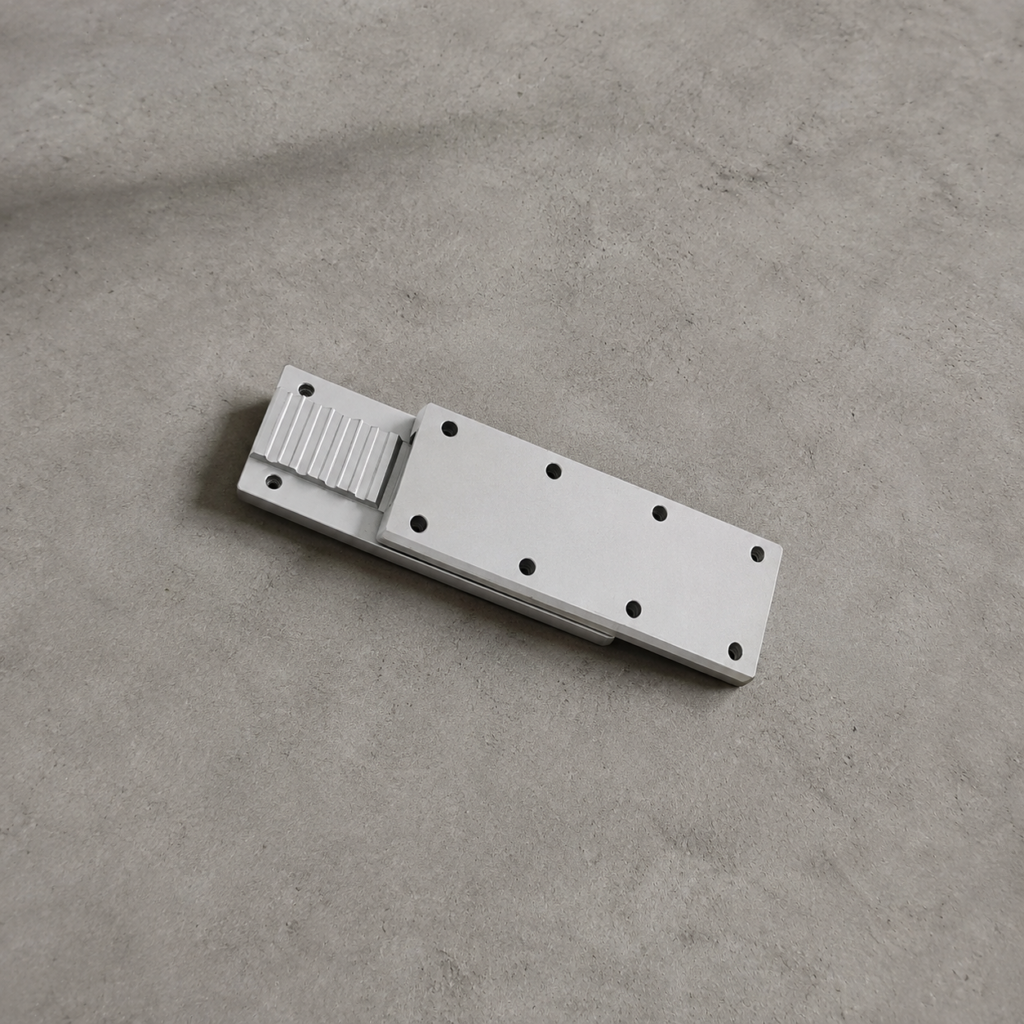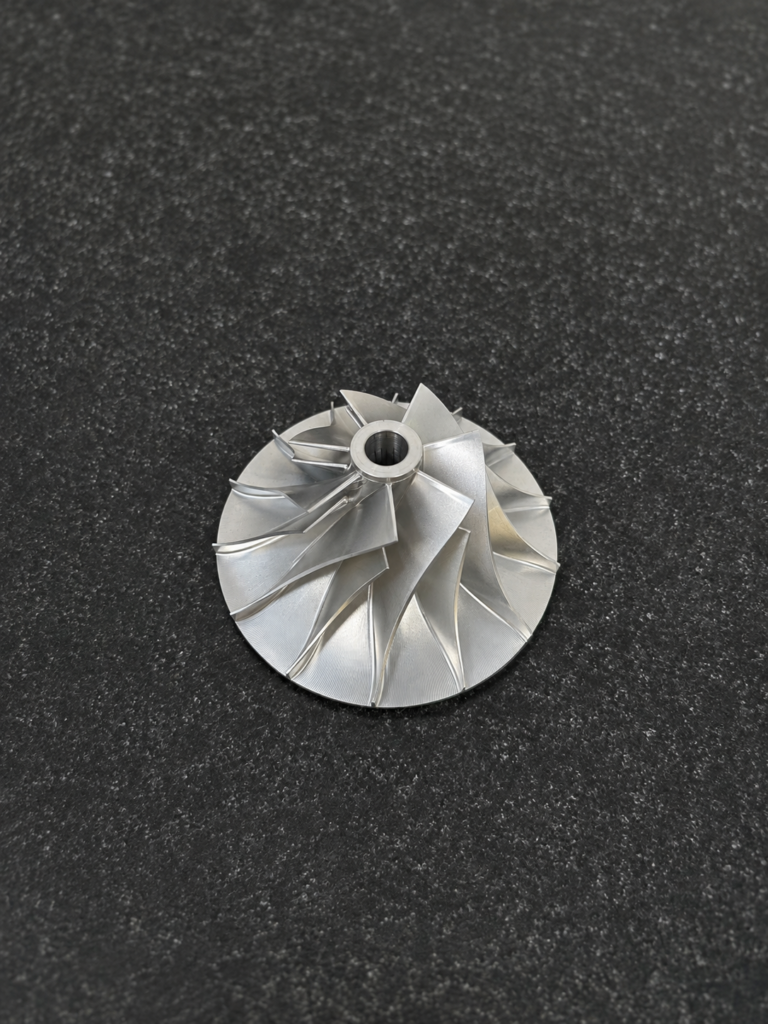
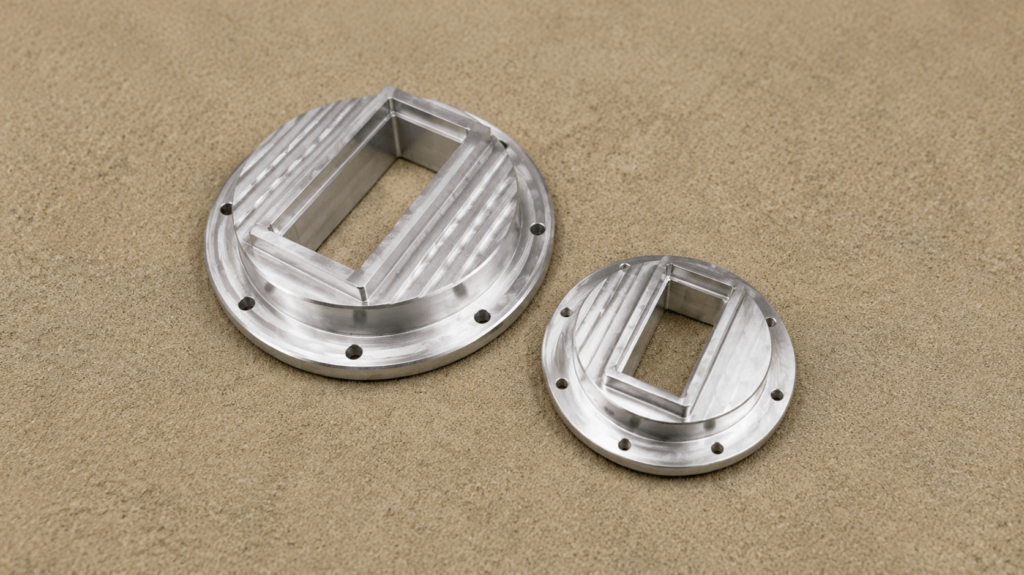
High accuracy CNC machining for tight tolerances is essential for radar waveguide flanges because the flange locates a hollow RF path as well as its mounting hardware. A small error at the interface can affect how two waveguide sections mate, how consistently they are assembled, and how reliably the radar system performs after installation.
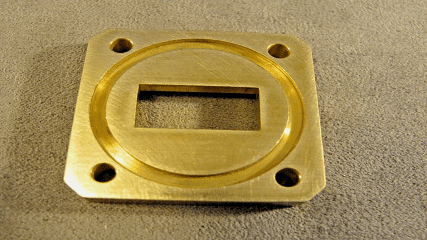
Unlike a general mounting plate, a radar waveguide flange must bring together the waveguide aperture, mating face, alignment features, and fastener pattern as one controlled interface.
A Waveguide Flange Is Part of the RF Path
A radar waveguide carries electromagnetic energy through a defined internal channel. At every flange joint, the mating waveguide apertures must meet in the intended position and orientation.
If the bore is offset, the flange face is distorted, or the alignment features do not accurately locate the mating component, the joint may create an unwanted discontinuity. Depending on the design and operating band, this can contribute to signal reflection, leakage, reduced repeatability, or more difficult system calibration.
That is why radar waveguide flanges should be machined from RF-critical datums—not simply from outside edges or bolt-hole centers.
Which Features Need Tight Control?
The drawing and applicable flange standard determine the actual requirements, but critical features commonly include:
- Waveguide aperture width, height, or diameter
- Aperture position relative to the alignment datum
- Flange-face flatness and surface condition
- Perpendicularity between the waveguide passage and mating face
- True position of precision alignment holes
- Bolt-hole pattern position and clearance
- Deburring of internal edges and contact surfaces
For a precision interface, a component can appear dimensionally acceptable while still creating a poor assembly if the relationship between these features is not controlled.
Hole Position Alone Does Not Guarantee Alignment
Fastener holes clamp two radar waveguide flanges together, but they do not necessarily establish the final RF alignment. Clearance is often needed for assembly, which means bolt holes alone can permit small positional variation.
Precision alignment holes, locating pins, or pilots provide the more repeatable locating function. Their position must be controlled relative to the waveguide aperture and flange face. If the holes are accurate only in relation to the outside profile, the mating bores can still be misaligned.
A reliable machining plan therefore treats the aperture, alignment holes, and sealing face as a functional feature group.
Machine From the RF Datums
High accuracy CNC machining for tight tolerances begins with a datum strategy that reflects actual assembly behavior. Whenever practical, the waveguide aperture and mating face should be finished in a controlled setup, followed by precision drilling or reaming of the locating features from the same reference system.
This approach helps reduce stack-up caused by repeated part flips, fixture variation, or separate operations. It also supports consistent relationships between the internal passage and the flange face.
Material choice and stress relief matter as well. Thin flanges or parts machined from stressed stock can move after roughing, so rough and finish operations should be planned to protect final flatness and geometry.
Verify the Mating Interface, Not Just Individual Dimensions
Inspection should confirm more than outside dimensions. A complete quality plan may include CMM verification of aperture location, true position of alignment holes, face flatness, and perpendicularity. Surface inspection and burr checks are equally important because small raised edges can prevent full face contact.
For critical radar assemblies, a controlled mating check and the customer’s specified RF validation can provide additional confidence before release.
Build Repeatability Into Every Flange
Radar waveguide flanges are interface components, not simple brackets. By machining aperture geometry, alignment features, and contact faces from the correct datums, manufacturers can produce parts that assemble consistently and support dependable RF performance.
When the application demands it, high accuracy CNC machining for tight tolerances turns the flange from a potential source of variation into a stable, repeatable part of the radar signal path.