The Components Look Smooth, but They Do Not Seat the Same
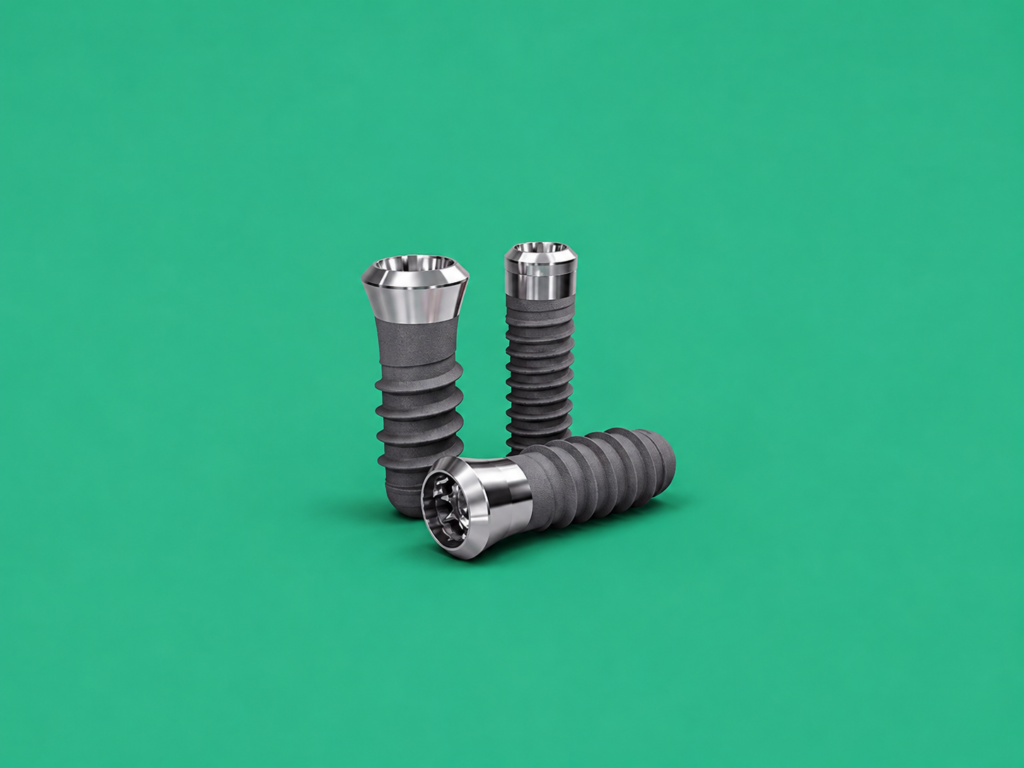
Dental implant taper fit is governed first by taper geometry. Surface roughness is also important, but it cannot correct a cone-angle mismatch, poor roundness, or misalignment between the implant and abutment axes.
A tapered interface is intended to create repeatable seating and controlled contact when the compatible abutment is assembled. If one component is slightly too steep, too shallow, oval, or off-axis, the contact may concentrate near one end of the cone instead of distributing across the intended interface.
The parts may still assemble. They may even feel secure. But the actual contact pattern, seating depth, removal force, and microgap can become inconsistent.
Why Taper Geometry Comes First
The taper angle determines where and how the two conical surfaces contact. It establishes the basic wedge relationship that produces frictional retention and supports the connection under loading.
For manufacturing control, taper cannot be reduced to a single angle value. The functional geometry includes:
- Cone angle
- Straightness of the conical generator
- Roundness at multiple sections
- Coaxiality to the implant or abutment datum
- Taper length and seating depth
- Edge condition at the start and end of the cone
If these features are not controlled as a system, a smooth surface may still produce line contact, uneven contact pressure, or unstable seating.
What Surface Roughness Actually Controls
Once the cone geometry is correct, surface condition influences how the mating surfaces slide, seat, and resist relative movement.
Excessive roughness can increase insertion friction, create localized high points, and promote surface damage during repeated assembly. A surface that is too smooth may also behave differently from the validated interface, particularly where friction and contact-area development are part of the design intent.
Roughness must therefore be controlled, but with the specified parameter, measurement direction, cutoff, and sampling location. A general “polished” requirement is not enough.
Also separate the taper interface from the implant’s bone-contact surface. Roughness that is intentionally designed for osseointegration is not automatically appropriate for the internal implant–abutment cone.
Do Not Inspect the Implant and Abutment Separately Only
A taper may meet its individual geometric requirements while the paired connection shows inconsistent seating. Material condition, coating, cleaning residues, machining marks, and dimensional variation on both components can influence the assembled result.

Use the validated compatible pair for functional verification. Depending on the design record, this may include:
- Seating-height or insertion-depth consistency
- Assembly and removal force or torque
- Contact-pattern evaluation
- Microgap measurement
- Cyclic-load performance
- Surface-condition inspection after assembly
The acceptance method must reflect the specific implant system. One manufacturer’s taper angle, roughness range, and assembly force are not transferable to another system.
The Practical Answer
For a dental implant taper interface, control taper geometry first. It determines the fundamental fit and contact location.
Then control surface roughness as a supporting requirement that influences friction, seating behavior, wear, and interface repeatability. The strongest quality plan combines geometric inspection with validated assembly testing of the complete implant–abutment pair.