Listen for the Warning
Deep blind hole chip evacuation becomes critical when chips cannot leave through the opposite side of the workpiece. As drilling continues, chips must travel upward through the tool flutes.
A rising spindle load, irregular cutting sound, poor coolant return, or chips packed around the tool may indicate that evacuation is failing. Continuing the cycle can damage the cutting edge, scratch the hole wall, or break the tool inside the part.
Identify What Blocks the Exit
| Warning Sign | Possible Cause |
|---|---|
| Chips wrap around the drill | Cutting parameters produce long chips |
| Spindle load increases with depth | Chips are packed in the flutes |
| Hole wall becomes scratched | Trapped chips are recutting |
| Tool breaks near the bottom | Insufficient chip space or coolant flow |
| Hole diameter changes | Tool deflection or built-up chips |
| Tap fails in the hole | Drilling chips remain before tapping |
The deeper the hole relative to its diameter, the longer and narrower the chip-removal path becomes.
Use a Controlled Peck Cycle
A peck cycle advances the drill in stages and periodically retracts it to release chips. The peck depth should become smaller as the hole becomes deeper or chip evacuation becomes more difficult.
Retraction must be sufficient to clear the flutes. Very short movements may only loosen the chips without removing them from the hole.
Excessive pecking also increases cycle time, so the sequence should match the material, tool geometry, coolant supply, and hole depth.
Match the Tool and Coolant
Deep-hole drills should provide enough flute space for chip flow. Tool coatings and cutting-edge geometry should suit the workpiece material and encourage chips to break into manageable lengths.
Through-tool coolant can reach the cutting edge more effectively than external coolant. However, the hole must still provide a return path for coolant and chips. A large tool shank inside a narrow hole can restrict this flow.
Cutting speed and feed should produce stable chips without overloading the tool. Simply reducing feed too far may create thin, continuous chips that are harder to evacuate.
Leave Space at the Bottom
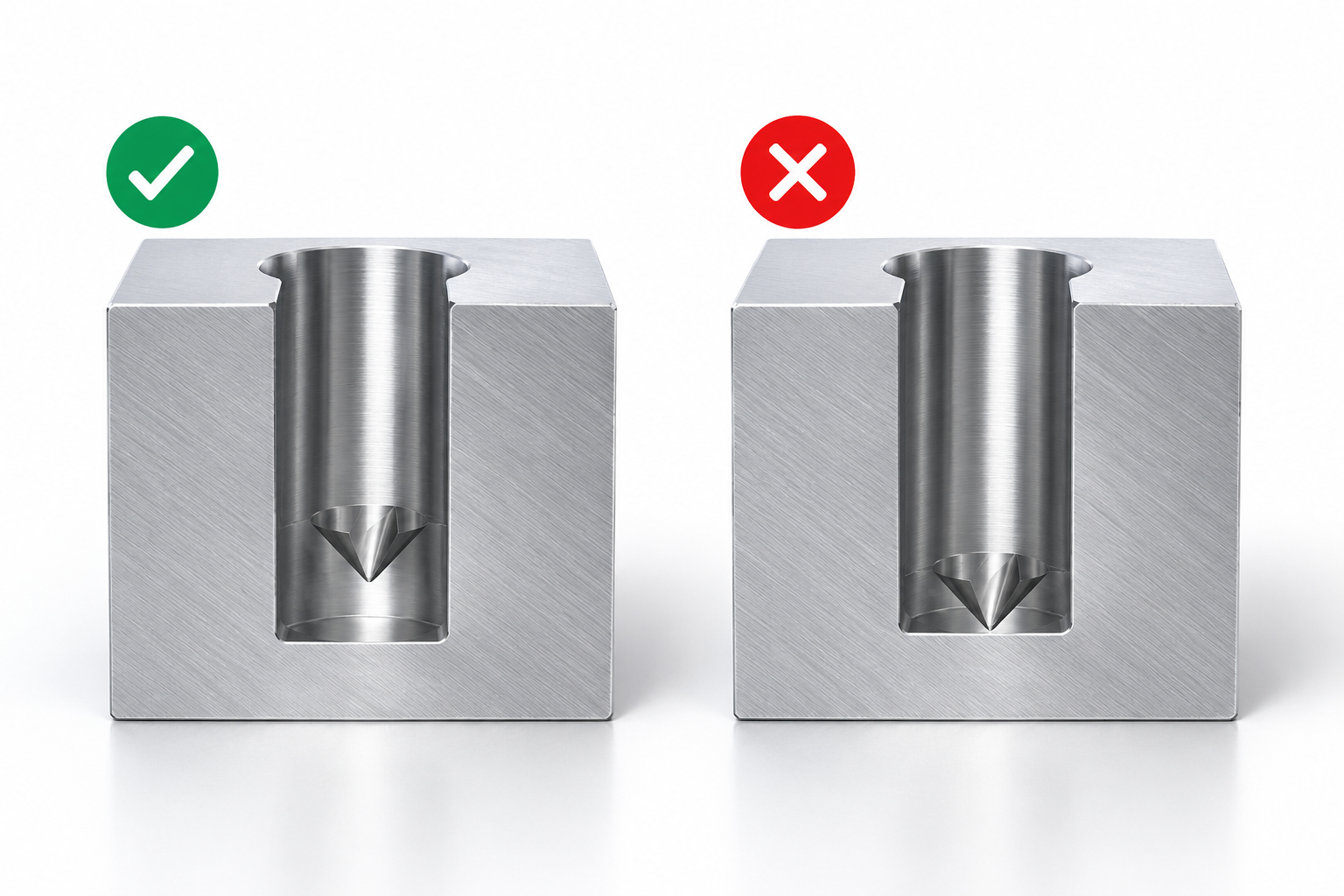
A blind hole must be deeper than its required usable depth. Additional clearance is needed for the drill tip and any chips remaining near the bottom.
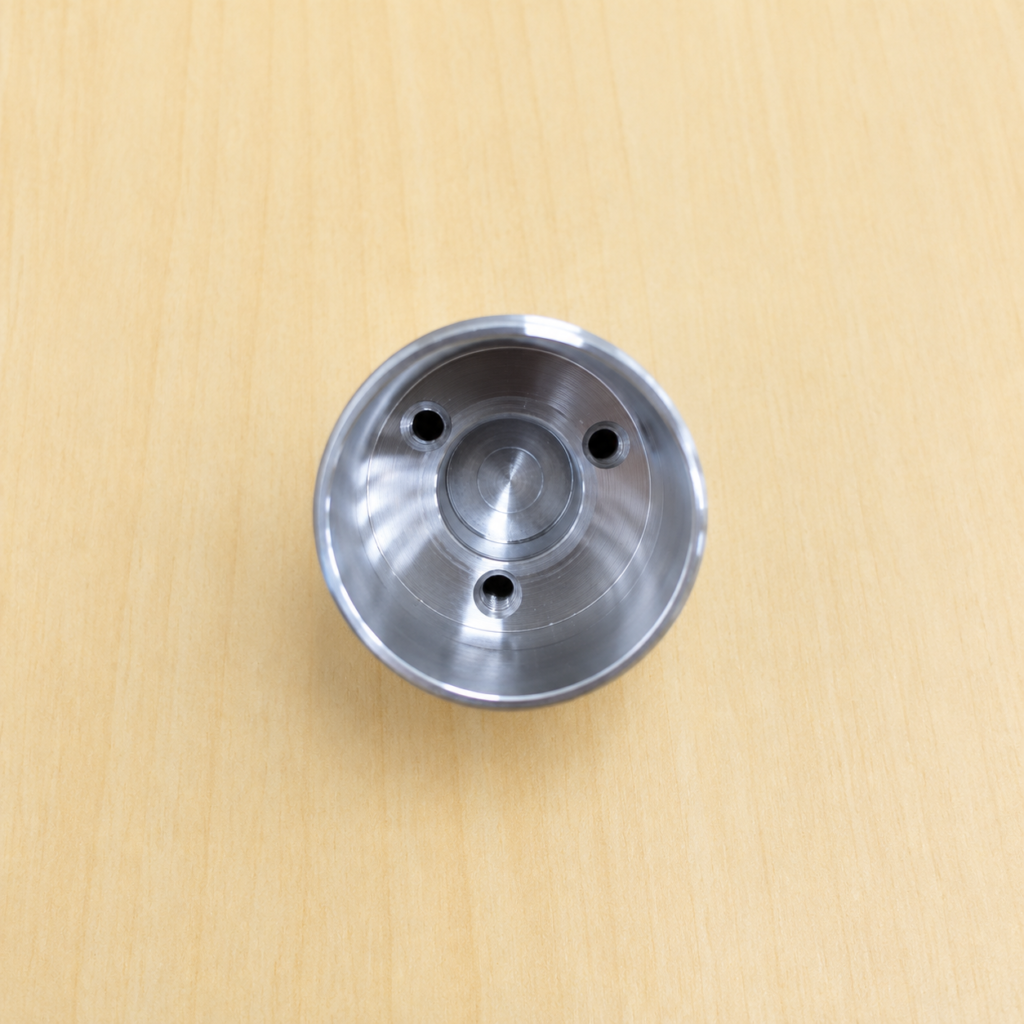
Before tapping or reaming, the hole should be cleaned so that trapped chips are not pushed deeper. Chip accumulation beneath a tap can prevent full depth and may cause tool breakage.
Conclusion
Reliable deep blind hole chip evacuation depends on suitable tool geometry, controlled pecking, effective coolant delivery, stable chip formation, and adequate bottom clearance.
Planning these conditions before machining reduces clogging, protects the tool, and improves hole accuracy and surface quality.