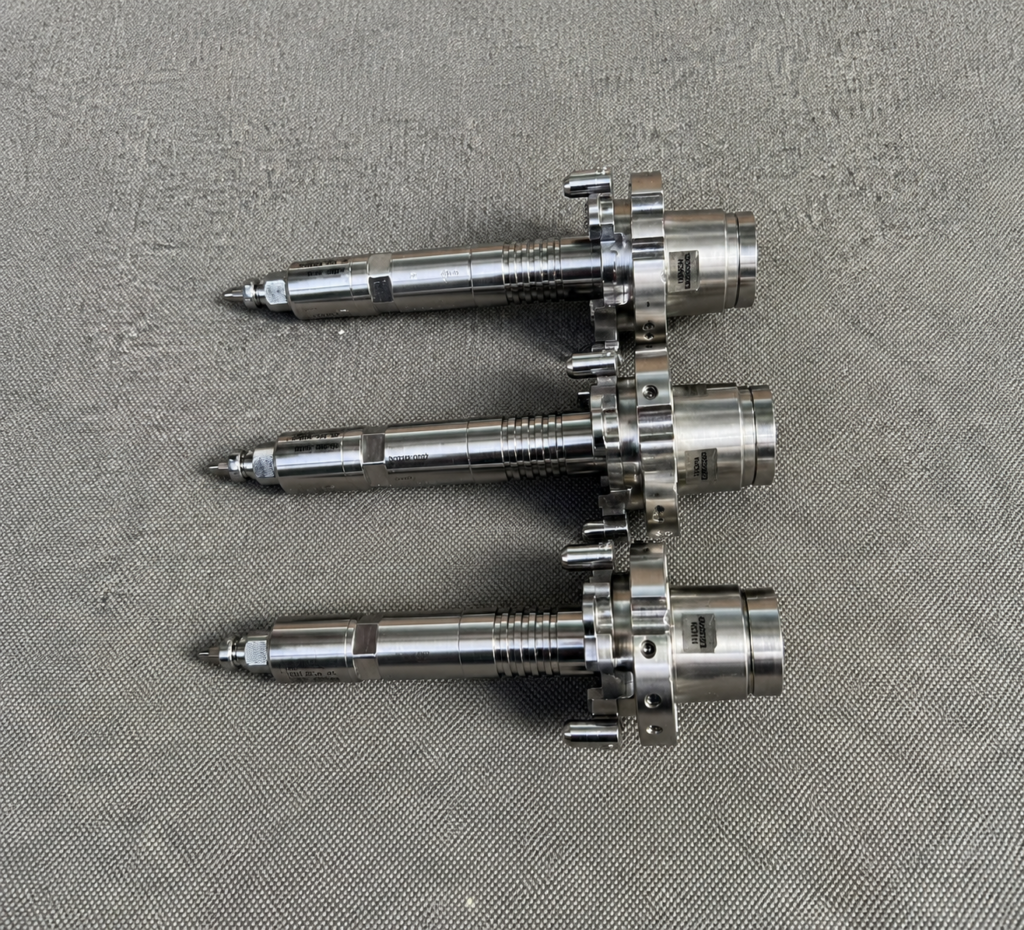
DLC coating for vacuum robot parts can reduce sliding friction, adhesive wear, and dependence on conventional lubricants. It is potentially suitable for shafts, pins, guides, cams, gripper mechanisms, and other moving components inside vacuum-transfer systems.
However, DLC is a family of carbon-based coatings rather than one fixed material. Its suitability depends on vacuum level, contact pressure, counterface material, temperature, particle limits, and the specific DLC structure.
Go: The Part Has Sliding or Fretting Contact
DLC combines high hardness with a relatively low-friction surface. It can prevent metal-to-metal adhesion and reduce scuffing on parts that repeatedly slide, oscillate, or experience small-amplitude movement.
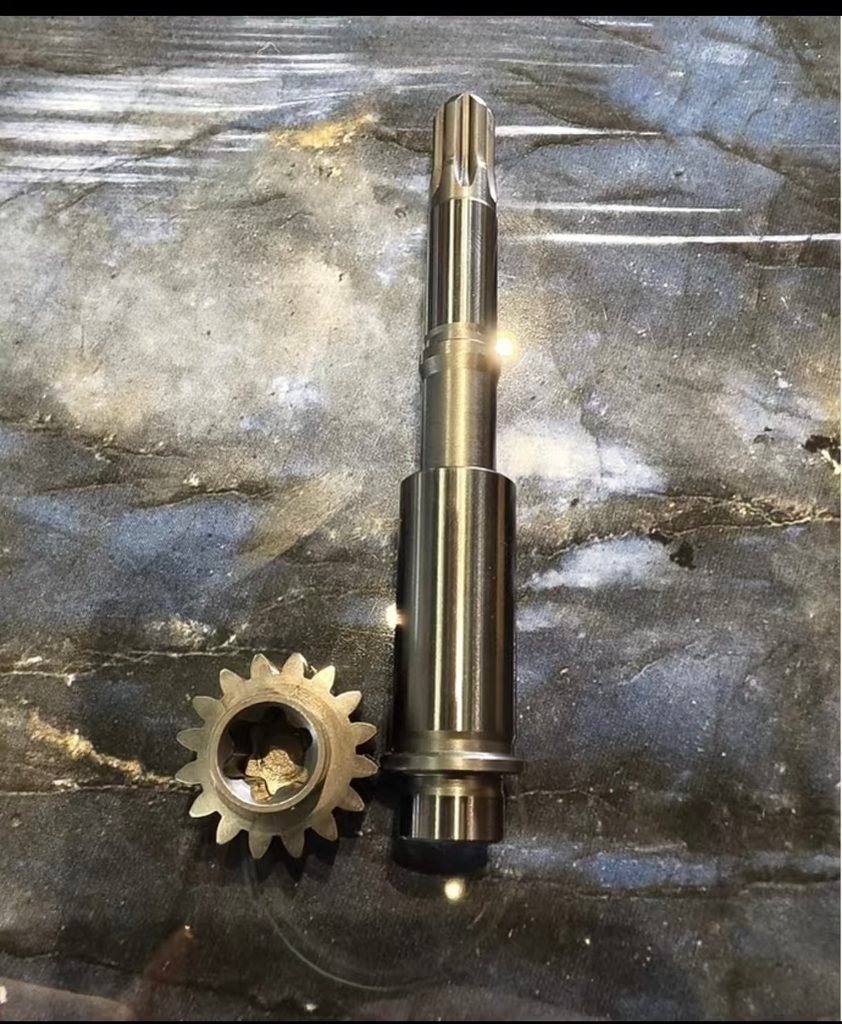
This is useful in vacuum robots because conventional oils and greases may evaporate, migrate, or contaminate sensitive chambers. DLC can function as a solid surface treatment without creating a thick lubricating layer.
Typical candidates include guide pins, actuator shafts, cam tracks, gripper pivots, bearing races, and sliding interfaces. The greatest benefit normally appears where adhesive wear or insufficient lubrication limits component life.
Check: Which DLC Type Will Be Used?
Hydrogenated DLC, hydrogen-free amorphous carbon, tetrahedral amorphous carbon, and metal-doped DLC do not behave identically. Their hardness, internal stress, electrical properties, temperature resistance, and friction response can differ significantly.
Humidity often affects the friction behavior of carbon coatings. A coating that performs well in normal air may behave differently after moisture is removed under high vacuum. NASA research on space-rated DLC has shown that deposition parameters can separate high-friction coatings from ultralow-friction coatings under vacuum.
The coating must therefore be selected and tested for the actual pressure and atmosphere. A generic specification stating only “DLC coating” is not sufficient.
Check: Can the Substrate Carry the Load?
DLC is hard but usually thin. If the underlying metal deforms under contact pressure, the coating may crack or delaminate even though the carbon layer itself has high hardness.
Hardened steel, suitable stainless steel, carbide, and other rigid substrates generally provide better support than untreated soft metals. Aluminum components may require an intermediate hard layer or another surface-hardening treatment before DLC application.
Surface finish also matters. DLC follows the existing geometry and cannot correct deep machining marks, burrs, or sharp edges. Precision polishing and edge preparation should be completed before coating.
An adhesion layer such as chromium or another compatible interlayer may be needed to control internal stress and improve bonding.
Stop: The Contact Geometry Causes Edge Loading
DLC may fail rapidly when the contact load is concentrated on a sharp corner or narrow edge. Misalignment, impact, and excessive preload can break the coating and release hard particles.
For vacuum robots used in semiconductor or optical production, particle generation may be more critical than visible wear. Coating failure can contaminate wafers, sensors, chamber surfaces, and vacuum seals.
Contact geometry should distribute pressure evenly. The counterface must also be compatible; pairing DLC with an unsuitable rough or equally hard surface can produce abrasive wear instead of reducing it.
Check: Are Electrical and Thermal Functions Required?
Many DLC coatings have relatively high electrical resistance. They may interfere with grounding, static-charge dissipation, electrical contacts, or sensor reference paths.
Coating should be excluded or selectively removed from grounding points and conductive interfaces. Masking boundaries must be clearly defined on the drawing.
The coating process temperature and service temperature must also be compatible with the substrate, heat treatment, brazed joints, magnets, and dimensional tolerances of the robot component.
Prove Performance in Vacuum
Air-based wear data cannot confirm performance inside a vacuum chamber. Representative testing should reproduce vacuum level, load, speed, motion pattern, counterface, temperature, and expected operating cycles.
Validation should measure friction, wear depth, adhesion, particle generation, dimensional change, and transfer-film formation. Thermal-vacuum cycling and residual-gas analysis may also be necessary for contamination-sensitive equipment.
Outgassing qualification should include the complete coated component and any cleaning agents, sealants, lubricants, or packaging residues—not only the DLC film.
Conclusion
DLC is suitable for many vacuum robot parts when sliding wear, fretting, or lubricant contamination is a concern. It should not be specified by name alone. Reliable performance requires the correct DLC type, a load-bearing substrate, suitable contact geometry, controlled electrical interfaces, and testing under the actual vacuum environment.