
CNC Machining Undercuts & Tool Access Guidelines
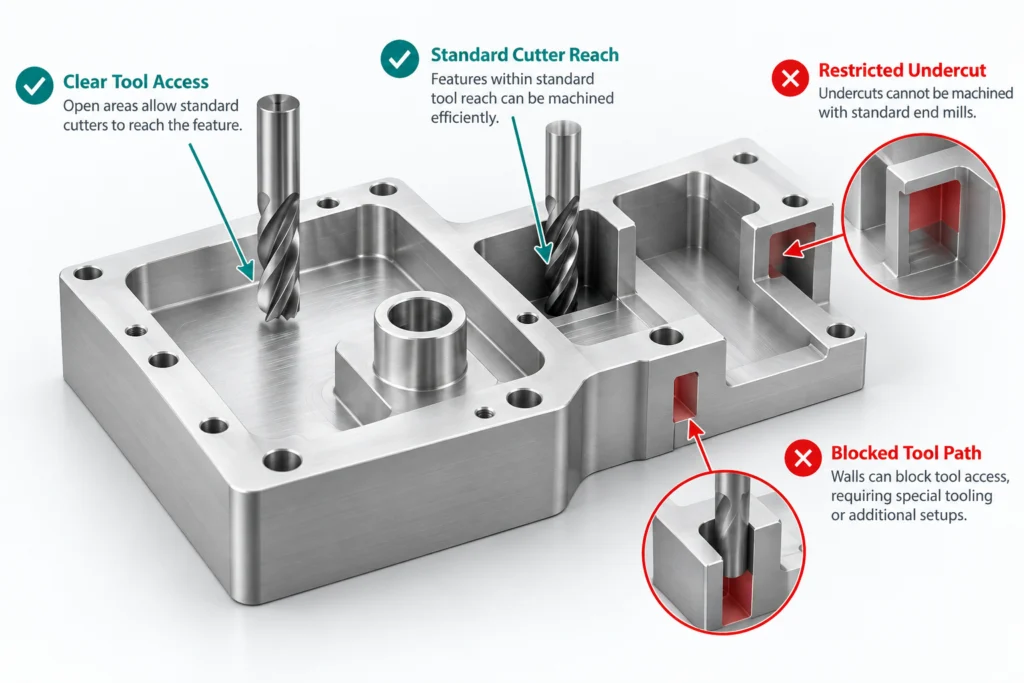
Design Features for Better CNC Tool Access
Undercut & Tool Access Considerations
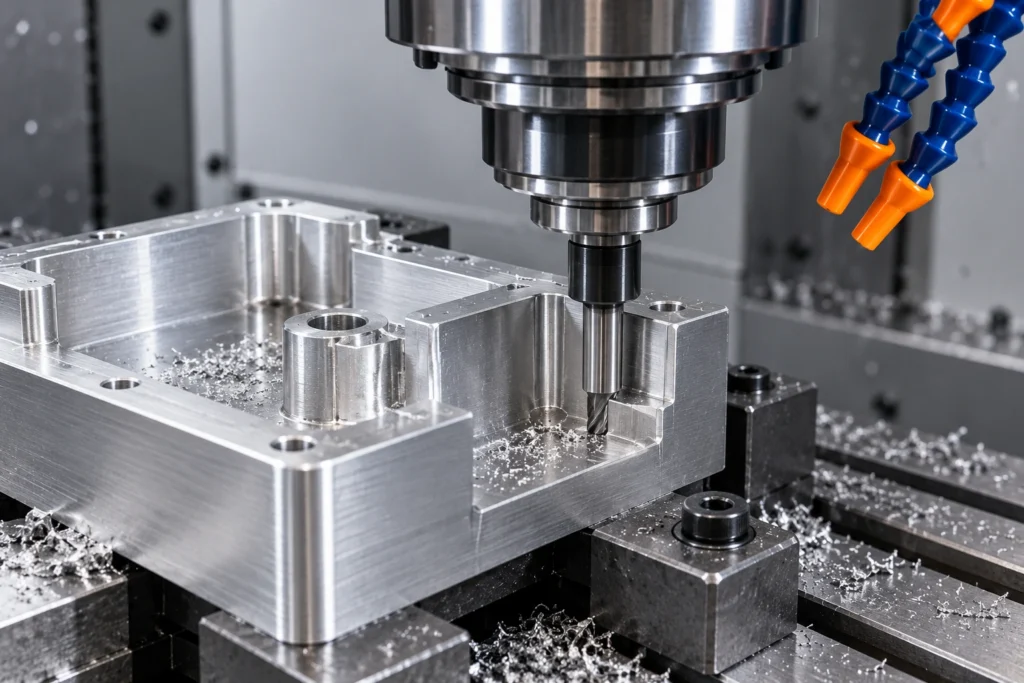
Good vs. Poor Undercut & Tool Access Design
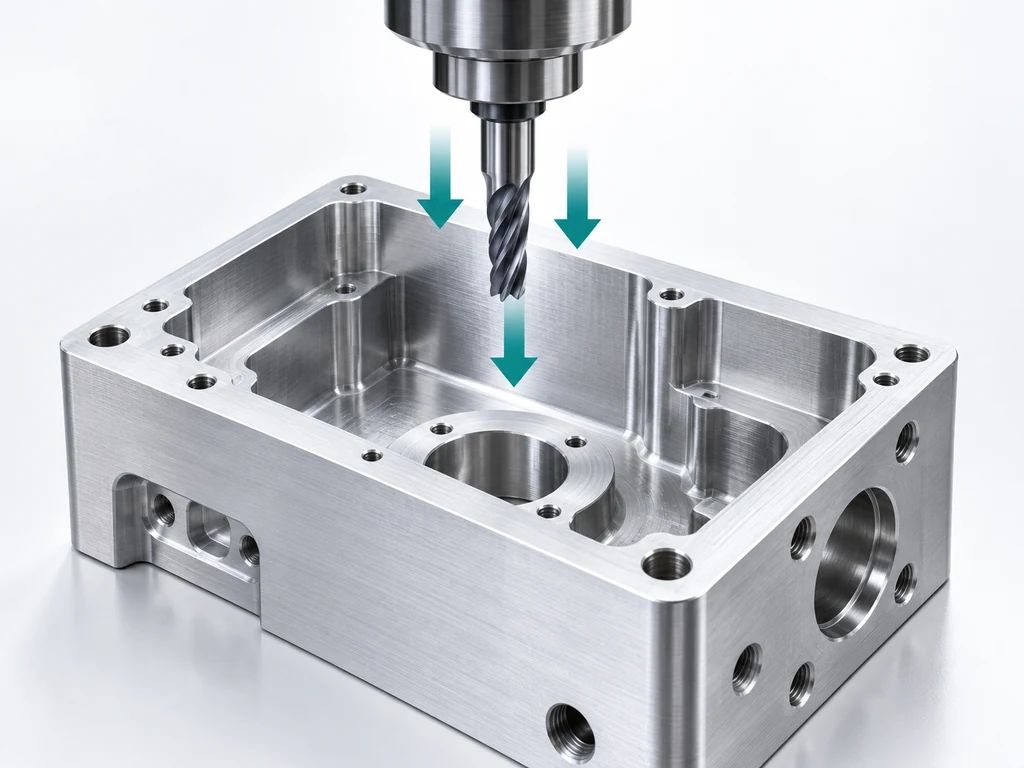
Clear Tool Access
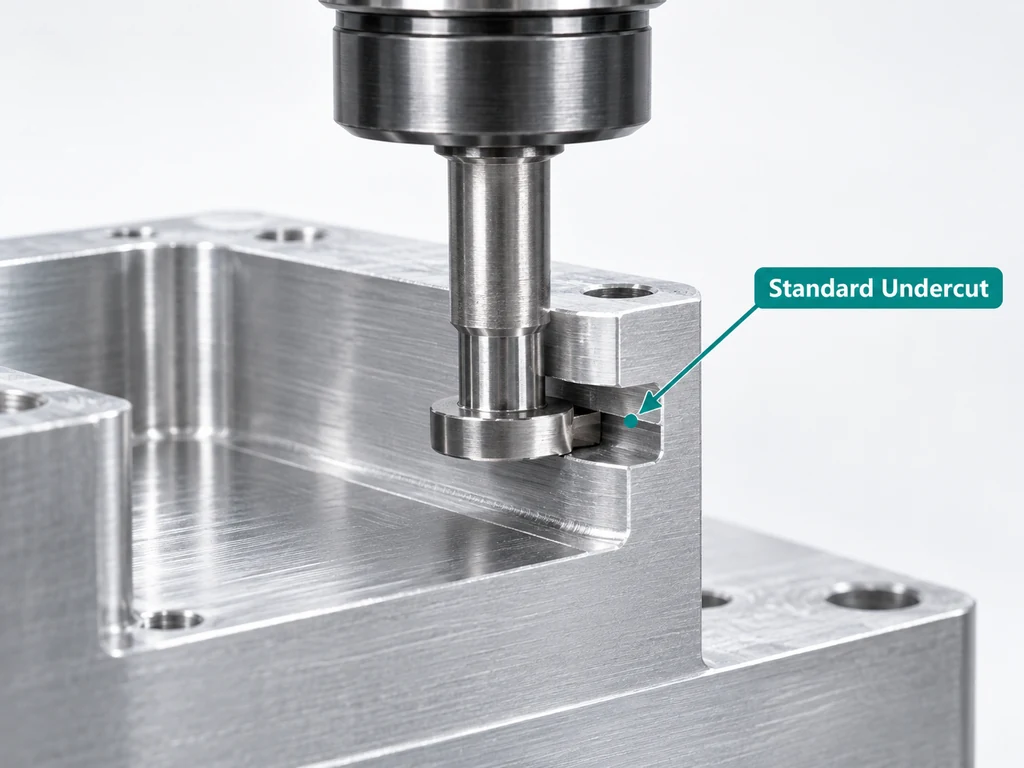
Standard Undercut Geometry
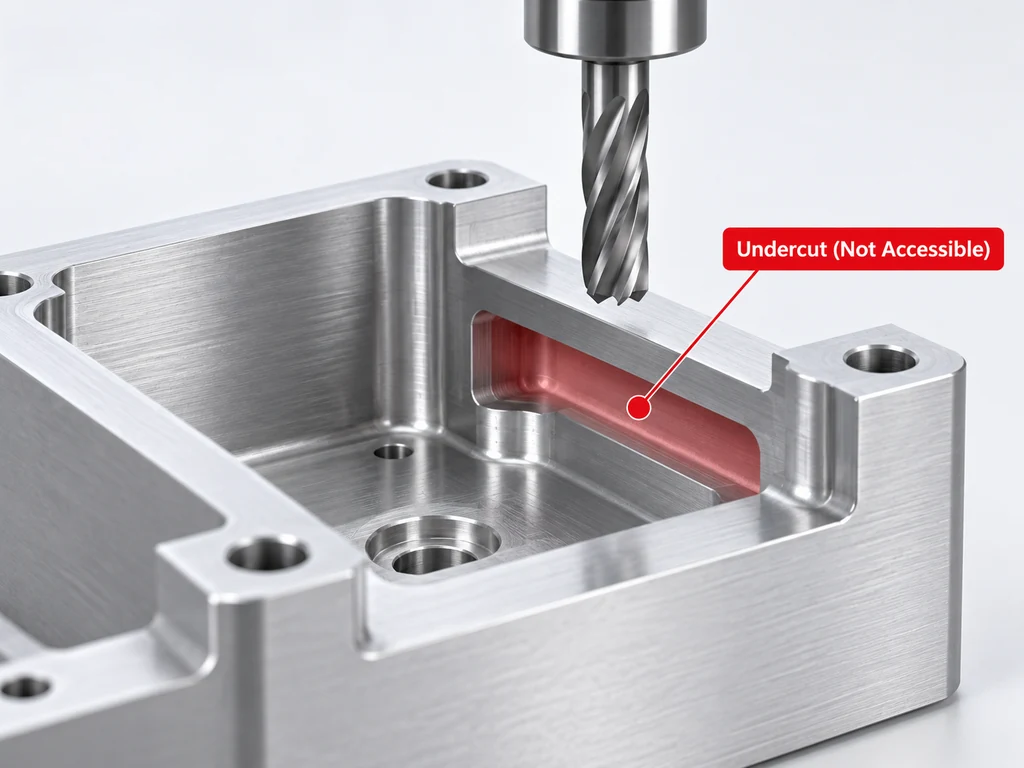
Restricted Undercut
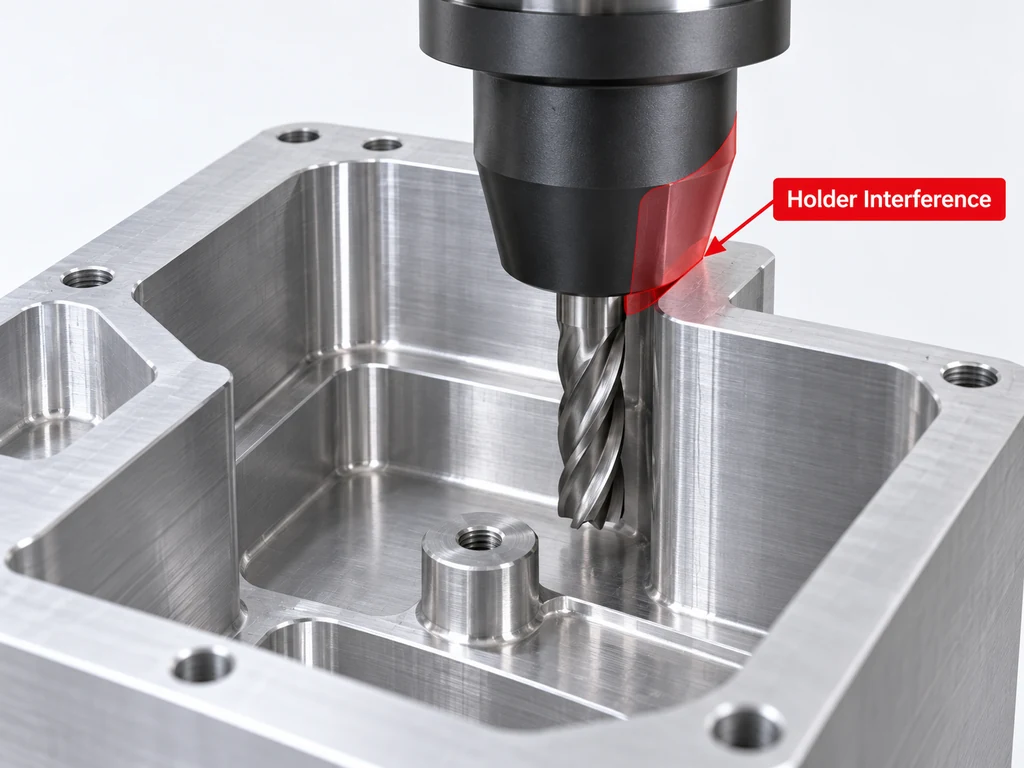
Blocked Tool Path
Need an Undercut & Tool Access Review?
Undercut & Tool Access FAQs
What is an undercut in CNC machining?
An undercut is a recessed feature that cannot be machined directly with a standard end mill from the main tool direction. It often requires a T-slot, lollipop, or other specialized cutter.
How are undercuts machined?
Undercuts are typically machined using specialized cutters such as T-slot cutters, keyseat cutters, or lollipop cutters. The exact tool depends on the feature geometry and available access.
What types of undercuts are easiest to machine?
Simple, standardized undercut shapes with sufficient clearance are the easiest and most economical to machine. Deep, narrow, or hidden undercuts usually require more specialized tooling.
Why is tool access important in CNC design?
Good tool access allows shorter and more rigid cutters, reduces setups, minimizes holder interference, and generally improves machining stability and cost efficiency.
How can I reduce the cost of machining undercuts?
Use standardized undercut dimensions, provide adequate cutter clearance, avoid unnecessarily deep recessed features, and keep features accessible from common machining directions.