CNC Machining Cost Optimization Guidelines
Reduce CNC machining costs by simplifying geometry, using practical tolerances, improving tool access, and reducing unnecessary setups and secondary operations.
Get a Quote
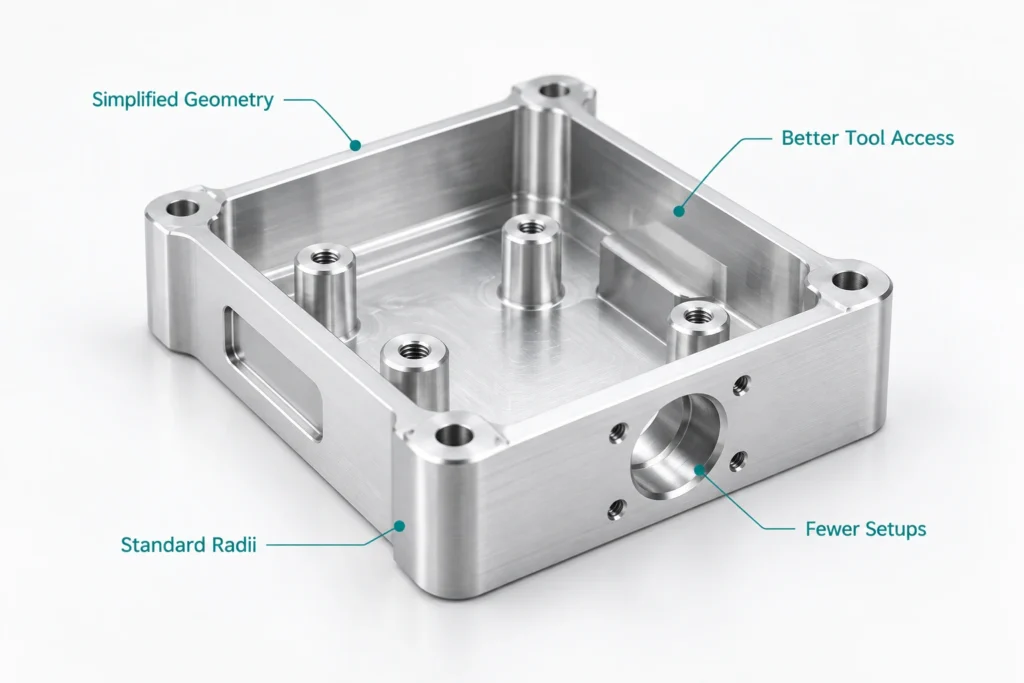
CNC machining cost optimization showing simplified geometry, better tool access, standard radii, and fewer setups
WHERE CNC MACHINING COST COMES FROM

Key Cost Drivers

Key design and process factors that influence CNC machining cost.

Machining Time

Complex features increase cycle time.

Setup & Fixturing

More setups add labor and fixture cost.

Tolerances

Tighter tolerances require more inspection.

Tooling

Small or specialized tools can increase cycle time and machining cost.

Secondary Operations

Finishing and coating can add cost and lead time.
HIGHEST-IMPACT WAYS TO REDUCE CNC COST

Focus on the Biggest Cost Drivers

01
Simplify Geometry
Remove unnecessary features.
02
Use Practical Tolerances
Tighten only critical dimensions.
03
Improve Tool Access
Avoid unnecessarily deep or narrow features.
04
Reduce Setups
Design for fewer machining orientations.
05
Limit Secondary Operations
Apply finishing only where required.
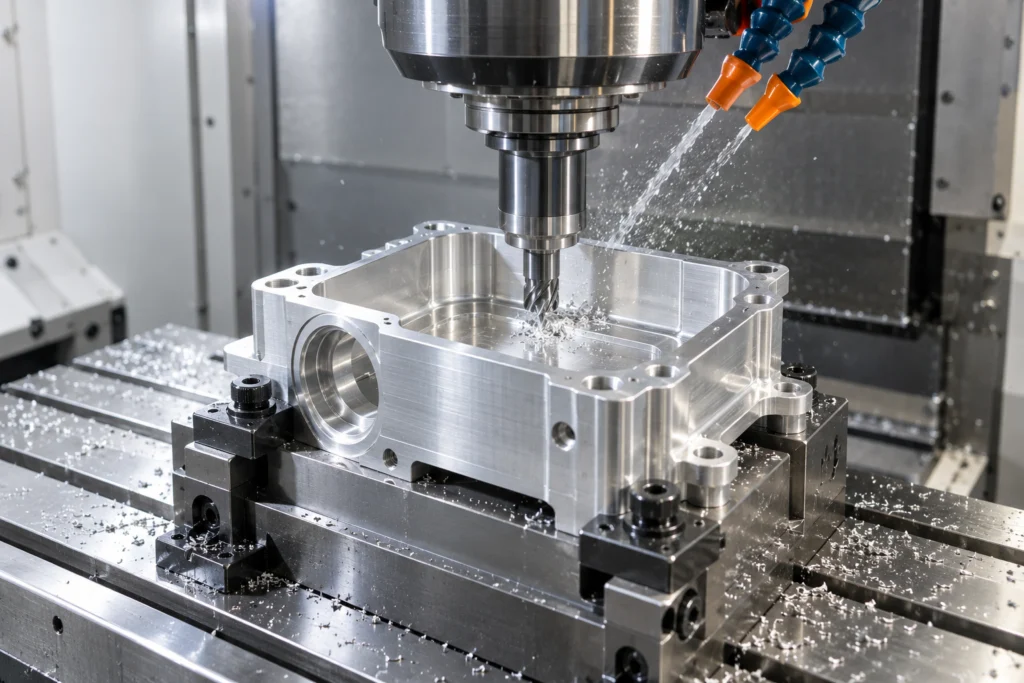
CNC milling an aluminum part designed to reduce machining time, setups, tooling, and secondary operation costs
BEFORE VS. AFTER COST OPTIMIZATION

Same Function. Lower Cost.

Simplify non-critical features while maintaining part function.

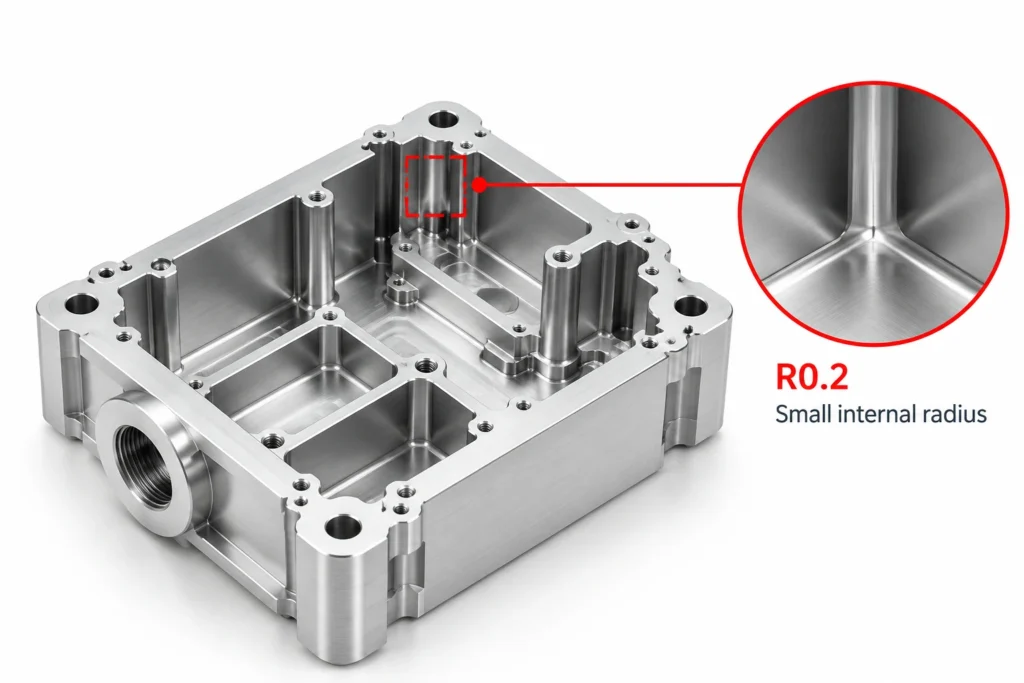
Original Design

Functional, but more complex and costly to machine.
Original CNC part design with a small internal radius that can increase machining time and tooling cost

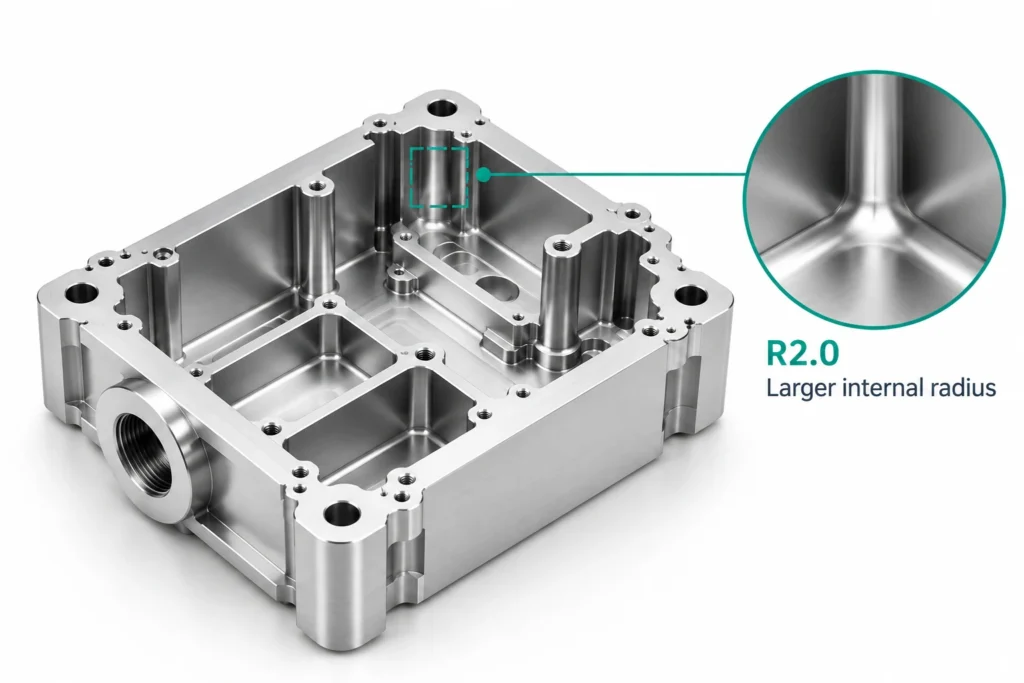
Optimized Option

Same function with a more manufacturable, cost-efficient design.
Optimized CNC part design with a larger internal radius for improved manufacturability and lower machining cost
Shorter Machining Time
Lower Tool Cost
Maintained Function
Better Manufacturability
WHAT SHOULD YOU OPTIMIZE FIRST?

CNC Cost Optimization Decision Guide

Quickly identify which design area to review first.

Long cycle time

Geometry & tool access

High inspection cost

Tolerances

High setup cost

Part orientation

High tooling cost

Deep / small features

High finishing cost

Secondary operations

Keep Critical Precision

Simplify Non-Critical Features

Balance Cost & Quality

Need a CNC Cost Optimization Review?

Send us your drawings or CAD files for a DFM review. We can identify practical ways to reduce machining costs without compromising function.
FAQ

CNC Cost Optimization FAQs

Common questions about CNC machining costs, design choices, tolerances, setups, tooling, and finishing.

Machining time, part complexity, material, tolerances, setup requirements, tooling, inspection, and secondary operations are the main cost drivers.

Simplifying geometry, improving tool access, using practical internal radii and tolerances, and reducing unnecessary setups can significantly improve machining efficiency and lower cost.

Usually yes. Tight tolerances may require slower machining, additional finishing passes, more process control, and more frequent inspection, increasing both cost and lead time.

Yes. Fewer setups reduce fixturing, handling, operator time, and repositioning while also helping maintain dimensional consistency between features.

No. Keep finishing where it provides functional, protective, or cosmetic value, and avoid unnecessary secondary operations on non-critical surfaces.