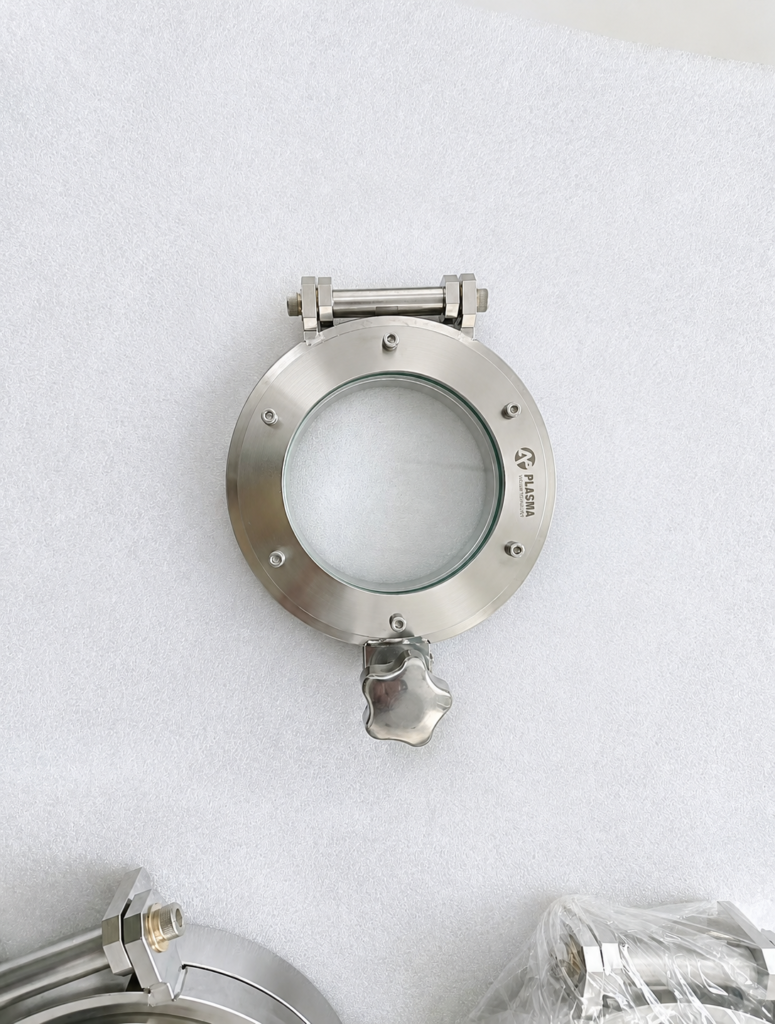

Optical lens barrel thermal expansion changes the mechanical distances that define an optical system. When temperature rises or falls, the barrel, lens seats, spacers, retaining rings, and sensor mount do not remain in their original positions.
Even a small dimensional change may matter when the system has a shallow depth of focus, a long optical path, a large aperture, or high-resolution requirements.
Temperature First Changes the Axial Spacing
A lens barrel expands approximately according to its length, coefficient of thermal expansion, and temperature change. As the barrel grows, the distance between lens groups may increase. The distance between the final lens and image sensor can also change.
These movements alter the position at which light converges. If the image plane moves away from the sensor, the result is thermal defocus even though every part remains within its room-temperature dimensional tolerance.
Long barrels accumulate more axial movement than short ones made from the same material. The location of each optical element therefore matters as much as the overall barrel length.
The Lenses Are Changing at the Same Time
The barrel is only one part of the thermal problem. Optical glass also expands, changing lens curvature and thickness. Its refractive index varies with temperature, an effect described by the temperature coefficient of refractive index, or dn/dT.
These changes can increase or decrease the focal length of an individual lens. Meanwhile, barrel expansion moves the lens and sensor mechanically.
The final focus shift is the combined result of both effects. A low-expansion housing is not automatically the best solution if its movement could otherwise compensate for the thermal behavior of the glass.
Radial Expansion Changes How the Lens Is Held
Temperature also changes the diameter of the barrel and lens cells. If the barrel expands faster than the glass, radial clearance may increase and allow an element to decenter or tilt.
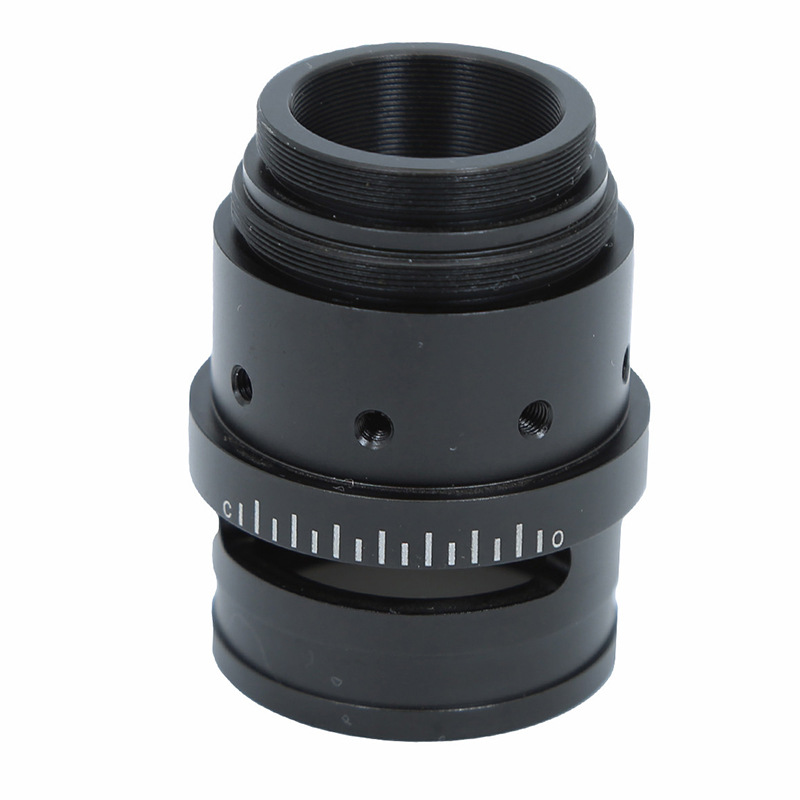
When temperature falls, the housing may contract more than the lens. Insufficient clearance can then increase radial pressure, distort the optical surface, create stress-induced birefringence, or damage the lens edge.
Retaining rings and spacers also change preload. A joint that is secure at room temperature may become loose when hot or excessively tight when cold. Flexible mounts, controlled gaps, and suitable adhesives can accommodate this differential movement.
A Temperature Gradient Is More Difficult Than Uniform Heating
Uniform temperature change mainly alters dimensions in a predictable direction. Real optical systems often heat unevenly because of electronics, sunlight, airflow, or nearby motors.
One side of the barrel may become warmer and expand more than the other. The result can be bending, lens decenter, sensor tilt, and asymmetric image degradation rather than simple axial defocus.
Material thermal conductivity therefore matters alongside thermal expansion. A material that spreads heat quickly may reduce gradients even if its coefficient of thermal expansion is relatively high.
Material Selection Is a System Decision
Aluminum is widely used because it is lightweight, machinable, and thermally conductive, but it also expands relatively quickly. Titanium has lower thermal expansion and high specific strength, although it is more difficult to machine and transfers heat more slowly.
Stainless steel offers stiffness and dimensional stability but adds weight. Invar provides very low thermal expansion, yet its mass, cost, machinability, and thermal conductivity may limit its use.
Designers may combine materials instead of selecting one barrel material for every component. The objective is to make mechanical movement counteract, rather than amplify, the optical focus shift.
Focus Can Be Stabilized Passively or Actively
Passive athermalization uses compatible glasses, barrel materials, spacer lengths, and mount geometry so that temperature-related movements compensate for one another.
Active systems measure temperature or image quality and move a lens group or sensor to restore focus. Heating or cooling may also keep the optical assembly near a controlled temperature.
The correct approach depends on operating range, resolution, size, weight, power, and allowable focus error.
Manufacturing Must Represent Operating Conditions
Room-temperature machining accuracy does not guarantee performance across the full thermal range. Critical dimensions should be toleranced using an optomechanical model that includes material CTE, glass properties, assembly preload, and expected temperature gradients.
Prototype assemblies should undergo thermal cycling while focus, modulation transfer function, centration, and image-plane position are measured. Residual machining stress must also be controlled because it can cause additional movement during thermal exposure.
Focus stability is achieved by coordinating optical design, material selection, mechanical geometry, and temperature testing—not by choosing the lowest-expansion metal alone.