
Glass sealant dispensing equipment depends on many compact mechanical components. Threaded adapters connect fluid lines, nozzle holders position the outlet, guide rings locate moving elements, and brackets attach sensors or dispensing heads to the machine frame.
These parts may be required for a new product format, an equipment modification, or the replacement of a worn component. A cnc on demand workflow produces the required quantity without forcing the maintenance or engineering team to order a large standardized batch.
The process begins with a specific production need and ends when the machined component fits the equipment and performs its intended function.
Demand Often Begins with a Machine Change
A glass processing line may need to handle a different panel size, sealant cartridge, nozzle diameter, or dispensing path. Even when the main machine remains unchanged, several small components may need new dimensions.
A nozzle adapter may require a different thread. A guide ring may need a larger opening. A sensor bracket may need its mounting holes moved to clear another assembly.
On-demand machining allows these changes to be produced directly from an updated drawing or three-dimensional model. The engineering team can order one verification part before requesting the remaining quantity.
This approach is also useful when an older machine uses components that are no longer available from the original supplier. An existing part can be measured, modeled, and reproduced without redesigning the complete dispensing system.
One Order Can Contain Several Part Types
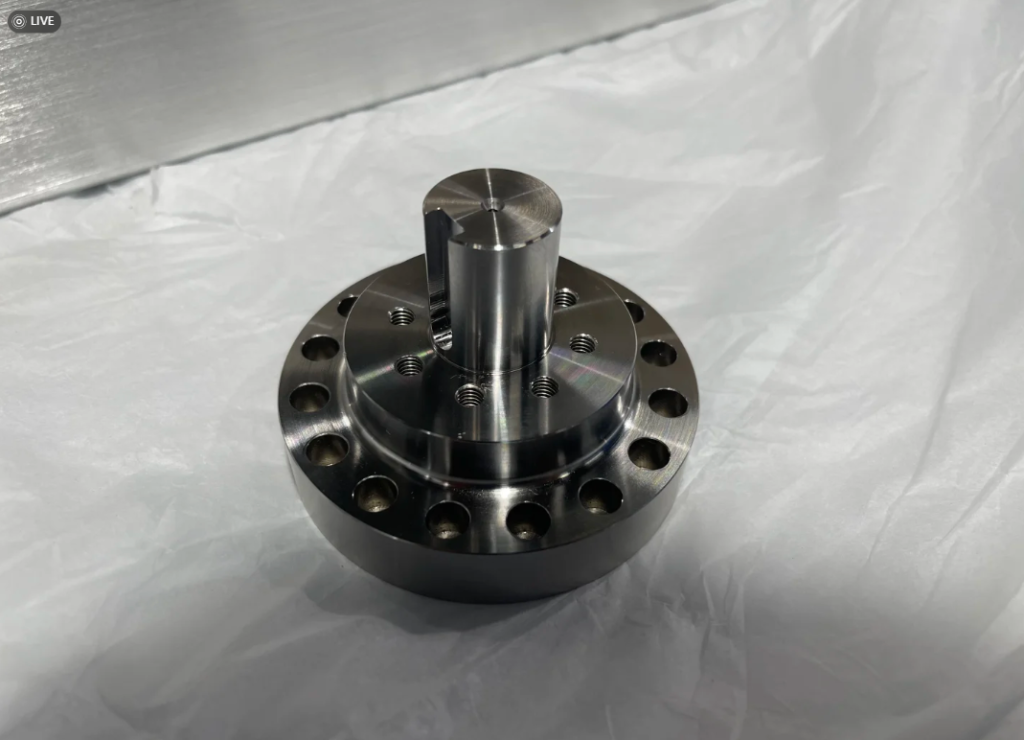
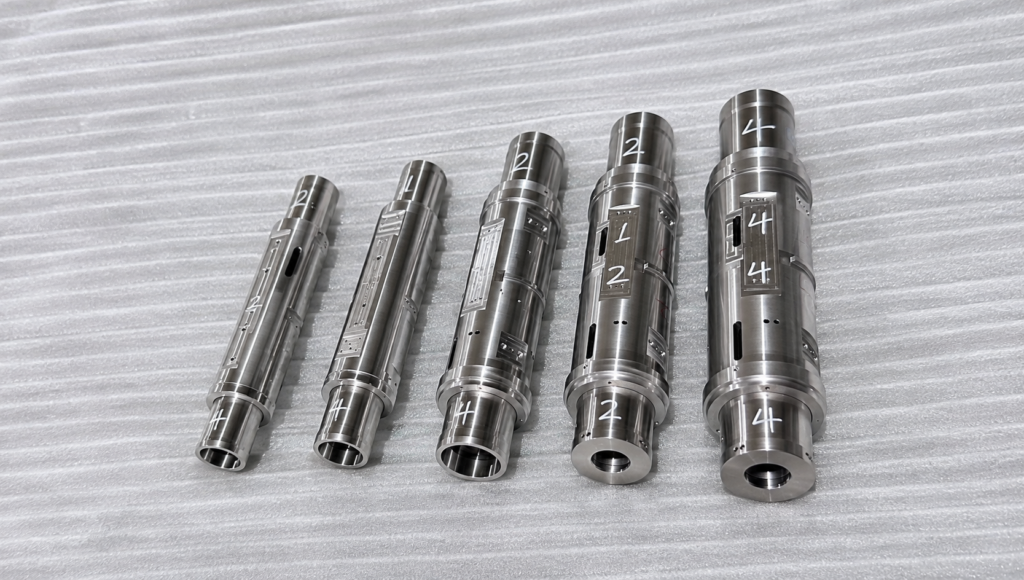
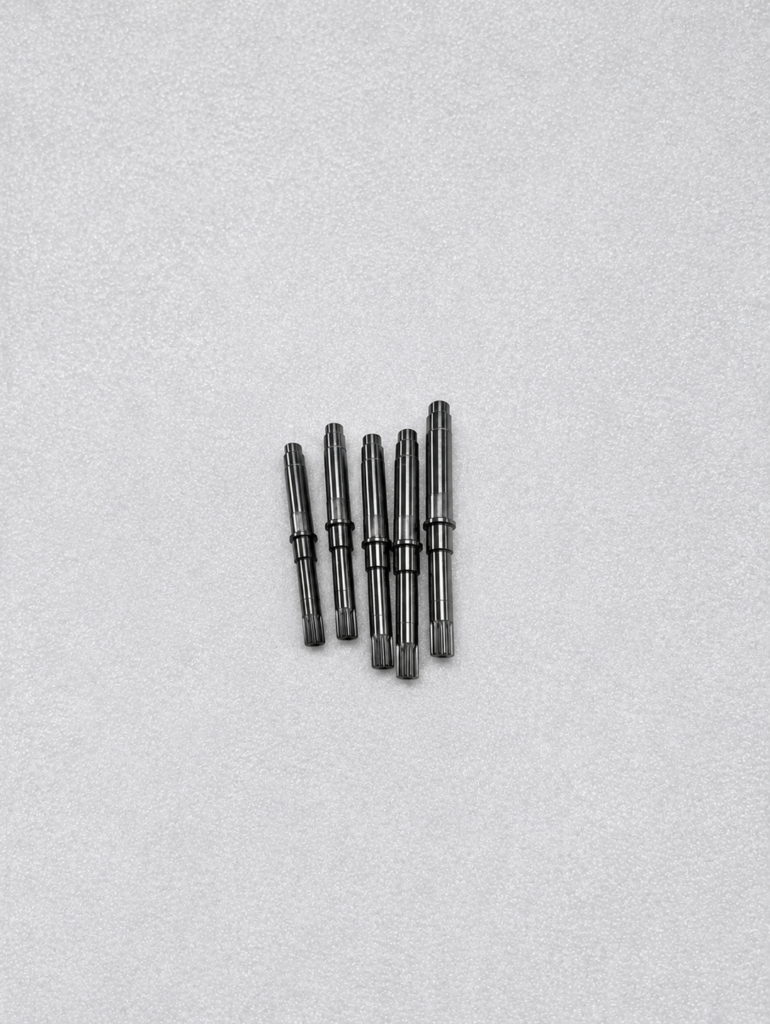
The components shown include turned cylindrical parts, circular rings, and flat mounting pieces. They do not all require the same machining process.
Threaded adapters and nozzle holders begin with turning. CNC lathes create their outside diameters, shoulders, bores, grooves, and internal or external threads.
Guide rings may also be turned before receiving cross holes or slots. Mounting brackets require milling to create their external profiles, pockets, mounting faces, and hole patterns.
A coordinated cnc on demand order can combine these different parts in one project. Each item follows its own machining route while remaining connected to the same equipment modification or maintenance task.
This is more practical than treating every small component as a separate high-volume production order.
Connection Features Control Compatibility
The new component must connect with the existing dispensing equipment. Threads, pilot diameters, mounting faces, and bolt patterns therefore become the most important references.
A threaded adapter must match both the mating thread and the internal flow passage. Its shoulder may also control how deeply it enters the assembly.
A nozzle holder must keep the outlet aligned with the dispensing path. If its bore and mounting diameter do not share the same axis, the nozzle may point away from the programmed location.
For a mounting bracket, the relationship between the locating face and hole pattern determines whether the attached sensor or valve sits in the correct position.
These interfaces should be measured from the functional datums used during machine assembly rather than from convenient but unrelated exterior edges.

runfunc: 0; algolist: 0;
multi-frame: 1;
brp_mask:0;
brp_del_th:0.0000,0.0000;
brp_del_sen:0.0000,0.0000;
motionR: 0;
delta:1;
bokeh:1;
module: photo;hw-remosaic: false;touch: (-1.0, -1.0);sceneMode: 12582912;cct_value: 0;AI_Scene: (-1, -1);aec_lux: 225.0;aec_lux_index: 0;albedo: ;confidence: ;motionLevel: -1;weatherinfo: weather???, icon:1, weatherInfo:100;temperature: 32;zeissColor: bright;
Internal Passages Need Complete Edge Control
Components that carry sealant, air, cleaning fluid, or lubricant may contain axial bores connected to radial holes. These intersecting passages can leave internal burrs after drilling.
A loose burr may enter the fluid path or prevent a fitting from seating correctly. The machining plan should therefore include access for deburring, cleaning, and visual inspection.
Transitions between different bore diameters should avoid unnecessary steps where material can collect. Thread runouts must also provide enough clearance for the mating fitting to reach its sealing position.
If the component includes a narrow nozzle passage, the opening should be protected during later handling and finishing. Cleaning must remove chips and cutting fluid before the part returns to the dispensing system.
The First Part Confirms the Assembly
On-demand production is especially useful when dimensions have been taken from an existing machine rather than from a complete original drawing.
The first machined part can be installed before the remaining pieces are released. This trial checks thread engagement, mounting-hole alignment, tool access, nozzle position, and clearance from neighboring components.
If a dimension requires adjustment, the digital model can be updated without affecting a large inventory. The corrected version then becomes the reference for the rest of the order.
For a group of related components, the assembly trial should also confirm how the pieces interact. An adapter may fit individually but still position the nozzle too close to a bracket or guide ring.
Digital Files Replace Physical Inventory
Traditional spare-parts planning requires components to be produced and stored before they are needed. Low-use items may remain on a shelf for years, while the required version is unavailable when a machine changes.
An on-demand approach stores approved drawings, models, inspection points, and manufacturing notes as a digital inventory. The physical component is produced when maintenance, modification, or replacement creates demand.
Revision control is important because similar-looking glass sealing equipment components may use different threads, bore sizes, or mounting patterns. Each approved file should be linked to the relevant machine position and version.
When another part is required, the verified data can support repeat production without measuring the equipment again.
From Immediate Need to Installed Component
The value of on-demand machining is not limited to small order quantities. It connects engineering changes, mixed component types, functional interfaces, assembly trials, and future replacement needs within one controlled workflow.
Turning produces the cylindrical adapters, holders, and rings. Milling creates brackets and non-round profiles. Drilling, threading, deburring, and cleaning complete the features required for installation.
By producing only the approved components when they are required, cnc on demand helps glass sealant dispensing equipment return to operation without creating unnecessary physical inventory or committing to an unsuitable large batch.