The relationship between brake piston material corrosion and seal life begins at the piston surface. The hydraulic seal slides against this surface whenever the brakes are applied or released. If corrosion, coating failure, or abrasive wear damages it, the seal may experience increased friction, tearing, fluid leakage, or incomplete piston retraction.
Material selection also influences heat transfer from the brake pad into the caliper fluid. The best piston is therefore not automatically the material with the highest corrosion resistance. It must balance surface durability, thermal behavior, stiffness, mass, manufacturability, and compatibility with the seal and caliper body.
A Small Boot Failure Starts the Damage
The external dust boot prevents water, road salt, dirt, and brake debris from reaching the exposed piston surface. SAE J1570 specifically identifies moisture and dirt exclusion as necessary to prevent corrosion and impaired caliper operation.
If the boot tears, becomes incorrectly seated, or hardens with age, contamination can collect around the piston. A steel piston may develop rust on the portion extending beyond the hydraulic seal.
During the next pad replacement or piston retraction, that corroded area can move across the seal lip. Rust particles and pits then act like an abrasive surface, damaging a seal that may previously have been functioning correctly.
Moisture can also reach the internal surface because conventional glycol-based brake fluids absorb water over time. The condition of the fluid, dust boot, piston and seal must therefore be considered together.
The Seal Does More Than Prevent Leakage
A disc-brake piston seal normally has a square or specially controlled cross-section. Hydraulic pressure pushes the piston outward and elastically distorts the seal. When pressure is released, the seal helps retract the piston by a small amount.
This action depends on controlled friction between the piston and seal. According to SAE research on caliper seal-groove design, this interface affects piston sliding force, retraction, fluid displacement, and brake drag.
A rough or corroded piston can prevent smooth movement. Excessive friction may cause the piston to remain extended, leaving the pad in contact with the rotor. The resulting heat accelerates seal aging and can create a cycle of increasing drag and temperature.
A surface that is too rough damages the seal, while an unsuitable coating or lubricant can change friction enough to affect retraction behavior.
Common Piston Materials Have Different Strengths
| Piston material | Main advantages | Main concerns |
|---|---|---|
| Coated carbon steel | High strength, stiffness, and economical production | Corrosion can begin if plating is scratched, porous, or worn |
| Stainless steel | Good corrosion resistance and lower heat transfer than aluminum | Higher cost, greater mass, and possible galling or machining difficulty |
| Anodized aluminum | Low mass and good manufacturability | High thermal conductivity; anodized surface damage can expose the base metal |
| Phenolic composite | Low thermal conductivity, low mass, and no red rust | Dimensional change, edge damage, creep, or moisture effects must be controlled |
| Titanium alloy | Corrosion resistance, strength, and relatively low heat transfer | High cost and demanding manufacturing requirements |
These are general tendencies. Actual performance depends on the exact grade, coating, surface finish, piston geometry, seal compound, brake fluid, and operating temperature.
Coated Steel Depends on Surface Integrity
Carbon-steel pistons are frequently protected by plating or another surface treatment. The coating provides the corrosion barrier, while the steel supplies strength and dimensional stability.
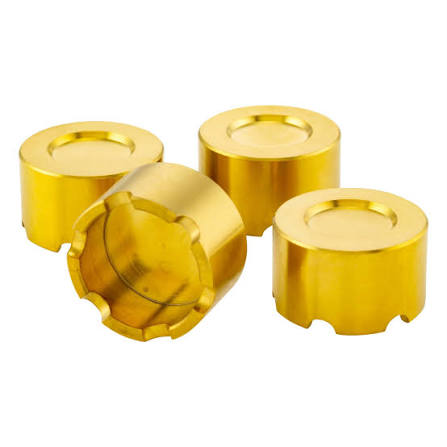
This system can perform reliably as long as the coating remains continuous. Scratches from installation tools, poor coating adhesion, exposed edges, pores, or abrasive contamination can allow corrosion to begin underneath it.
Once corrosion grows beneath the coating, the surface may blister or flake. Detached particles can enter the seal interface, while the uneven piston surface creates a potential leakage path.
Inspection must therefore assess more than the presence of visible red rust. Discoloration, coating lift, pits, scoring, and damaged edges can all justify piston replacement.
Stainless Steel Reduces Rust Risk but Not Every Failure
Stainless steel offers better resistance to water and road salt than unprotected carbon steel. It is useful where long service intervals or aggressive environments make coating damage a concern.
However, stainless steel is not immune to corrosion. Chlorides can cause pitting or crevice attack, especially where deposits remain trapped beneath a damaged boot. Incorrect processing can also leave iron contamination on the surface.
Its higher density increases piston mass, while poor surface finishing can still wear the seal. Stainless steel must be supplied with the specified roughness, roundness, hardness, and corrosion condition rather than accepted solely by grade name.
Aluminum Requires a Durable Treated Surface
Aluminum pistons reduce unsprung mass and can be machined efficiently. Their natural oxide layer provides some protection, while hard anodizing can improve wear and corrosion resistance.
The limitation is that aluminum conducts heat readily. Without suitable piston geometry, insulation, or cooling, more heat may reach the brake fluid and seal.
Damage to the anodized layer can expose softer base material. Contact between aluminum and more noble metals in the presence of salty water may also create galvanic-corrosion concerns. Brembo research has identified the importance of controlling galvanic couples between anodized aluminum and stainless-steel components in braking systems.
Composite Pistons Can Slow Heat Transfer
Phenolic and other engineering-composite pistons have low thermal conductivity. They can reduce heat flow from the pad into the brake fluid, which helps control fluid temperature and seal exposure.
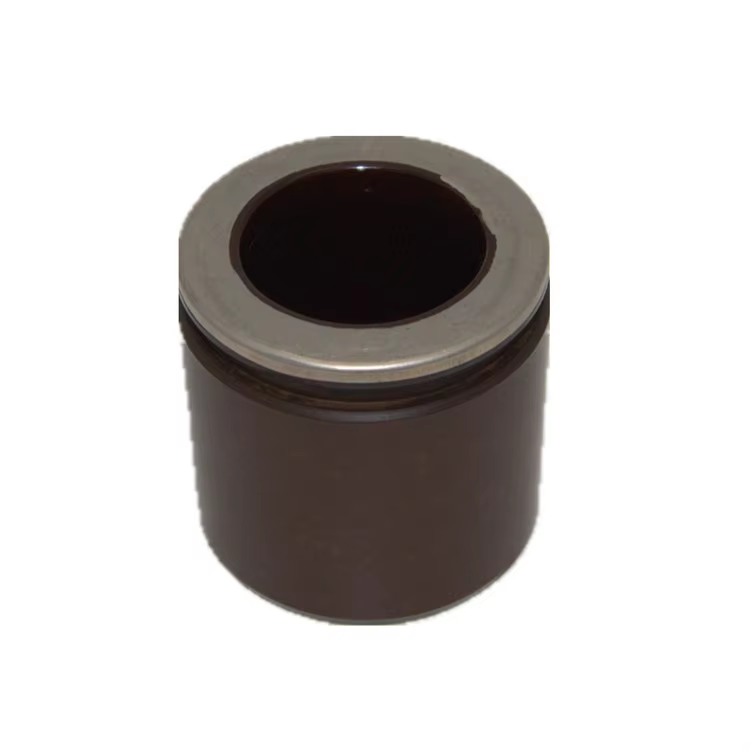
They also avoid conventional red rust. However, composite pistons require careful control of moisture absorption, dimensional stability, compressive strength, creep, and edge condition.
A swollen, cracked, or chipped composite piston may bind in the bore even though no corrosion is visible. It should not automatically be replaced with a metal piston unless the alternative material and dimensions are approved for that caliper design.
Heat Can Shorten Seal Life Without Visible Corrosion
The piston forms part of the thermal path between the pad and hydraulic system. Repeated high-temperature braking can harden the dust boot, age the pressure seal, and reduce the brake fluid’s safety margin.
Low-conductivity materials can reduce this heat flow, but they may also retain heat near the pad contact area. Piston geometry, insulating inserts, airflow, pad backing plates, and caliper design all influence the final temperature.
Brembo warns that excessive heat during unapproved caliper refinishing can damage piston seals. This demonstrates that seal life depends on the complete thermal history, not only on corrosion resistance.
The Finished Surface Matters More Than the Material Name
A corrosion-resistant alloy with poor grinding can be less reliable than a correctly finished coated-steel piston. The functional surface must meet requirements for diameter, roundness, straightness, roughness, and absence of burrs.
Coating thickness must also be considered in the final dimension. Excess thickness can increase sliding force, while an undersized or worn piston may reduce sealing contact or allow uneven movement.
During overhaul, a piston with deep corrosion should not simply be polished until it looks smooth. Removing material can change the diameter and surface texture beyond the approved limit.
Material Is One Part of Seal-Life Control
Long seal life requires a compatible piston material, intact dust boot, correct seal compound, clean brake fluid, controlled surface finish, and proper assembly.
Maintenance should include checking the boot for tears, inspecting the piston before pushing it back through the seal, and replacing contaminated brake fluid at the specified interval. Aggressive cleaners and incorrect lubricants can damage elastomers even when the piston remains corrosion-free.
The correct material reduces the likelihood of corrosion and thermal damage, but reliable braking comes from treating the piston, coating, seal, boot, fluid, and caliper bore as one engineered system.