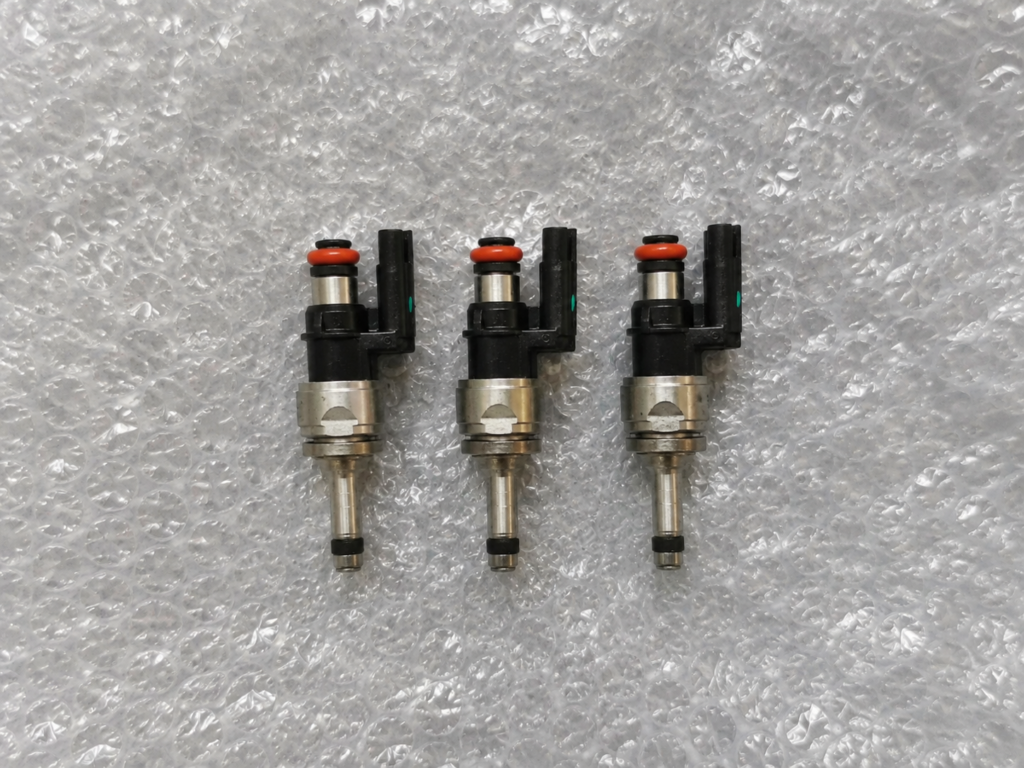
Fuel injector needle valve material cleanliness is critical because a defect too small to see can affect sealing, wear, fatigue life, and injection accuracy. Modern common-rail injectors may operate at pressures reaching thousands of bar while completing several injections during a single combustion cycle.
Under these conditions, a nonmetallic inclusion is not merely a metallurgical imperfection. It can become the starting point of a functional failure.
The Defect Begins Inside the Steel
Steelmaking can leave microscopic oxides, sulfides, silicates, or other nonmetallic inclusions within the material. Their effect depends on size, shape, type, distribution, and position rather than inclusion count alone.
A small, rounded inclusion deep inside a lightly loaded region may cause no problem. A large or elongated inclusion close to the needle seat, sliding surface, or highly stressed transition can behave very differently.
During forging, bar processing, and machining, inclusions may become elongated or exposed at the surface. If an inclusion separates from the surrounding steel, it can leave a pit that concentrates stress or interrupts the finished surface.
High Pressure Turns a Pit into a Fatigue Site
Each injection cycle loads the nozzle and needle valve with rapidly changing hydraulic and contact forces. Over an engine’s service life, these parts experience millions of pressure cycles.
An inclusion or inclusion-related cavity raises local stress. A fatigue crack may begin at its edge and grow with each cycle, even when the nominal stress remains within the design limit.
Research into failed diesel nozzle valves has connected surface dents and fatigue cracking with the separation of compound inclusions. Cavitation can enlarge the initial damage, accelerating crack initiation around the sealing region.
Cleaner steel reduces the population of harmful initiation sites, but it cannot compensate for an unsuitable design or incorrect heat treatment.
The Sealing Line Has Almost No Margin
When the needle closes, its precision-ground cone contacts the valve seat and stops fuel flow. A small pit, hard inclusion, or locally soft region can prevent uniform contact.

The result may be internal leakage, delayed closing, pressure loss, or fuel dribble after injection. These changes affect combustion, emissions, fuel consumption, and deposit formation.
The sealing surface therefore requires both high material cleanliness and extremely controlled finishing. Grinding burns, chatter, residual stress, and lapping contamination can create defects that resemble material-related failures.
Sliding Surfaces Must Wear Uniformly
The needle moves repeatedly inside a closely fitted guide. Stable motion depends on precise clearance, straightness, hardness, surface texture, and lubrication from the fuel.
An exposed inclusion may break away and create abrasive debris. A hard particle can scratch the needle or guide, while the remaining cavity disrupts the lubricating film. Uneven wear may then increase leakage or cause the needle to stick.
Material cleanliness must not be confused with fuel cleanliness. High-quality steel controls internal metallurgical defects; filtration and assembly cleanliness control external particles and deposits. Both are necessary.
Heat Treatment Can Reveal Hidden Weaknesses
Injector components often receive hardening, carburizing, or other controlled heat treatments to provide a hard wear-resistant surface with adequate core toughness.
Improper processing may cause distortion, retained-austenite variation, decarburization, excessive carbide networks, or inclusion debonding. Machining and grinding must then produce the required geometry without introducing thermal damage.
For this reason, specifying a steel grade alone is insufficient. The production route, cleanliness level, heat-treatment condition, and surface-integrity requirements must be defined together.
How Is Material Cleanliness Verified?
ASTM E45 provides recognized methods for rating nonmetallic inclusions in wrought steel. Inclusions are evaluated by characteristics such as size, shape, concentration, and distribution.
Critical programs may combine metallographic rating with ultrasonic inspection, automated image analysis, hardness testing, and finished-part surface inspection. Sampling location matters because inclusion populations can vary within the same heat or bar.
Acceptance limits should reflect the component’s stress level and failure risk rather than relying on a general description such as “clean steel.”
Cleanliness Protects Injection Accuracy
High material cleanliness lowers the likelihood that inclusions will become pits, wear particles, leakage paths, or fatigue origins. It supports the dimensional accuracy and surface integrity required by a high-pressure needle valve.
Reliable performance still depends on correct heat treatment, precision grinding, clean assembly, fuel filtration, and injector design. Clean steel is the foundation that allows those controls to remain effective throughout service.