Quick Answer
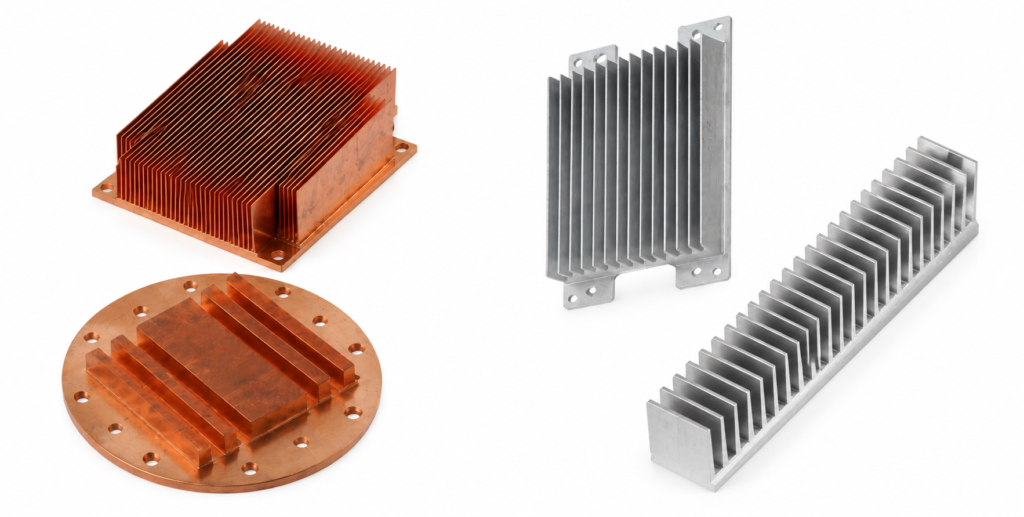
A copper vs aluminum heat sink comparison has no universal winner. Copper transfers heat faster, while aluminum is lighter, less expensive, and easier to manufacture.
Choose copper for compact, high-heat-load components. Choose aluminum when weight, cost, and cooling area are more important.
Copper and Aluminum Comparison
| Factor | Copper | Aluminum |
|---|---|---|
| Thermal conductivity | Higher | Lower |
| Weight | Heavy | Lightweight |
| Cost | Higher | Lower |
| Machinability | More difficult | Easier |
| Best use | Compact heat spreaders | Large heat sinks and fins |
Thermal Performance
Copper has higher thermal conductivity than common aluminum alloys. It moves heat away from concentrated sources quickly, making it suitable for high-power processors, lasers, and power electronics.
Aluminum transfers heat less efficiently, but a larger aluminum heat sink with well-designed fins can still provide effective cooling at a lower weight and cost.
Weight and Manufacturing
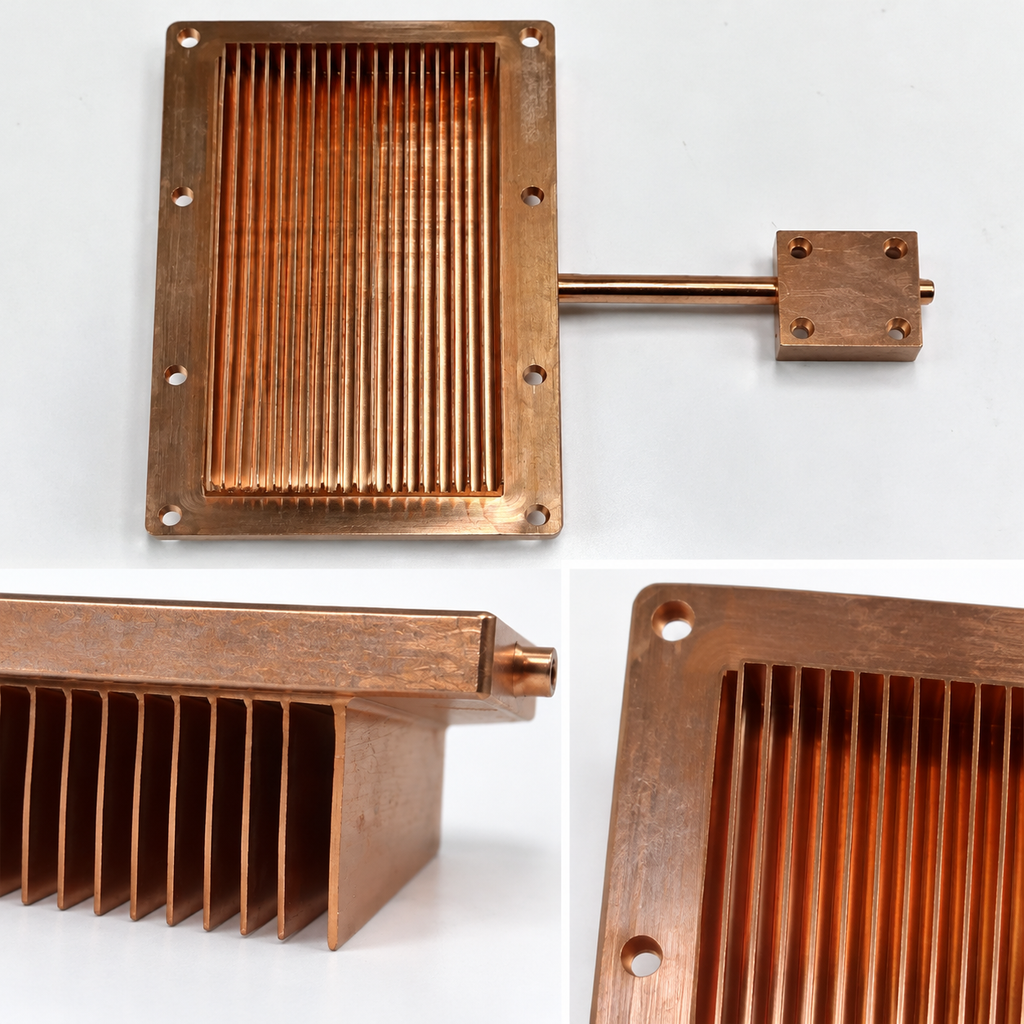
Copper is approximately three times as dense as aluminum. Large copper heat sinks can therefore become heavy and expensive.
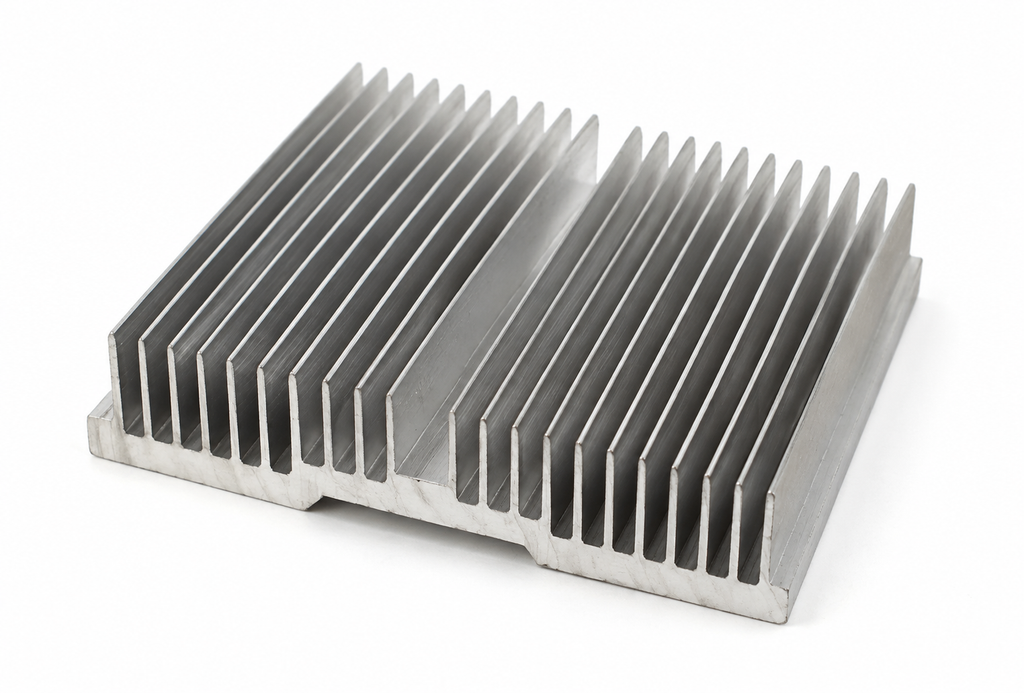
Aluminum is easier to machine, extrude, and form into complex fin structures. It is commonly used for portable equipment, automotive electronics, enclosures, and general cooling components.
For most prototypes and standard heat sinks, aluminum is the more economical option.
Common Heat Sink Materials
6061 aluminum is commonly used for CNC-machined heat sinks because it offers good machinability, strength, corrosion resistance, and availability.
6063 aluminum is often used for extruded heat sinks with detailed fin profiles.
C110 copper is suitable when high thermal conductivity is the main requirement. The exact performance depends on the alloy and material condition.
Which Material Should You Choose?
Choose copper when:
- Heat is concentrated in a small area.
- The heat sink must remain compact.
- Maximum heat spreading is required.
- Additional weight and cost are acceptable.
Choose aluminum when:
- Low weight is important.
- A large cooling area is available.
- Production cost must be controlled.
- The design requires long or complex fins.
Can Copper and Aluminum Be Combined?
Yes. A hybrid heat sink can use a copper base to spread heat and aluminum fins to release it into the surrounding air.
This design combines copper’s thermal performance with aluminum’s lower weight and cost. Good thermal contact and protection against galvanic corrosion are essential.
Final Recommendation
Copper is better for compact heat sinks with concentrated heat loads. Aluminum is better for lightweight, economical heat sinks with larger cooling areas.
For many CNC-machined heat sinks, 6061 aluminum provides the best balance of performance, cost, and machinability. Copper should be considered when aluminum cannot meet the thermal requirements within the available space.