
5-Axis CNC Machining Design Guidelines
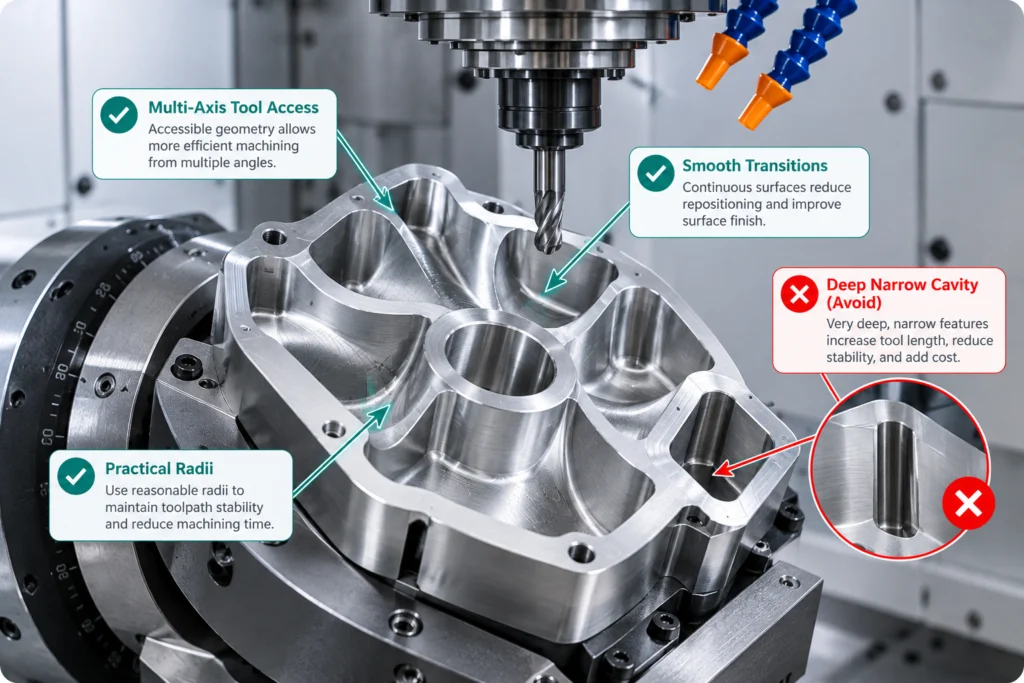
Design Parts for Efficient 5-Axis Machining
5-Axis Machining Design Considerations
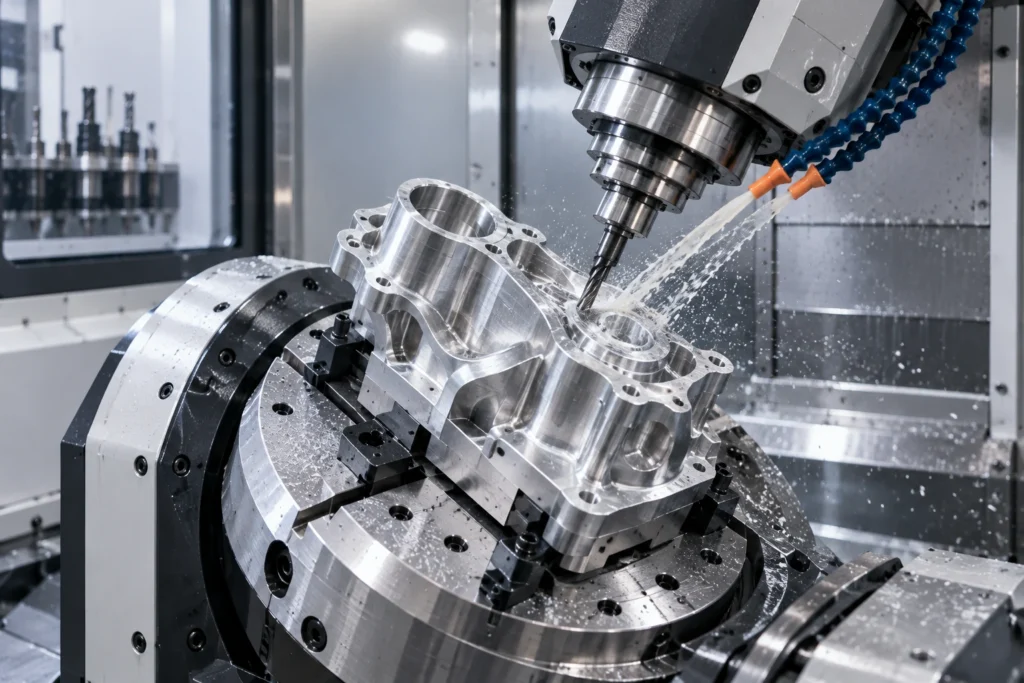
Good vs. Poor 5-Axis Machining Design
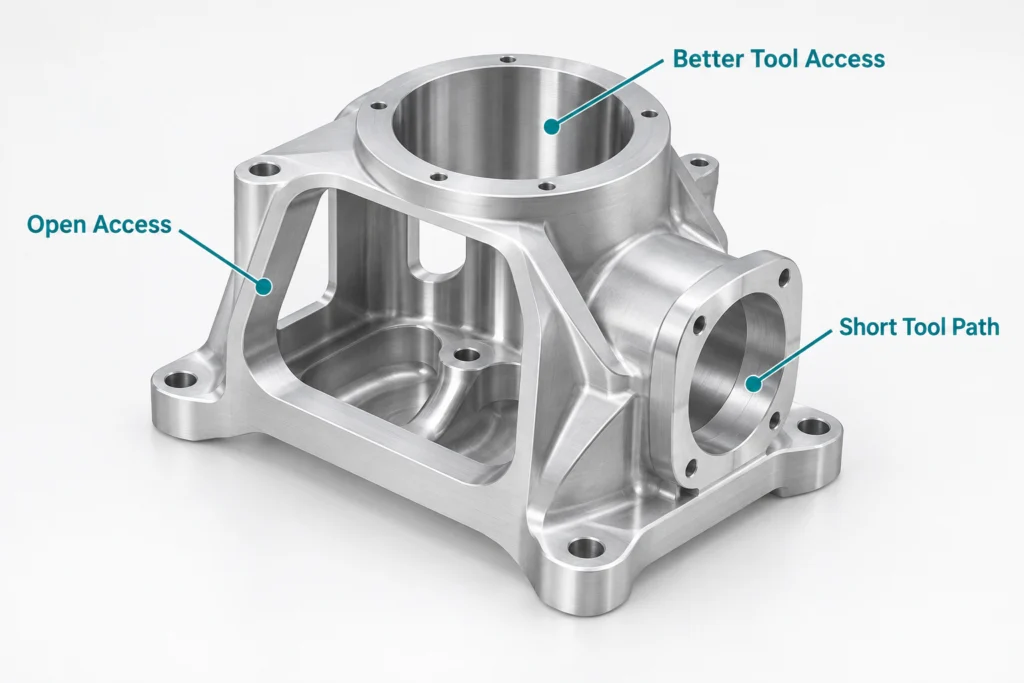
Clear Multi-Axis Tool Access
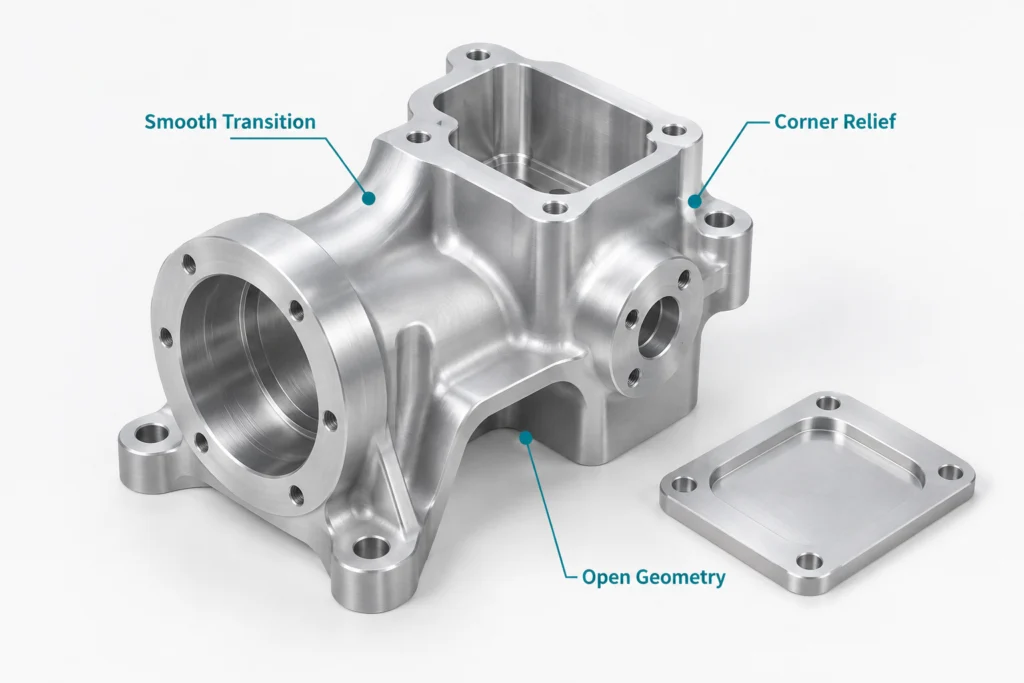
Smooth Continuous Geometry
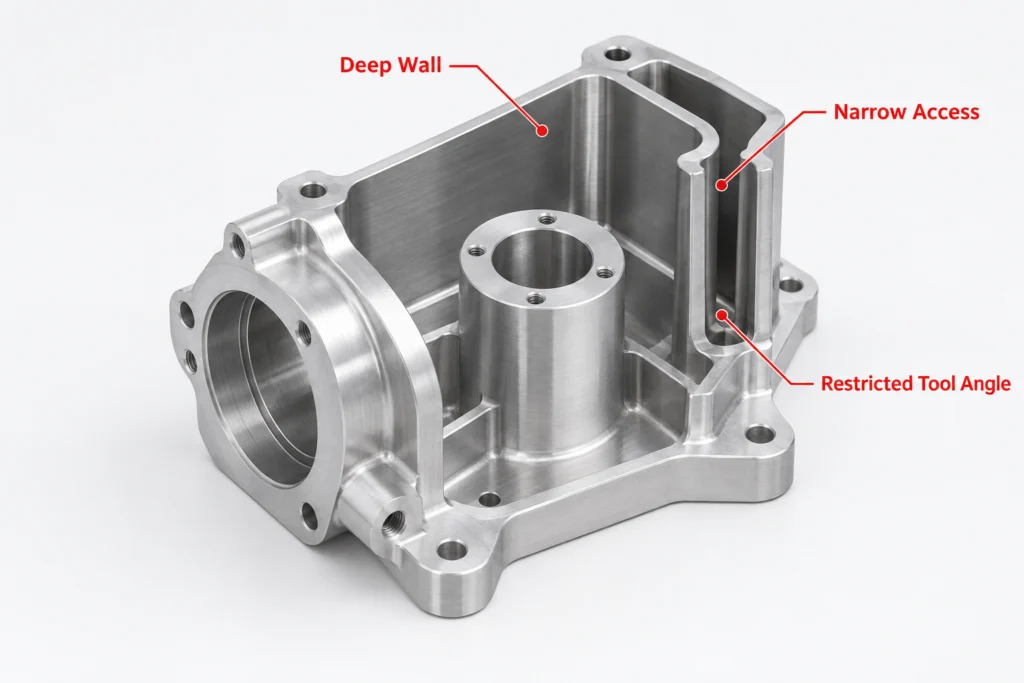
Restricted Tool Access
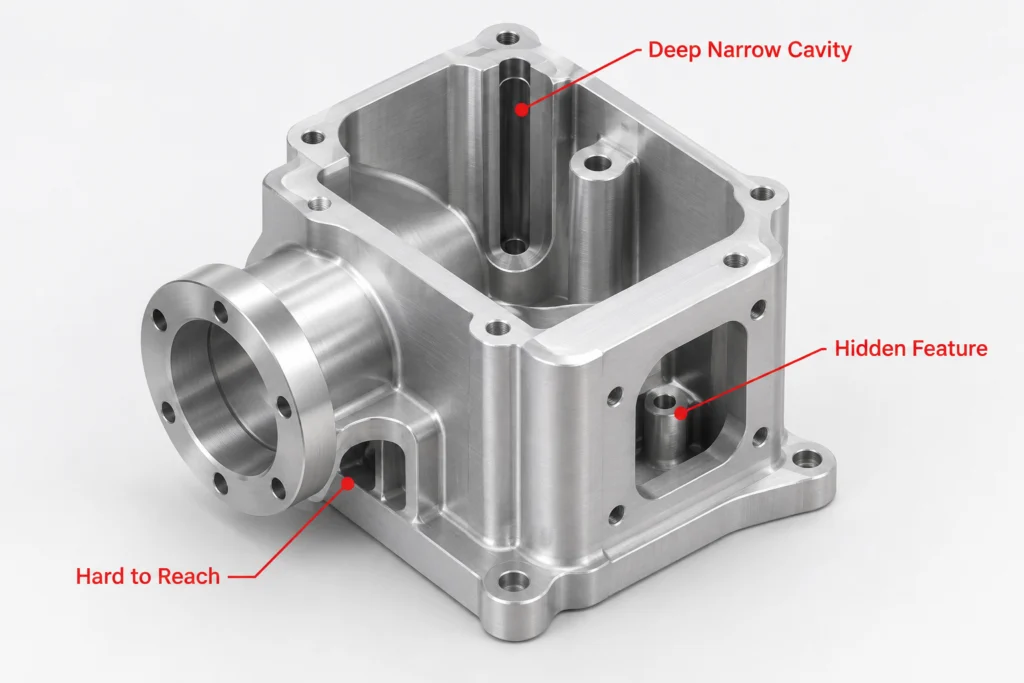
Complex Hidden Features
Need a 5-Axis Machining Design Review?
5-Axis Machining FAQs
What types of parts benefit most from 5-axis machining?
5-axis machining is well suited to complex parts with angled features, curved surfaces, deep cavities, or features on multiple faces that would otherwise require several setups.
How does 5-axis machining reduce setups?
The machine can tilt or rotate the part or cutting tool to reach multiple faces in one setup, reducing repositioning, fixture changes, and accumulated setup error.
Do complex parts always require 5-axis machining?
No. Some complex parts can be produced efficiently with 3-axis or 4-axis machining. The best process depends on geometry, tolerances, tool access, quantity, and cost.
How can I improve tool access for 5-axis machining?
Avoid deep narrow cavities, hidden undercuts, and geometry that blocks the cutter or holder. Open access and practical feature depth allow shorter, more rigid tools.
Does 5-axis machining improve accuracy?
It can. Fewer setups reduce repositioning error, while shorter tools and better access can improve rigidity, surface quality, and dimensional consistency.