
CNC Machining Surface Finish Guidelines
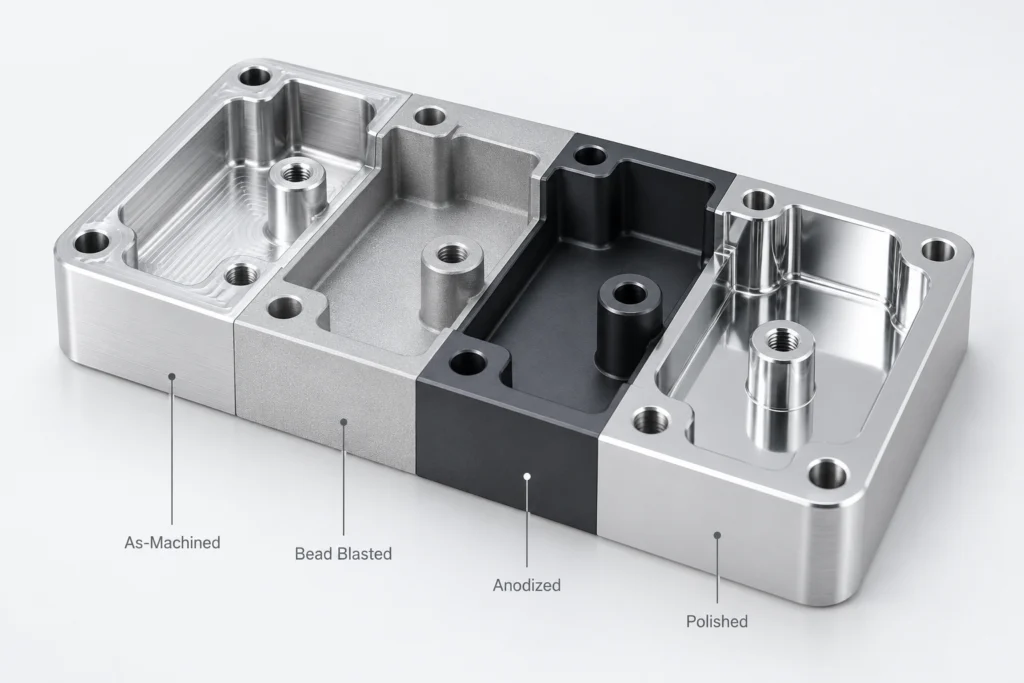
Specify Surface Finish Only Where It Matters Most
CNC Surface Finish & Inspection Considerations
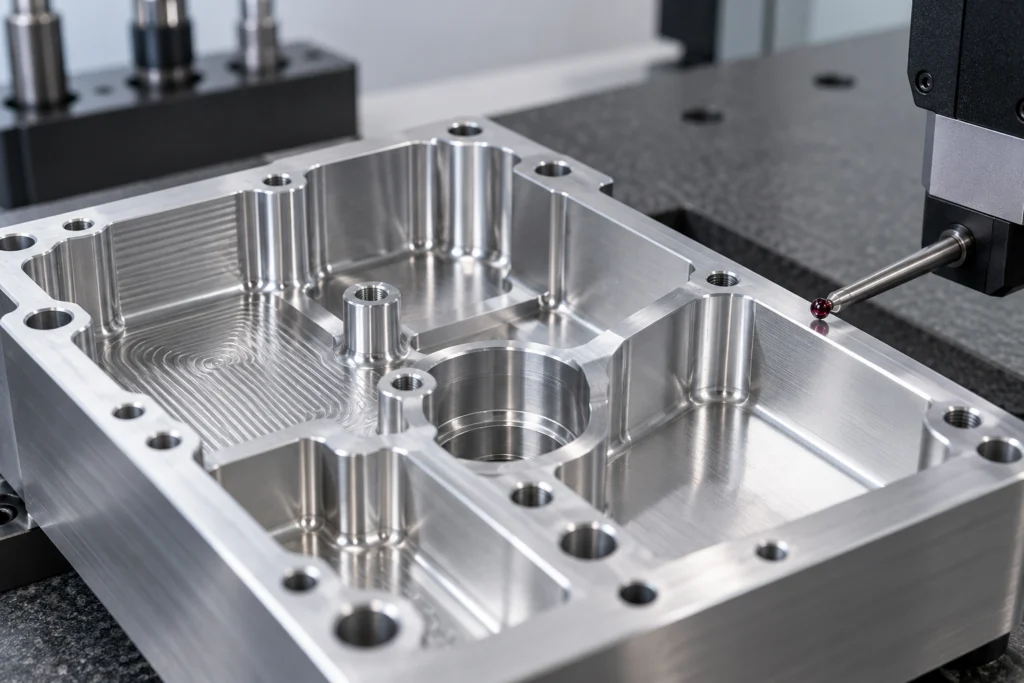
Good vs. Poor Surface Finish Design
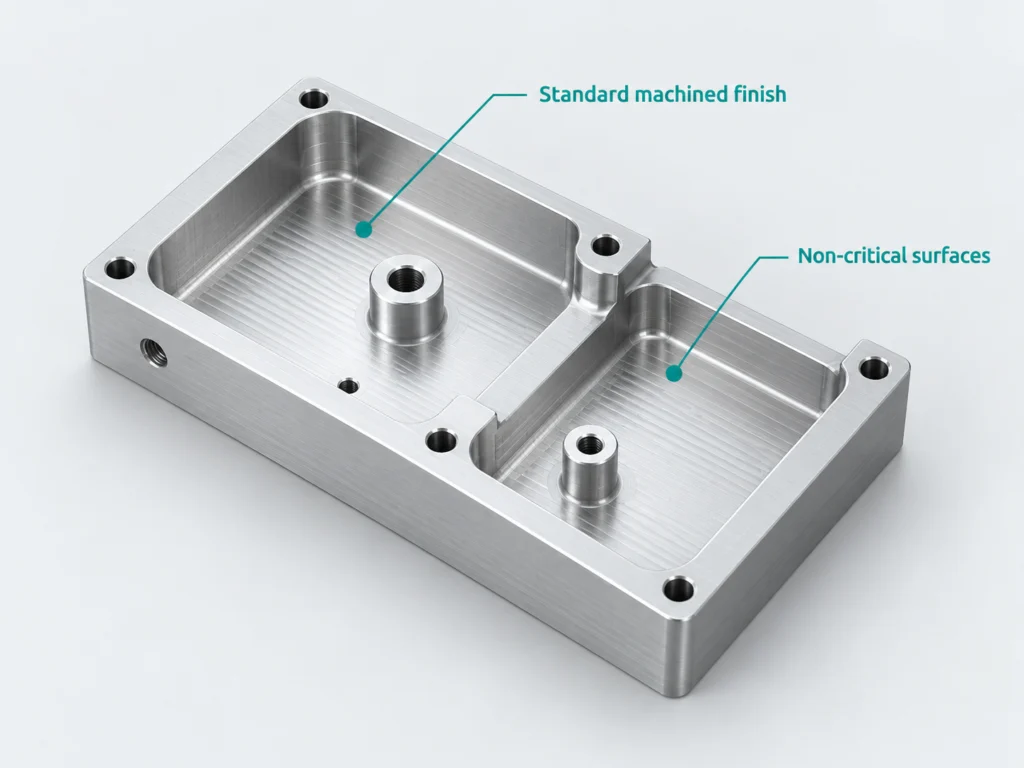
Standard Machined Finish
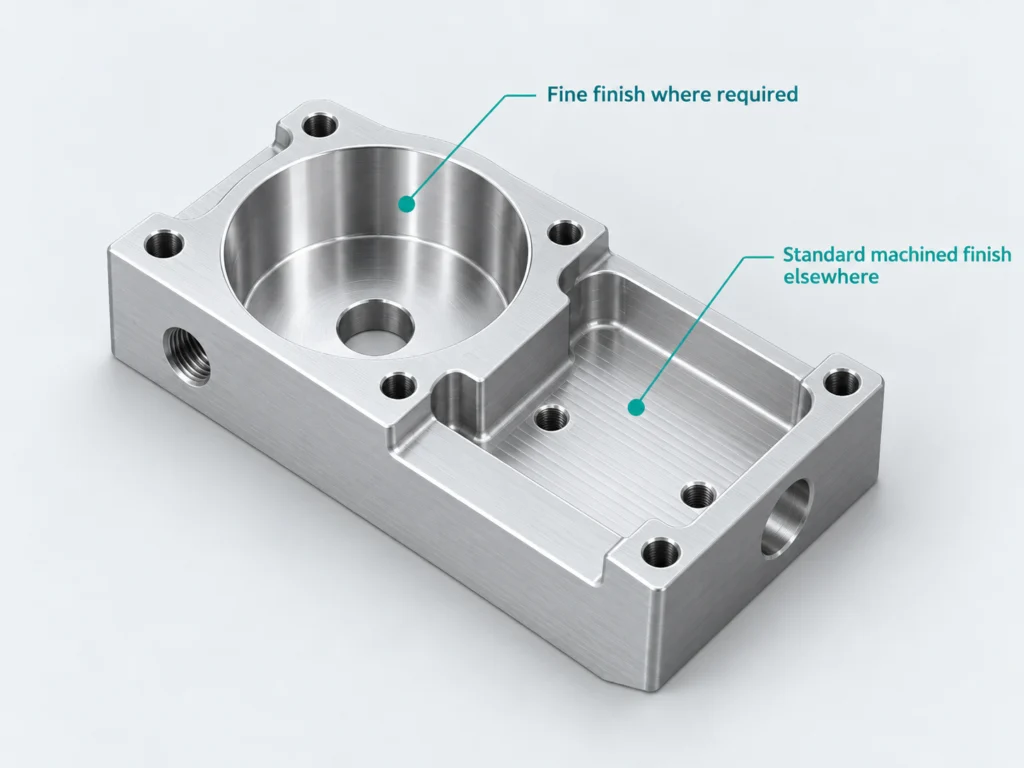
Finer Finish Where Required
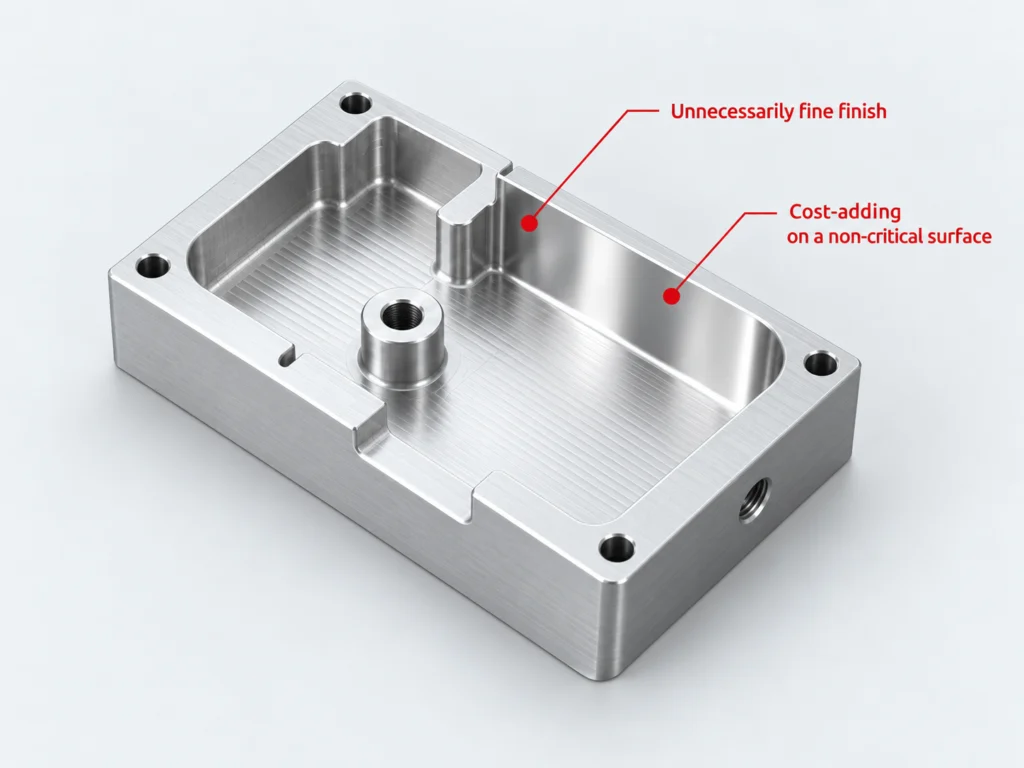
Unnecessarily Fine Finish
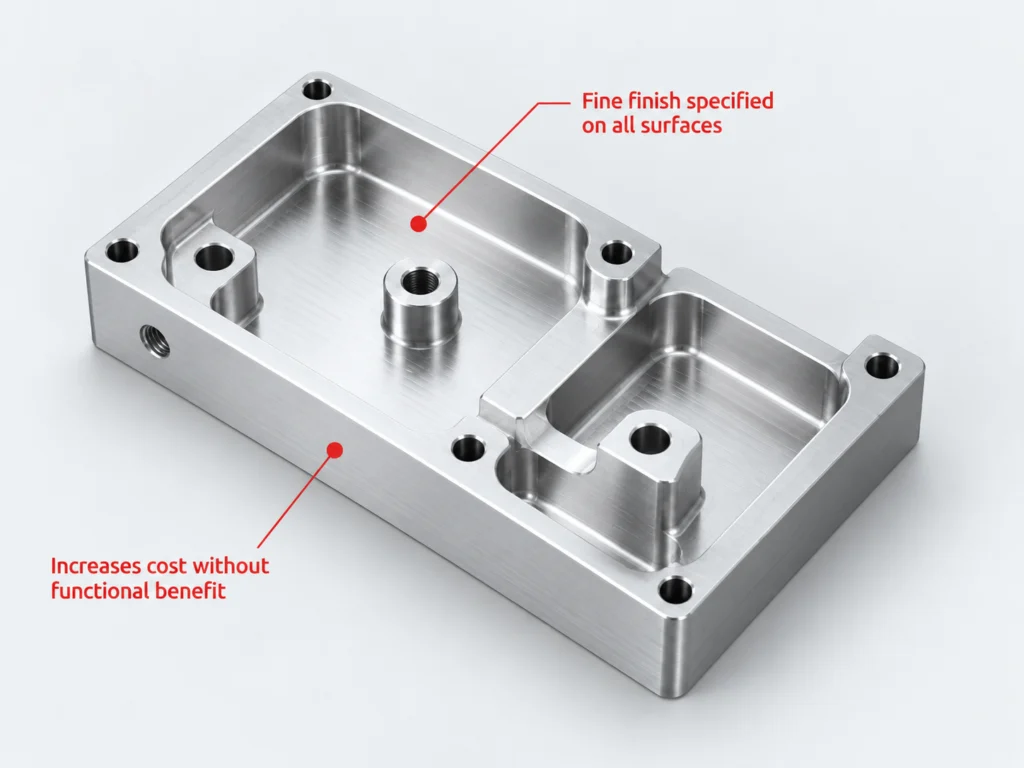
Fine Finish Everywhere
Need a Surface Finish Design Review?
Surface Finish FAQs
What surface finish is typical for CNC machined parts?
A standard as-machined finish is suitable for many CNC machined parts. Achievable surface roughness depends on the material, tooling, cutting parameters, feature geometry, and machining process.
When should I specify a finer surface finish?
Finer surface finishes are typically specified for sealing surfaces, sliding or bearing areas, precision mating features, or surfaces with specific cosmetic requirements.
Does a finer surface finish increase machining cost?
Yes. Finer finishes may require additional finishing passes, smaller stepovers, slower cutting conditions, tighter process control, and additional inspection, which can increase cost and lead time.
Is surface roughness the same as cosmetic appearance?
No. Surface roughness describes the microscopic texture of a surface, while cosmetic appearance can also depend on machining direction, tool marks, blasting, polishing, anodizing, plating, and other secondary processes.
Should I specify surface finish on every surface?
Usually not. Surface finish requirements should be applied only where they affect function, sealing, wear, fit, or appearance. Non-critical surfaces can generally use a standard machined finish.