
CNC Machining Tolerance Design Guidelines
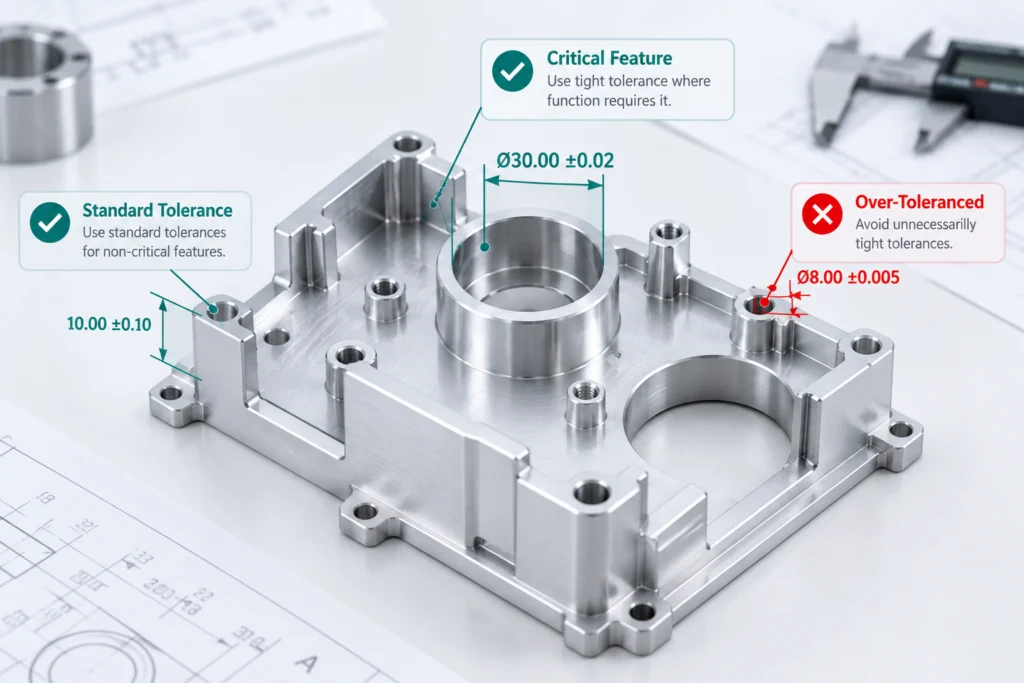
Apply Tolerances Where They Matter Most
CNC Tolerance & Inspection Considerations
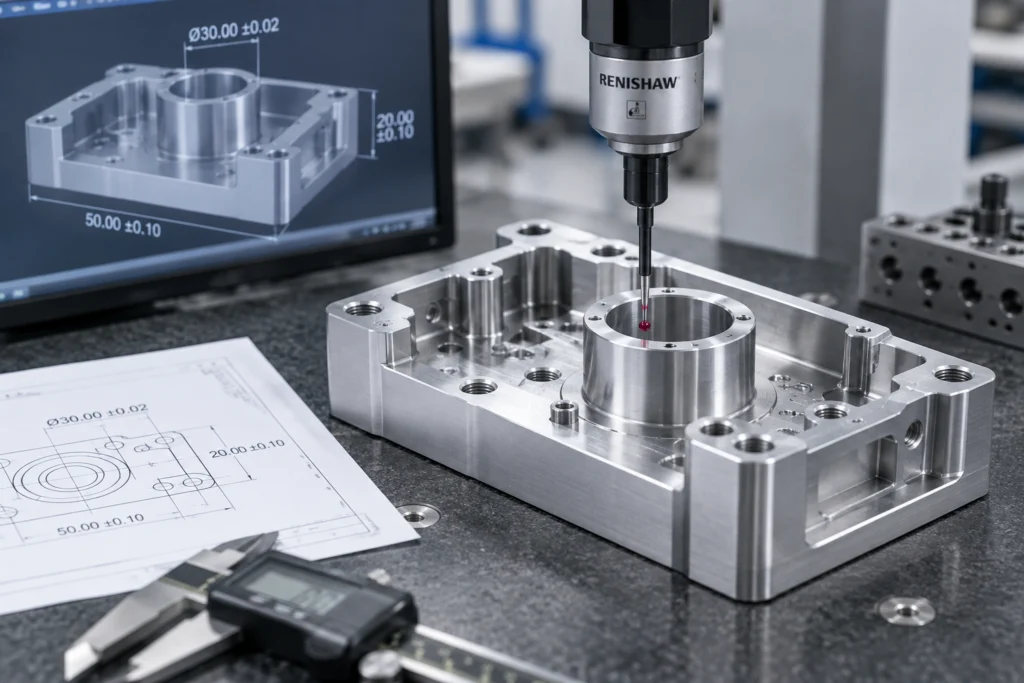
Good vs. Poor Tolerance Design
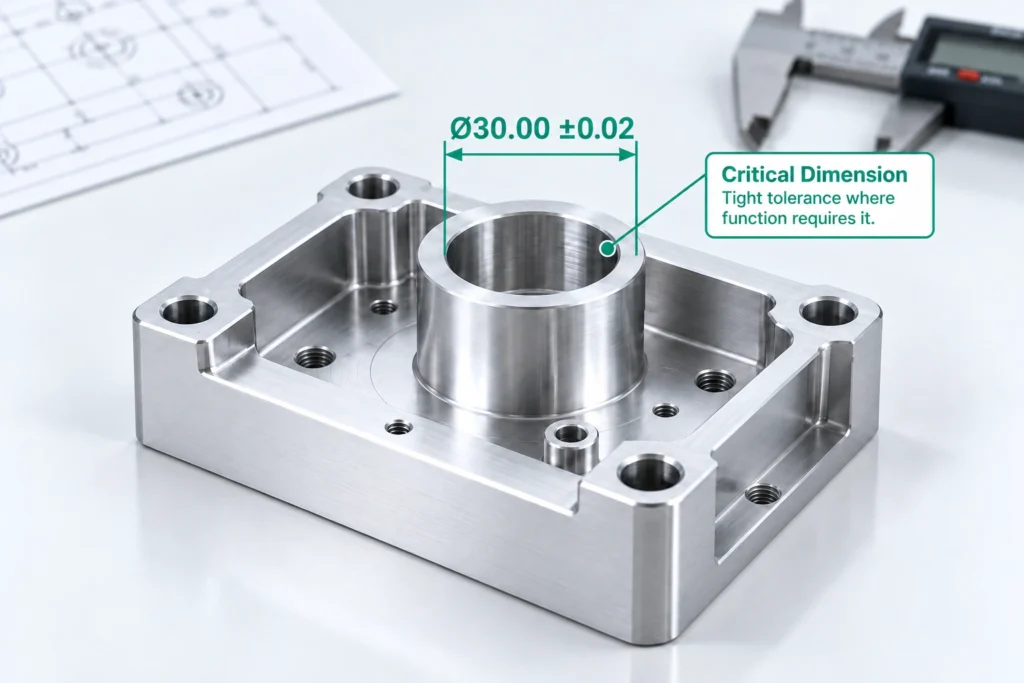
Functional Tolerances
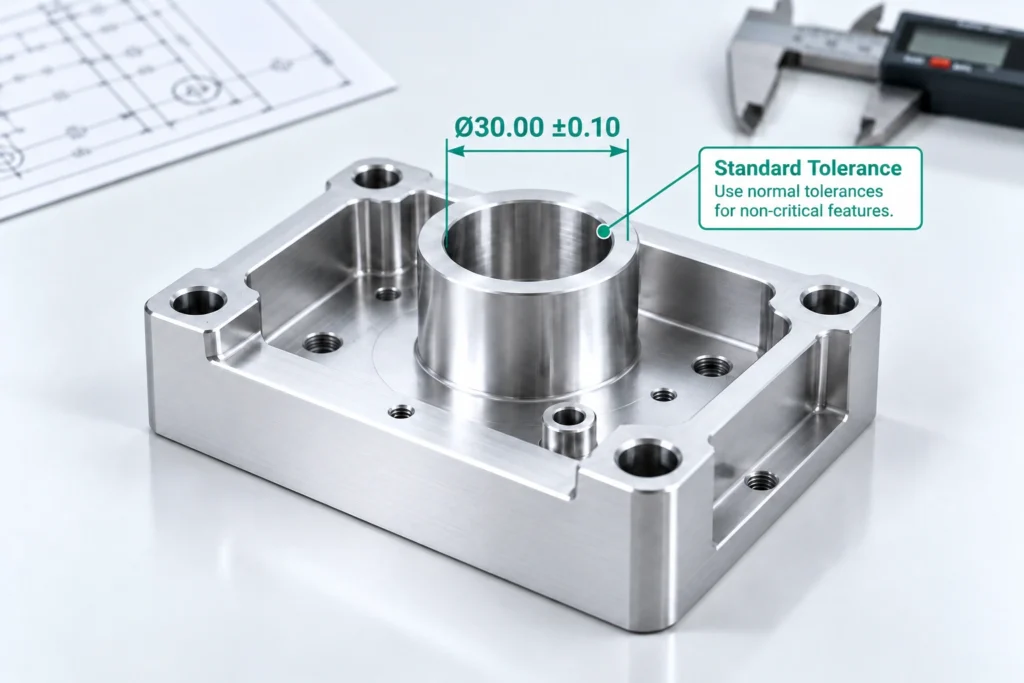
Standard Tolerances
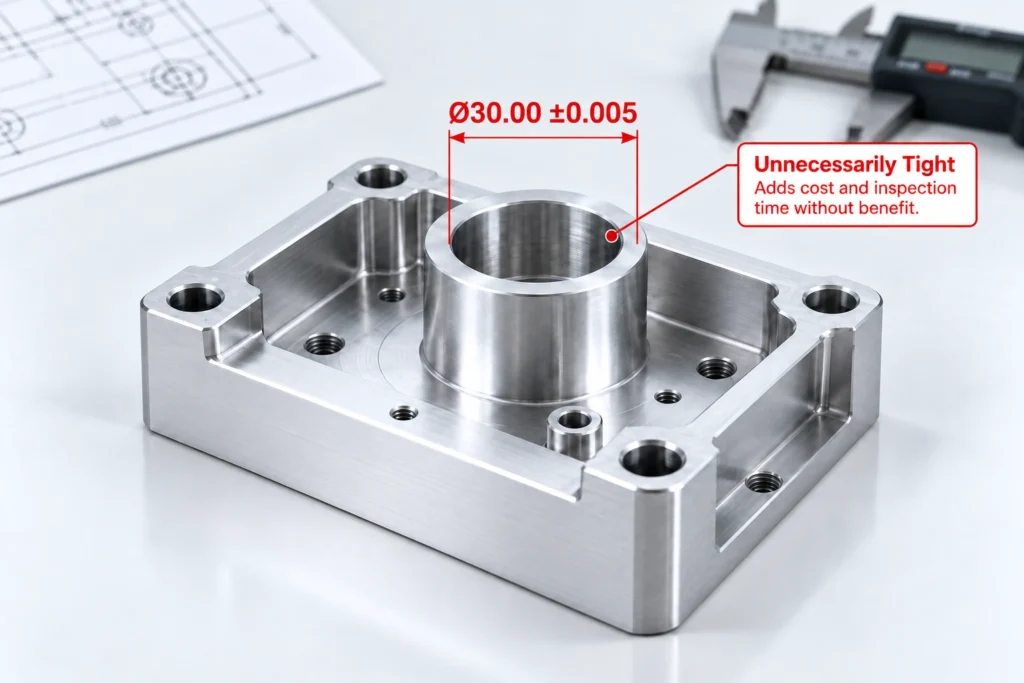
Unnecessarily Tight Tolerances
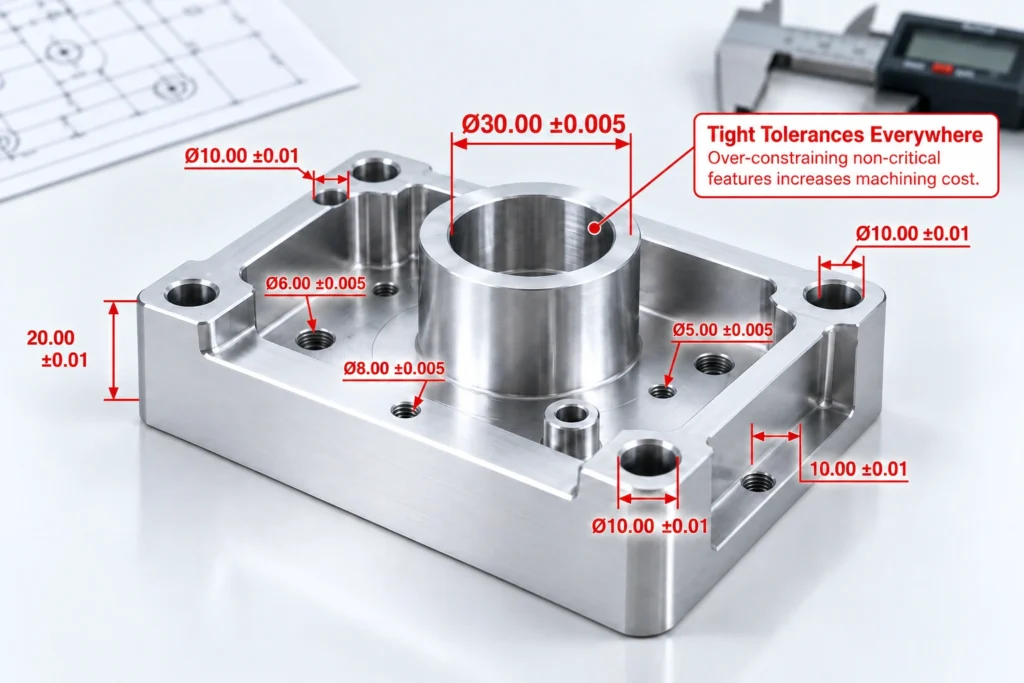
Tight Tolerances Everywhere
Need a Tolerance Design Review?
Tolerance Design FAQs
How tight should CNC machining tolerances be?
Tolerances should be based on the functional requirements of the part. Standard machining tolerances are suitable for many features, while tighter tolerances should be reserved for critical fits, alignment, sealing, or performance-related dimensions.
Do tighter tolerances increase CNC machining cost?
Yes. Tighter tolerances can require more precise tooling, additional machining passes, slower cutting conditions, more frequent inspection, and tighter process control, all of which can increase cost and lead time.
Should every dimension have a tight tolerance?
No. Tight tolerances should only be applied where they are functionally necessary. Using standard tolerances on non-critical dimensions improves manufacturability and helps control machining and inspection costs.
How do material and part geometry affect tolerance capability?
Material stability, wall thickness, feature size, part rigidity, heat, and residual stress can all influence achievable accuracy. Thin or flexible features generally require more careful tolerance planning.
When should I use GD&T instead of simple ± tolerances?
GD&T is useful when the functional relationship between features is more important than an individual size dimension. Position, flatness, parallelism, perpendicularity, and runout can provide clearer functional requirements for machining and inspection.