CNC Machining Undercuts & Tool Access Guidelines
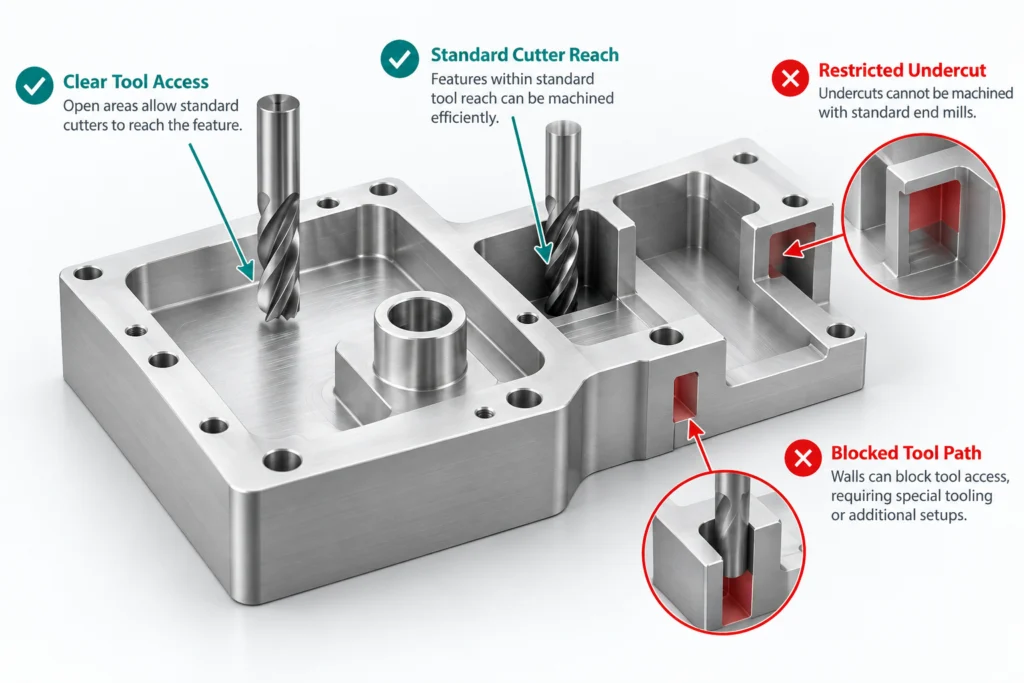
Design undercuts and recessed features with proper tool access to reduce specialized tooling, additional setups, and unnecessary machining costs.
Get a Quote
CNC machining undercuts and tool access showing standard cutter reach and restricted features
TOOL ACCESS BASICS

Design Features for Better CNC Tool Access

Clear tool access and standard machining directions help reduce special tooling, additional setups, and unnecessary machining cost.
Feature
Recommended
Avoid
Notes
Tool Access
Keep features open to standard cutters
Features blocked by walls
Clear access simplifies machining and reduces setups
Undercuts
Minimize or use standard undercut sizes
Deep or complex undercuts
Special cutters may be required
Side Features
Provide direct side access when possible
Hidden side features
Additional orientations may increase setup time
Deep Recesses
Keep depth within practical tool reach
Deep narrow cavities
Long tools increase deflection and vibration
Tool Clearance
Leave space around the cutting path
Tight surrounding geometry
Adequate clearance prevents holder interference
Machining Direction
Design features for access from common machining directions
Multiple blocked directions
Fewer machining directions generally reduce setups and cost
Design Tip: Features that can be reached with standard cutters and common machining directions are generally faster, more stable, and more economical to produce.
UNDERCUT & TOOL ACCESS MACHINING

Undercut & Tool Access Considerations

Tool Reach
Deep or recessed features may require longer tools, increasing deflection risk.
Undercut Tooling
Undercuts often require T-slot, lollipop, or other specialized cutters.
Holder Clearance
Surrounding walls must provide enough space to prevent tool-holder interference.
Feature Depth
Deep narrow features can limit cutter size and increase machining difficulty.
Setup Direction
Features accessible from fewer machining directions generally require fewer setups and lower machining costs.
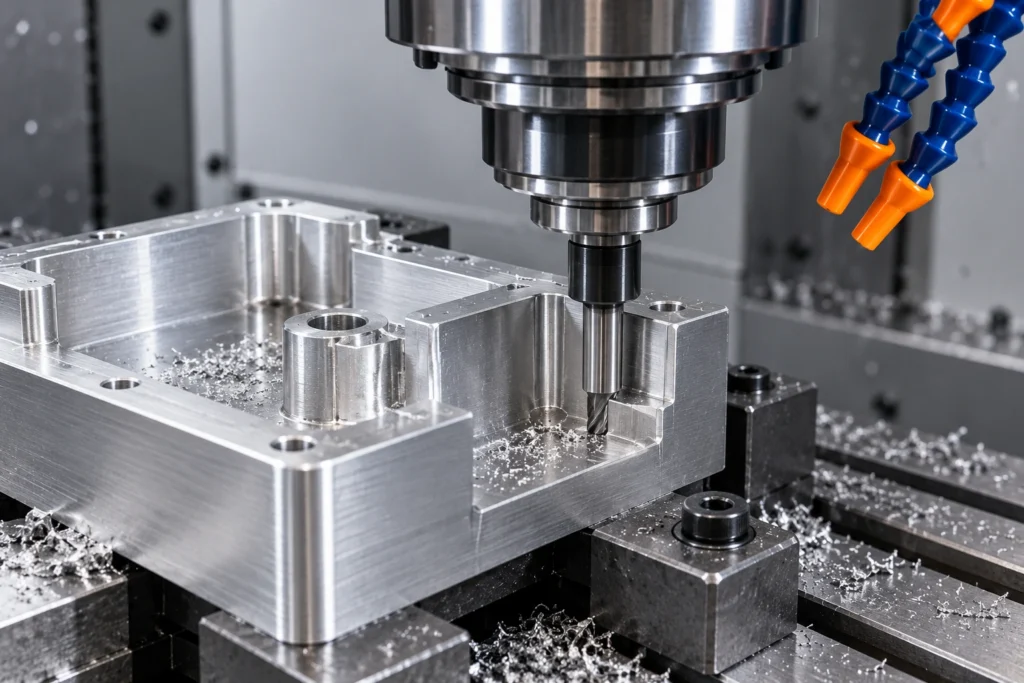
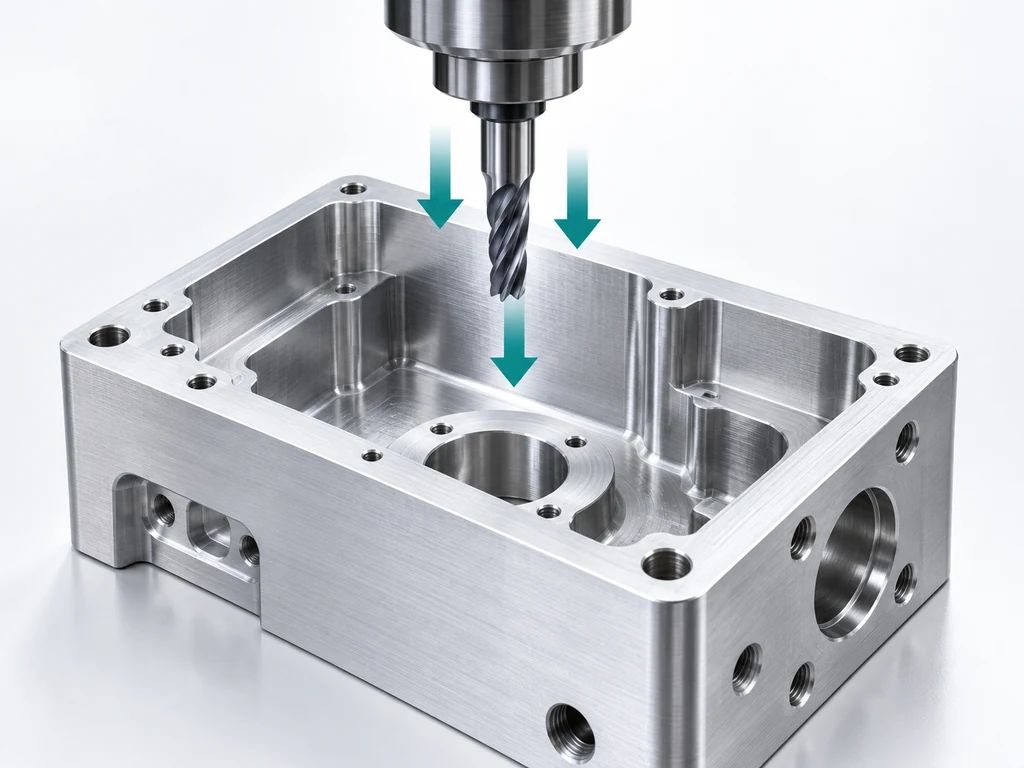
CNC machining aluminum part with tool access and cutter clearance considerations
DESIGN EXAMPLES

Good vs. Poor Undercut & Tool Access Design
Compare recommended and poor feature designs for better tool access, fewer setups, and more efficient CNC machining.
Clear tool access design for CNC machining with direct cutter reach

Clear Tool Access

Keep features open and accessible so standard cutters can reach them directly.
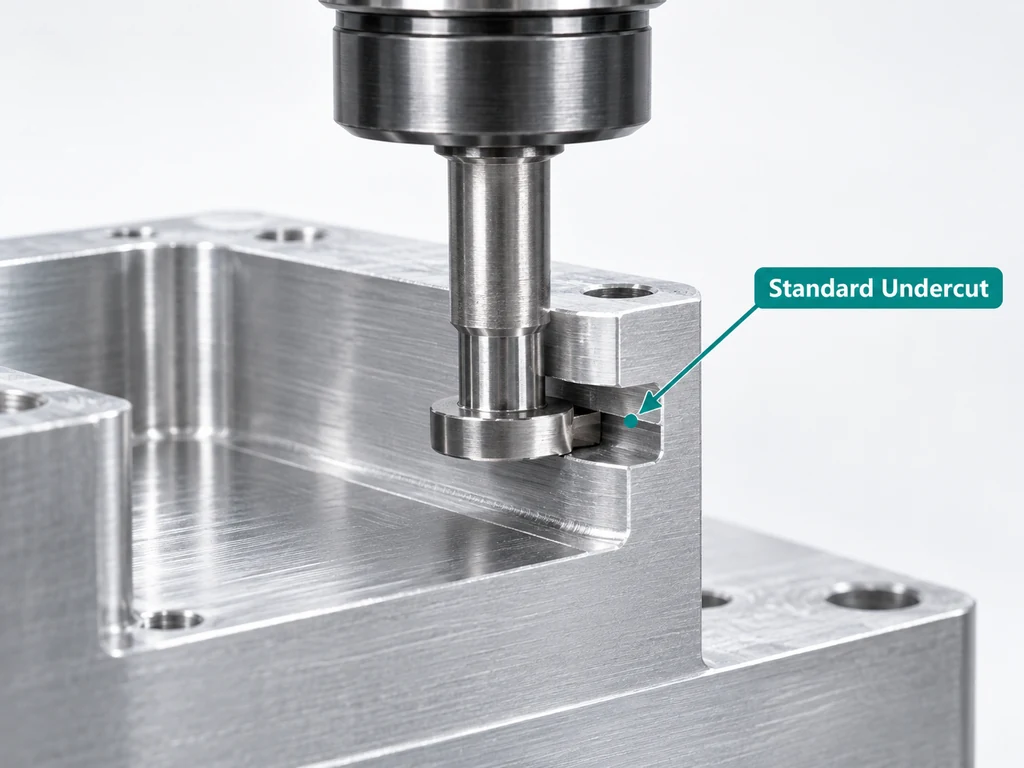
Standard undercut geometry designed for CNC machining with a specialty cutter

Standard Undercut Geometry

Use simple, standardized undercut shapes that can be machined with common specialty cutters.
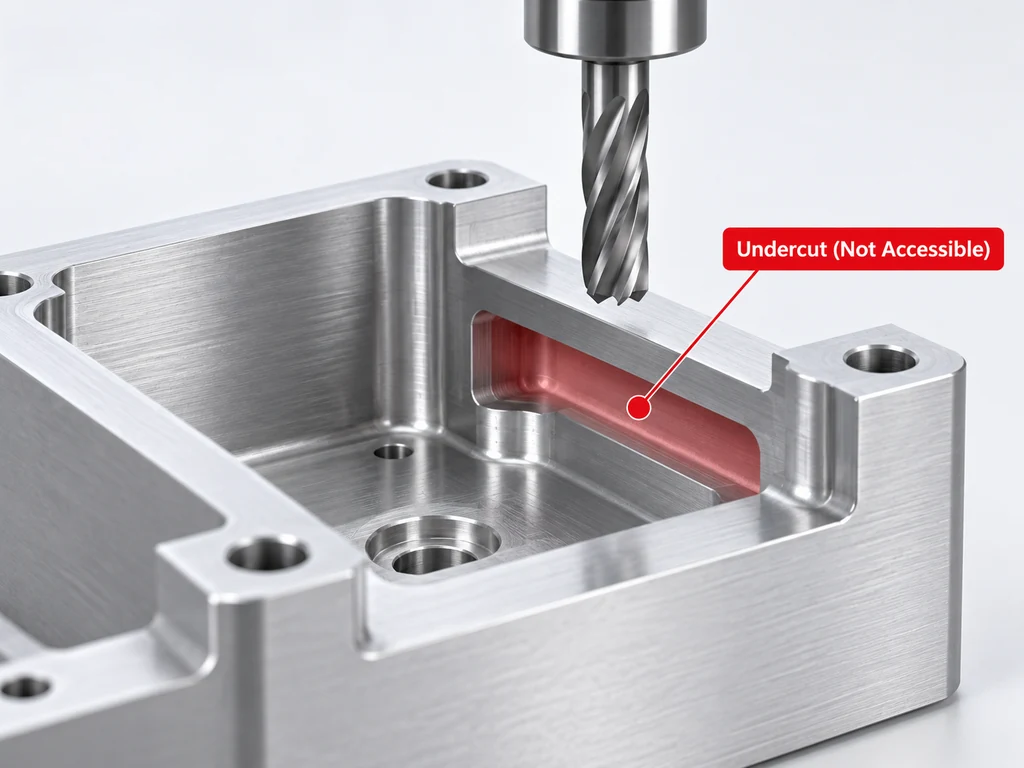
Restricted undercut design requiring specialized CNC machining access

Restricted Undercut

Deep or hidden undercuts may require special tooling and increase machining time.
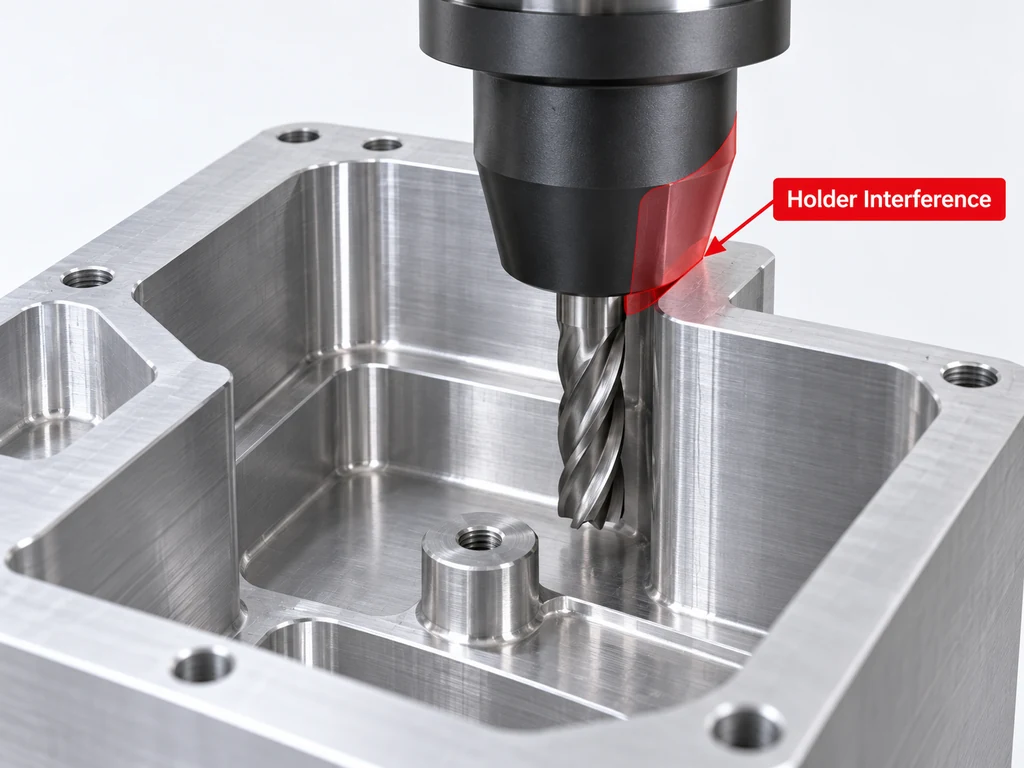
Blocked CNC tool path caused by insufficient cutter and holder clearance

Blocked Tool Path

Avoid surrounding walls or geometry that interfere with the cutter or tool holder.

Need an Undercut & Tool Access Review?

Send us your drawings for a DFM review. We can evaluate undercuts, tool access, cutter clearance, and machining feasibility.
FAQ

Undercut & Tool Access FAQs

Common questions about undercuts, tool access, and CNC machining design.

An undercut is a recessed feature that cannot be machined directly with a standard end mill from the main tool direction. It often requires a T-slot, lollipop, or other specialized cutter.

Undercuts are typically machined using specialized cutters such as T-slot cutters, keyseat cutters, or lollipop cutters. The exact tool depends on the feature geometry and available access.

Simple, standardized undercut shapes with sufficient clearance are the easiest and most economical to machine. Deep, narrow, or hidden undercuts usually require more specialized tooling.

Good tool access allows shorter and more rigid cutters, reduces setups, minimizes holder interference, and generally improves machining stability and cost efficiency.

Use standardized undercut dimensions, provide adequate cutter clearance, avoid unnecessarily deep recessed features, and keep features accessible from common machining directions.