
CNC Machining Internal Corners & Radii Guidelines
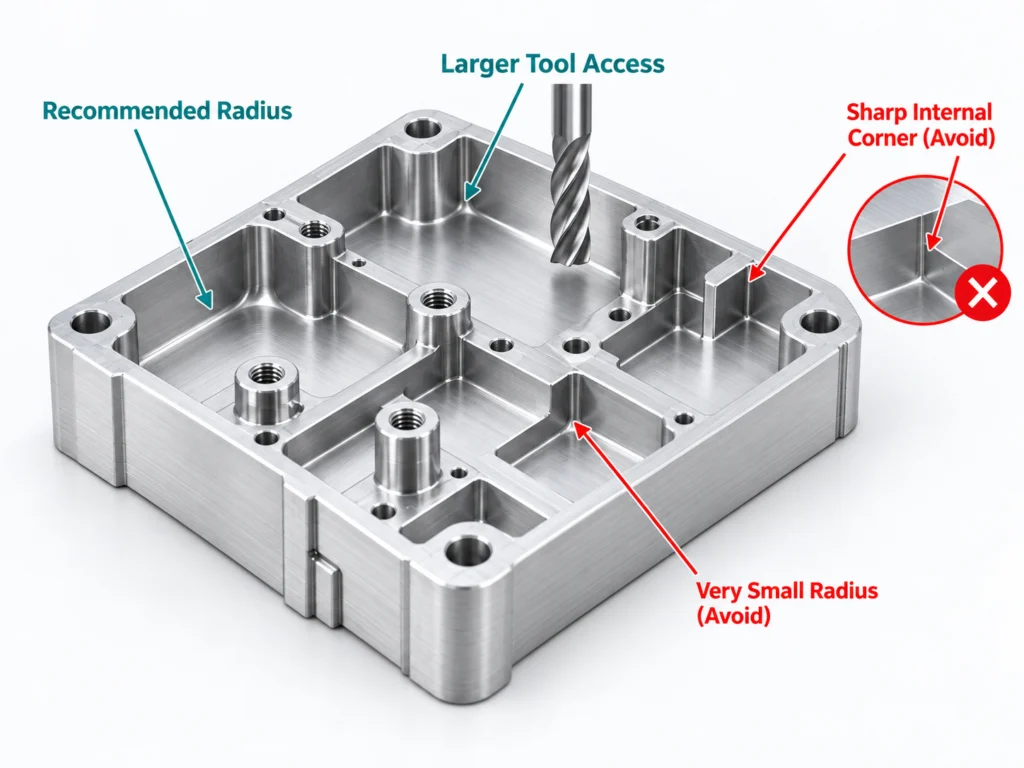
Design Internal Corners for Easier CNC Machining
Internal Corner Machining Considerations
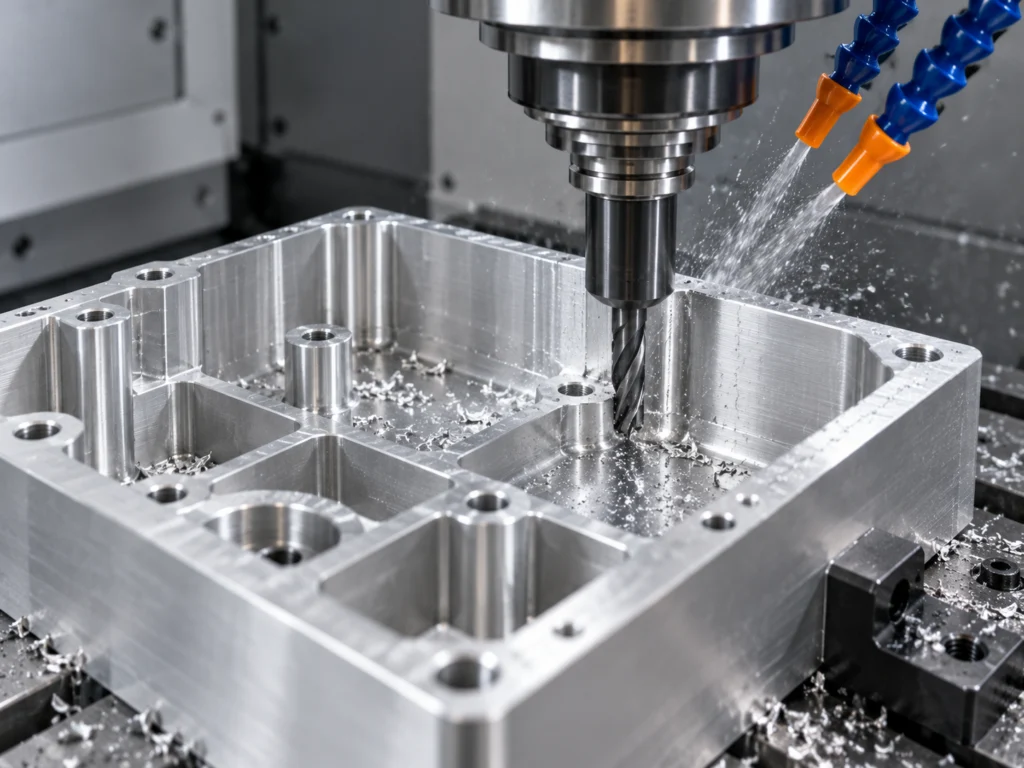
Good vs. Poor Internal Corner Design
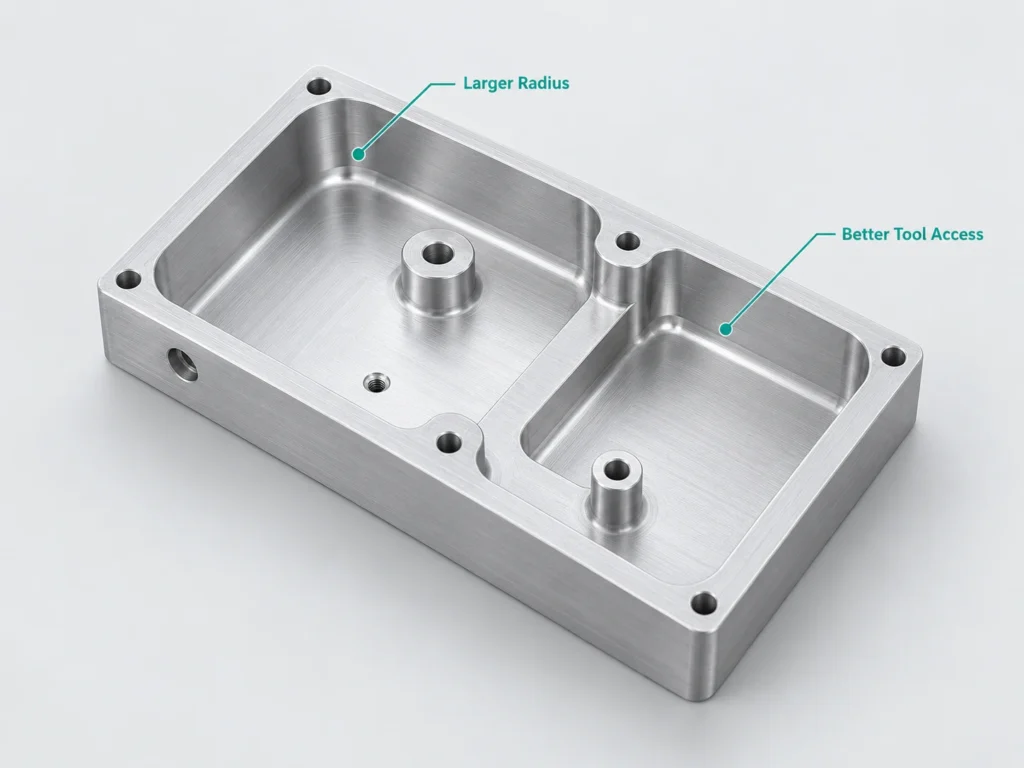
Larger Internal Radius
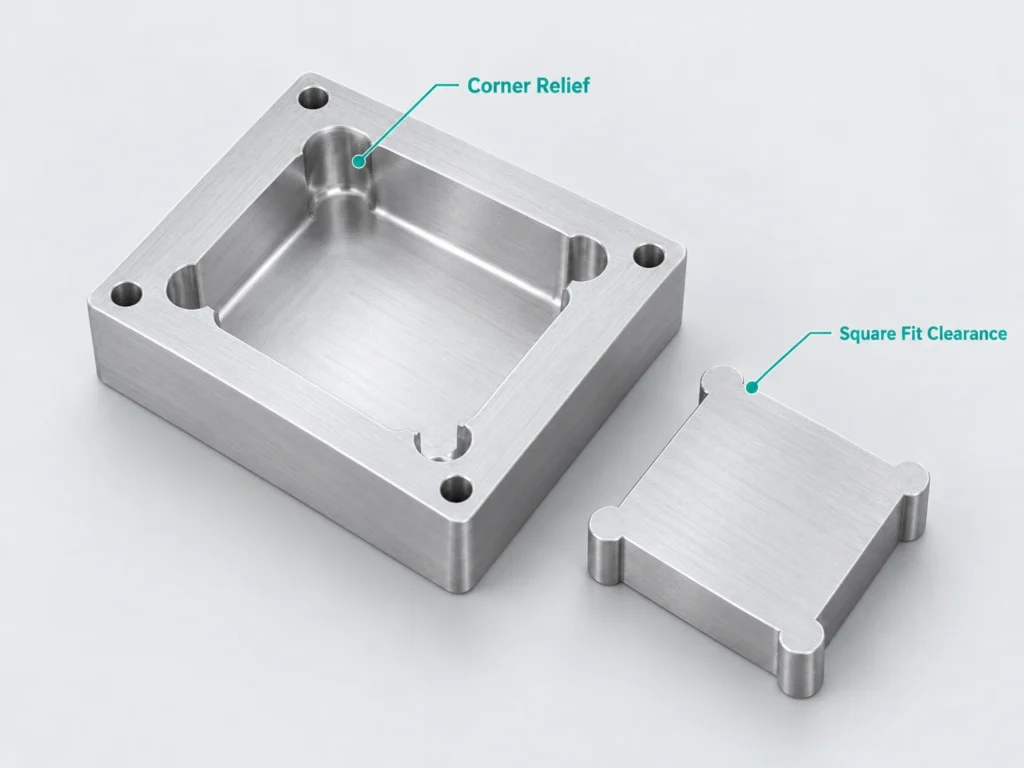
Corner Relief for Square Fits
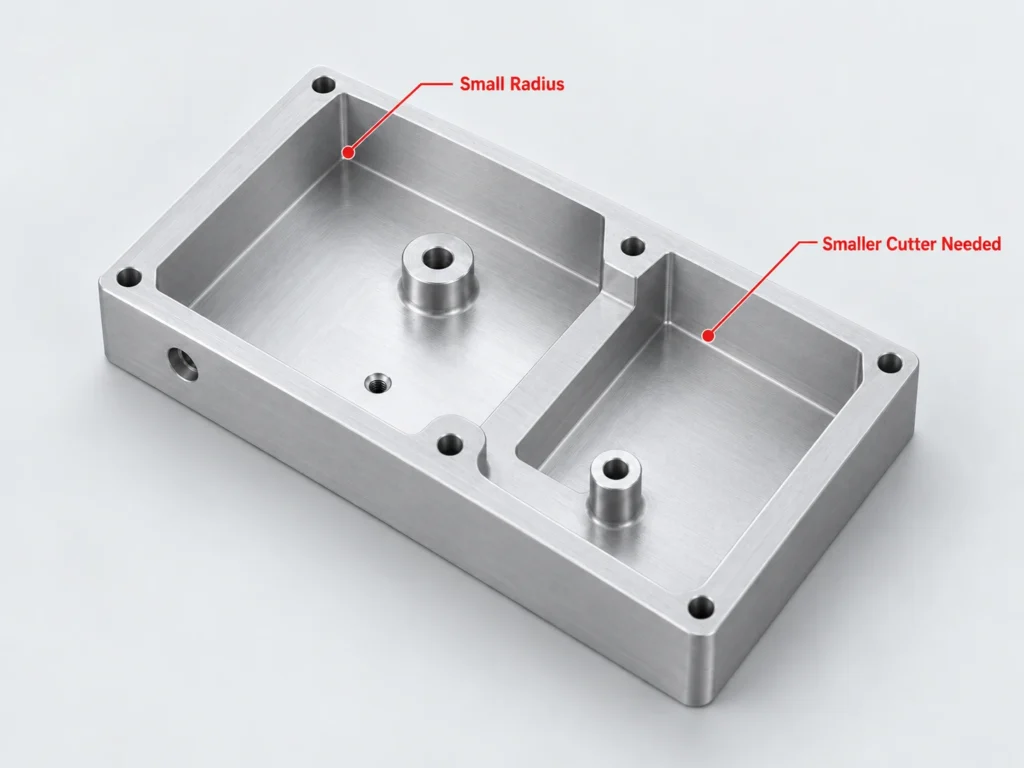
Very Small Internal Radius
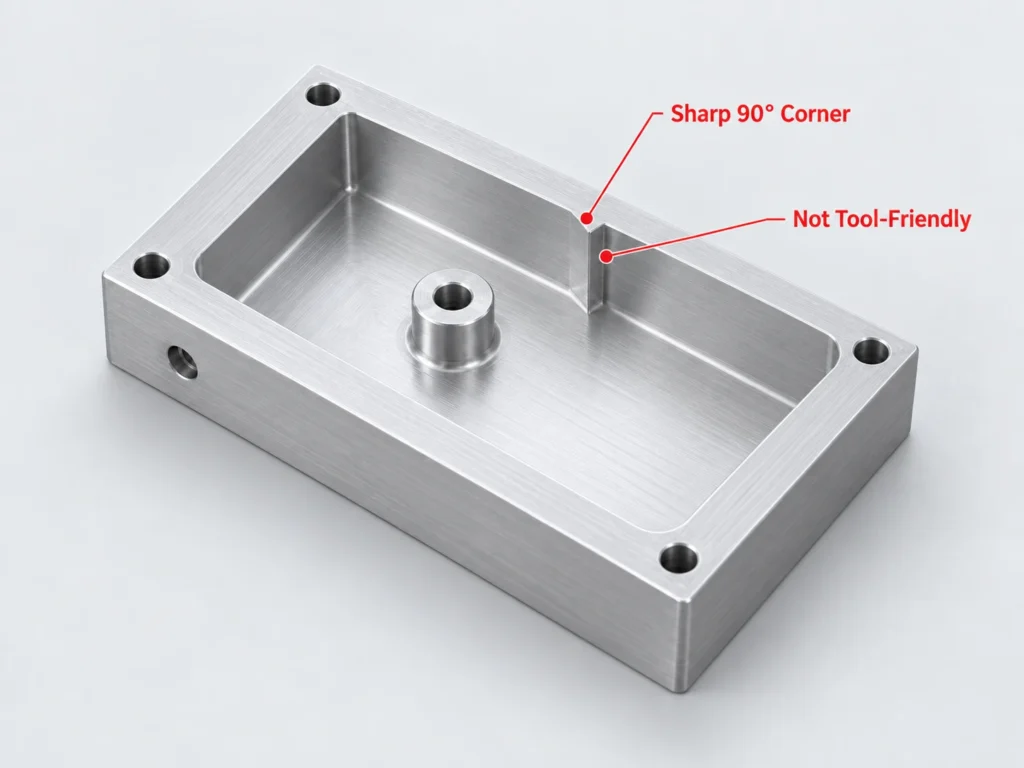
Sharp 90° Internal Corner
Need an Internal Corner Design Review?
Internal Corners & Radii FAQs
Why do CNC machined internal corners need a radius?
CNC end mills are round, so they naturally leave a radius in internal corners. Adding an appropriate radius improves tool access, allows the use of larger and more rigid cutters, and helps reduce machining time and tool wear.
What internal corner radius should I use for CNC machining?
Use the largest practical internal radius your design allows. Larger radii generally allow larger, more rigid cutters and improve machining stability. The final radius should be selected based on pocket depth, tool diameter, part geometry, and functional requirements.
Do deeper pockets need larger corner radii?
Generally, yes. Deep pockets require longer cutting tools, which are more prone to deflection and vibration. Increasing the internal corner radius allows the use of a larger and more rigid tool.
Can CNC machining produce a sharp 90° internal corner?
Standard CNC milling cannot directly produce a perfectly sharp 90° internal corner because end mills have a finite radius. If a sharp fit is required, corner reliefs, dog-bone features, EDM, or another secondary process may be considered.
What are dog-bone corners and when should I use them?
Dog-bone corners are small relief features added to internal corners to provide clearance for square mating parts. They are commonly used when a rectangular insert or component needs to fit fully into a CNC-milled pocket.