
CNC Machining Wall Thickness Guidelines
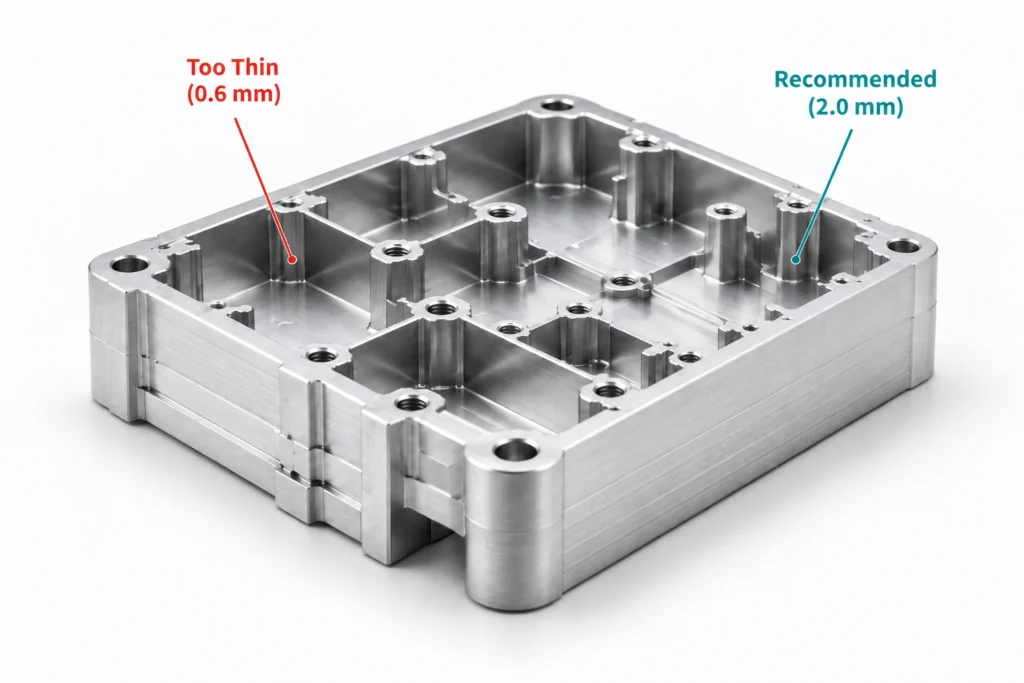
Typical CNC Wall Thickness Guidelines by Material
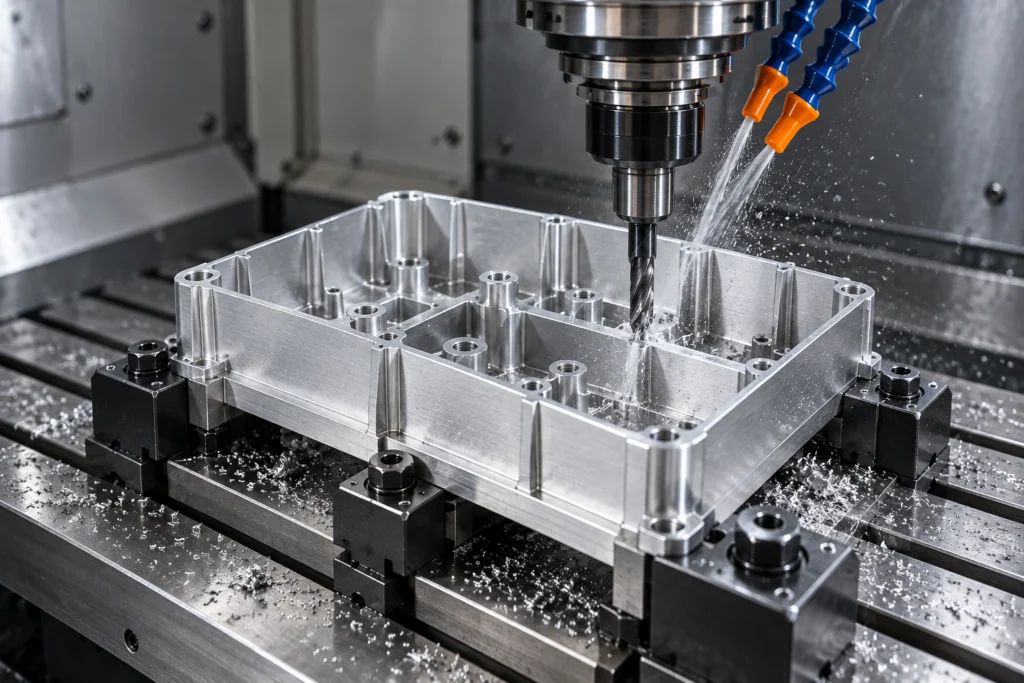
Thin-Wall Machining Considerations
Good vs. Poor Wall Thickness Design
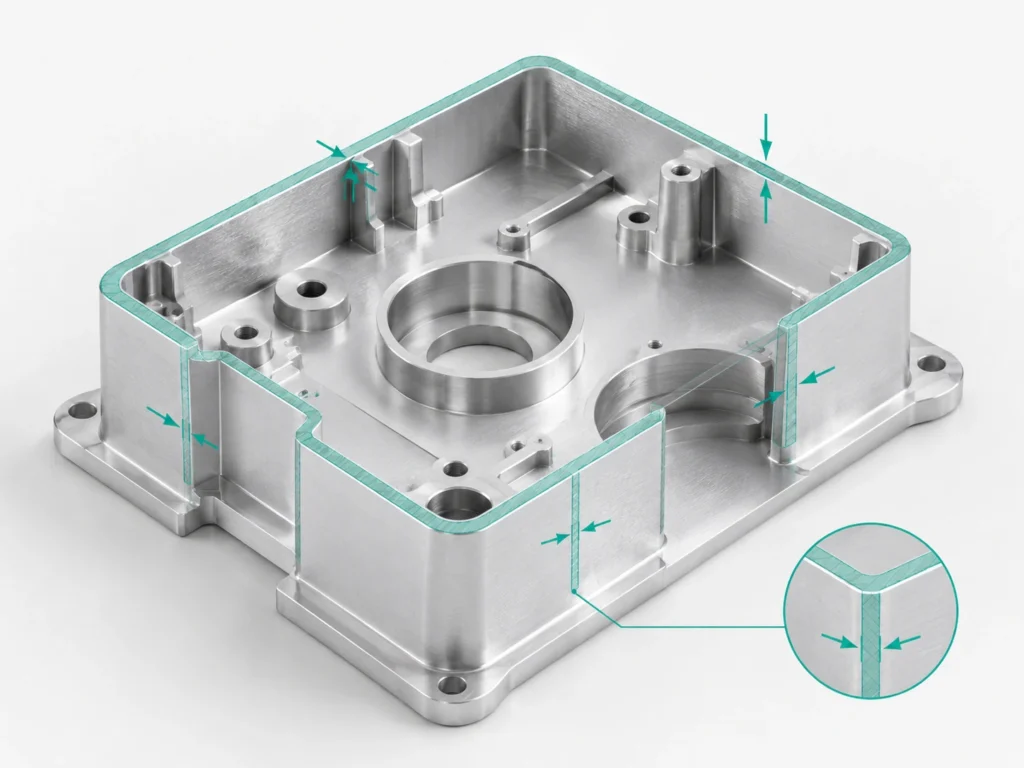
Uniform Wall Thickness
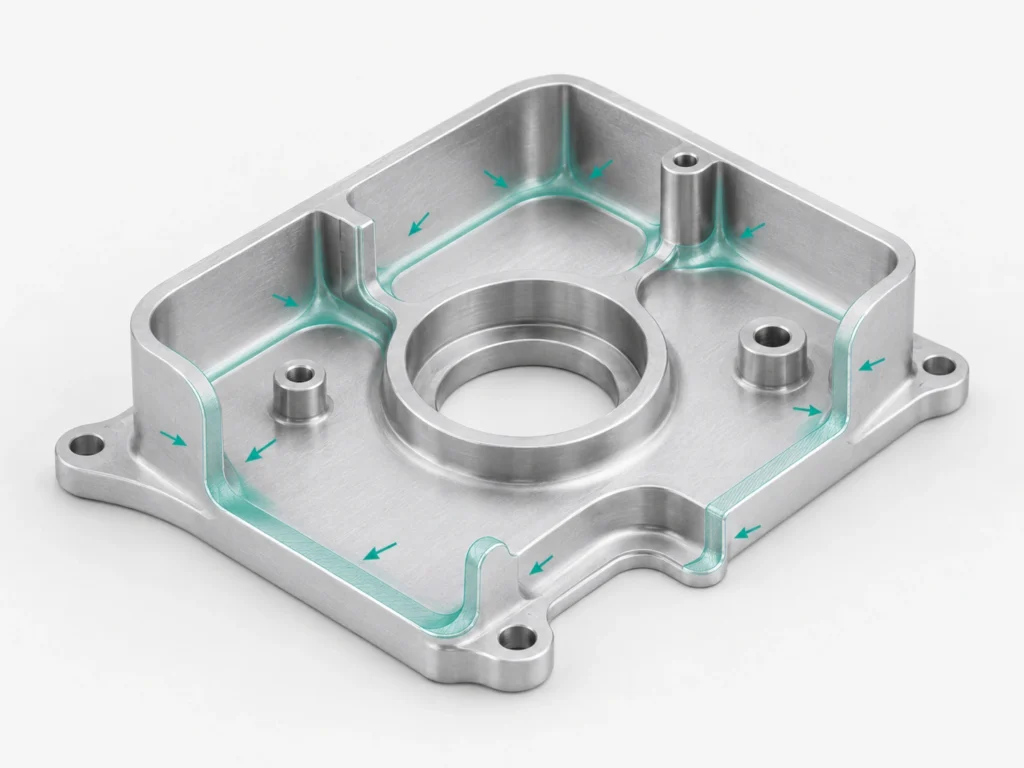
Smooth Thickness Transitions
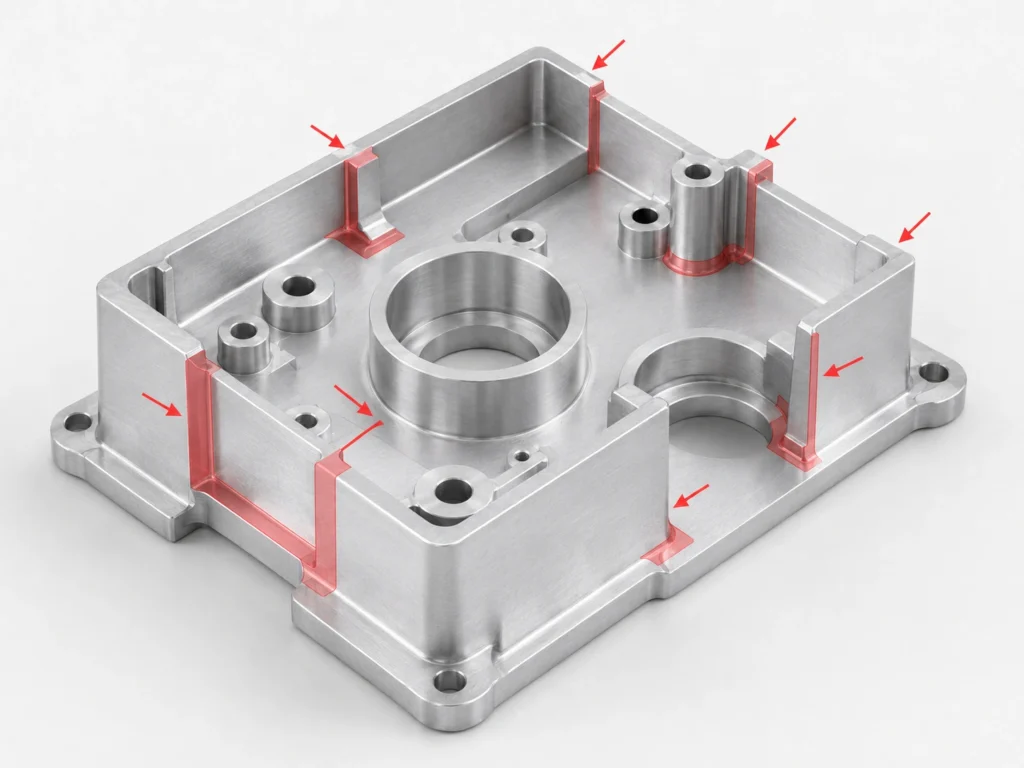
Sudden Thickness Changes
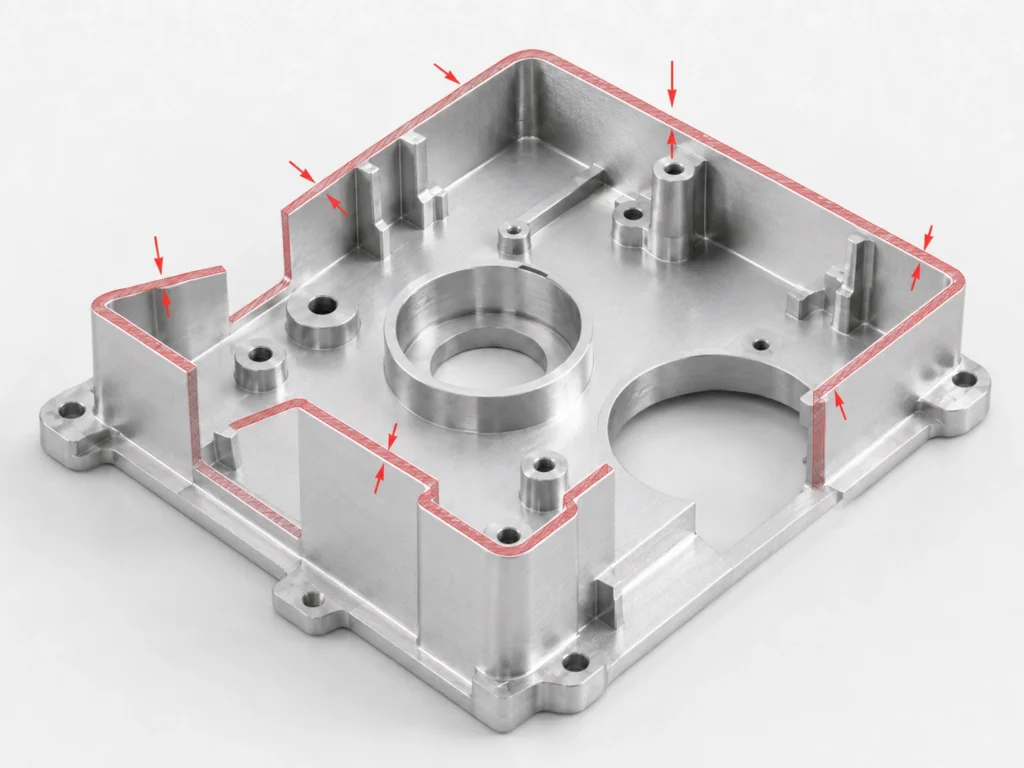
Excessively Thin Walls
Need a Wall Thickness Design Review?
Wall Thickness FAQs
What is the recommended minimum wall thickness for CNC machining?
For aluminum parts, around 1.0 mm can be a practical starting point for many designs. The appropriate minimum depends on material, geometry, wall height, tolerances, and machining conditions.
Does material affect the minimum wall thickness?
Yes. Material stiffness, cutting forces, heat sensitivity, and machinability all influence how thin a wall can be machined reliably.
Can you machine walls thinner than the recommended minimum?
In some cases, yes. Feasibility depends on material, wall height, geometry, tool access, fixturing, tolerance requirements, and surface finish. A drawing review is recommended.
How can I improve the rigidity of thin walls?
Use consistent wall thickness, add radii and supporting features where appropriate, and avoid unnecessarily tall or unsupported thin sections.
Do tighter tolerances affect thin-wall machining?
Yes. Tight tolerances on thin features may require more controlled machining, fixturing, and inspection to manage deformation and dimensional variation.